
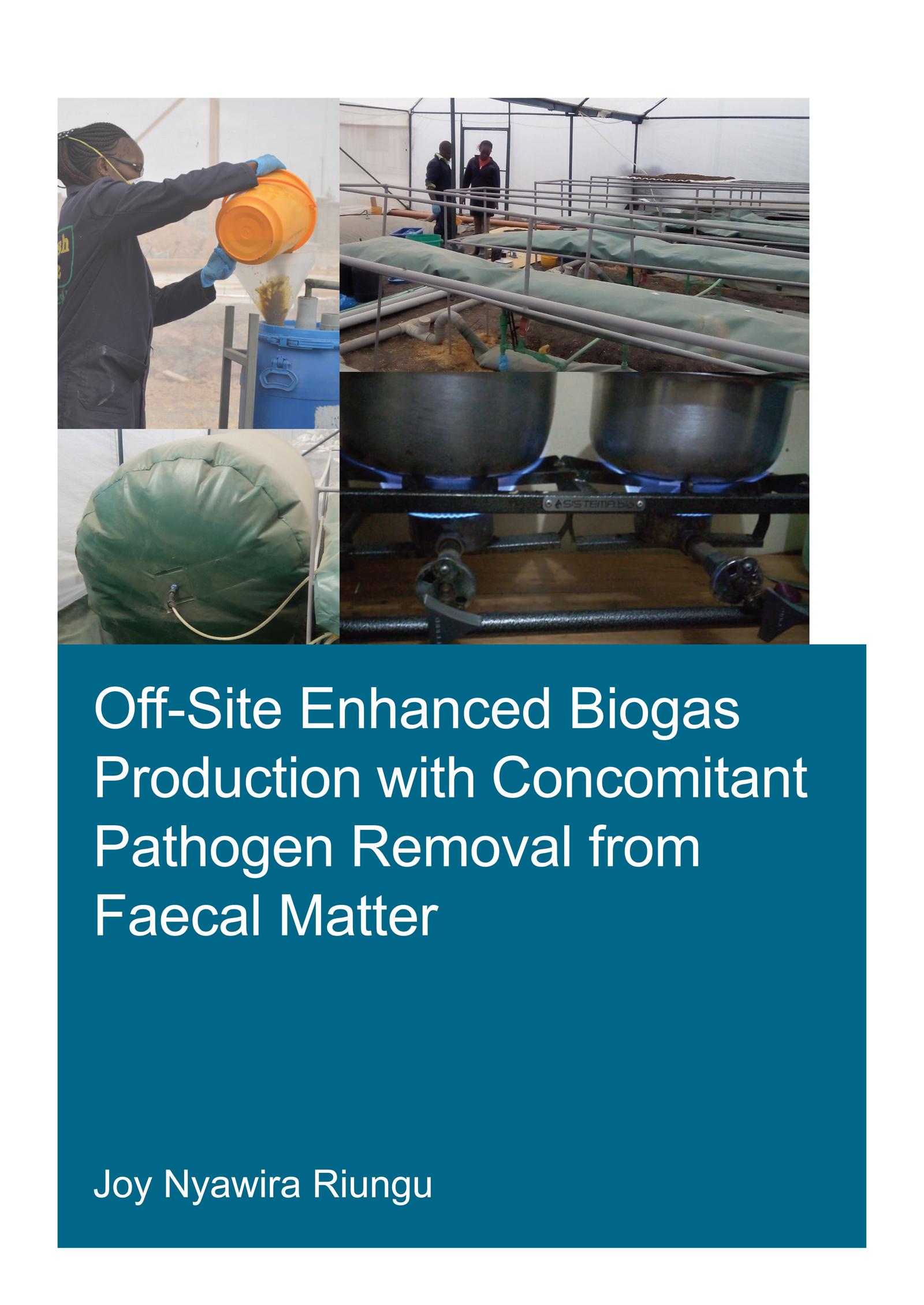
Globally, 2.7 billion people are using onsite sanitation systems, particularly in low income, high density settlements (LIHDS) in urban areas of developing countries. However, treatment technologies to manage the faecal sludge (FS) generated from these systems are often not in place, leading to high risks for environmental and public health. The development of replicable and effective technologies for FS treatment is key in addressing this challenge.
This research focused on development of an innovative FS stabilisation technology and addressed key constraints in anaerobic FS treatment: inadequate pathogen inactivation and limitations in biochemical energy recovery. The developed two-stage reactor system consists of an acidogenic reactor fed with mixtures of FS and market waste to facilitate pathogen inactivation, and a subsequent methanogenic plug-flow reactor for enhanced methane production. Due to its potential for application as an off-site FS treatment technology at any scale, receiving any type of faecal matter, collected from different types of sanitary systems, the system provides an option for FS stabilisation for LIHDS. Additionally, the research evaluated the limitations of sanitation provision in LIHDS, and proposes methods for creating an enabling environment for full-scale implementation of onsite systems. The presented results contribute to designing appropriate sanitation interventions in LIHDS.
Pay easily by card, Klarna, Apple Pay or Google Pay. Not happy? You always have a 14-day money-back guarantee. Read more in our terms. If you have any questions, email us at hello@memmo.org.
Memmo makes studying easier – wherever you are in the world. We bring your course books and smart study tools together in one place: summaries, quizzes, podcasts and flashcards. Plus Ted, your study buddy who answers anything you wonder. Over 50,000 students already study here – built to help you learn faster and stress less.