
The Open Access version of this book, available at https://www.taylorfrancis.com/books/edit/10.1201/9781003082613, has been made available under a Creative Commons Attribution-Non Commercial-No Derivatives 4.0 license.
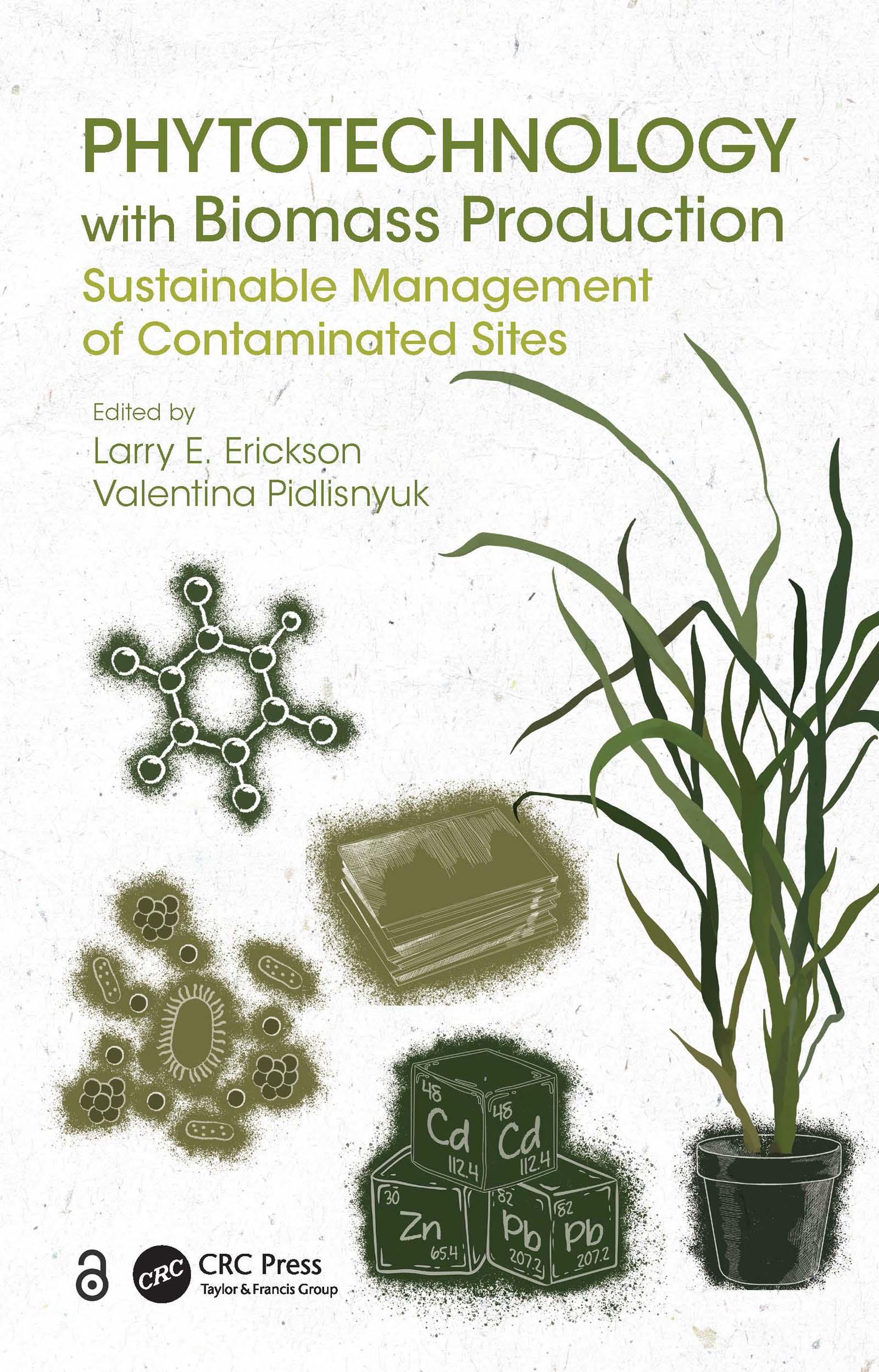
This book explains the concept of using phytotechnology with biomass production to improve soil quality and restore contaminated sites to a useful state that has economic and social value. Phytotechnology with Biomass Production: Sustainable Management of Contaminated Sites focuses on the application of second-generation biofuel crops, primarily Miscanthus, to slightly contaminated or marginal postmilitary and postmining soils. Based on recent and ongoing research from the United States, Ukraine, the Czech Republic, and Germany, along with case studies from other countries, this is the first comprehensive book on using phytotechnology with biomass production at contaminated sites at a global level.
FEATURES
- Focuses on an important topic of a growing global activity: soil improvement through biomass production
- Includes case studies and success stories from different countries on application of Miscanthus phytotechnology to sites differently contaminated by trace elements, pesticides, and petroleum products
- Discusses the peculiarities of Miscanthus production on postmilitary and postmining contaminated lands and the impact of plant growth regulators, soil amendments, fertilizers, and biochar to the process
- Introduces soil fauna as indicators of soil health during Miscanthus phytotechnology application
- Presents Miscanthus value chain associated with the processing of Miscanthus biomass to different bioproducts
While written primarily for faculty, students, research scientists, environmental and agricultural professionals, gardeners, farmers, landowners, and government officials, this book has value for all who are working on phytotechnology projects and phytomining to reduce risk and/or improve soil quality at contaminated sites. Phytotechnology with Biomass Production: Sustainable Management of Contaminated Sites is also a great new resource for those who are new to the topic and want to learn to apply phytotechnologies and biomass production with further conversion into energy and bioproducts.
Pay easily by card, Klarna, Apple Pay or Google Pay. Not happy? You always have a 14-day money-back guarantee. Read more in our terms. If you have any questions, email us at hello@memmo.org.
Memmo makes studying easier – wherever you are in the world. We bring your course books and smart study tools together in one place: summaries, quizzes, podcasts and flashcards. Plus Ted, your study buddy who answers anything you wonder. Over 50,000 students already study here – built to help you learn faster and stress less.