
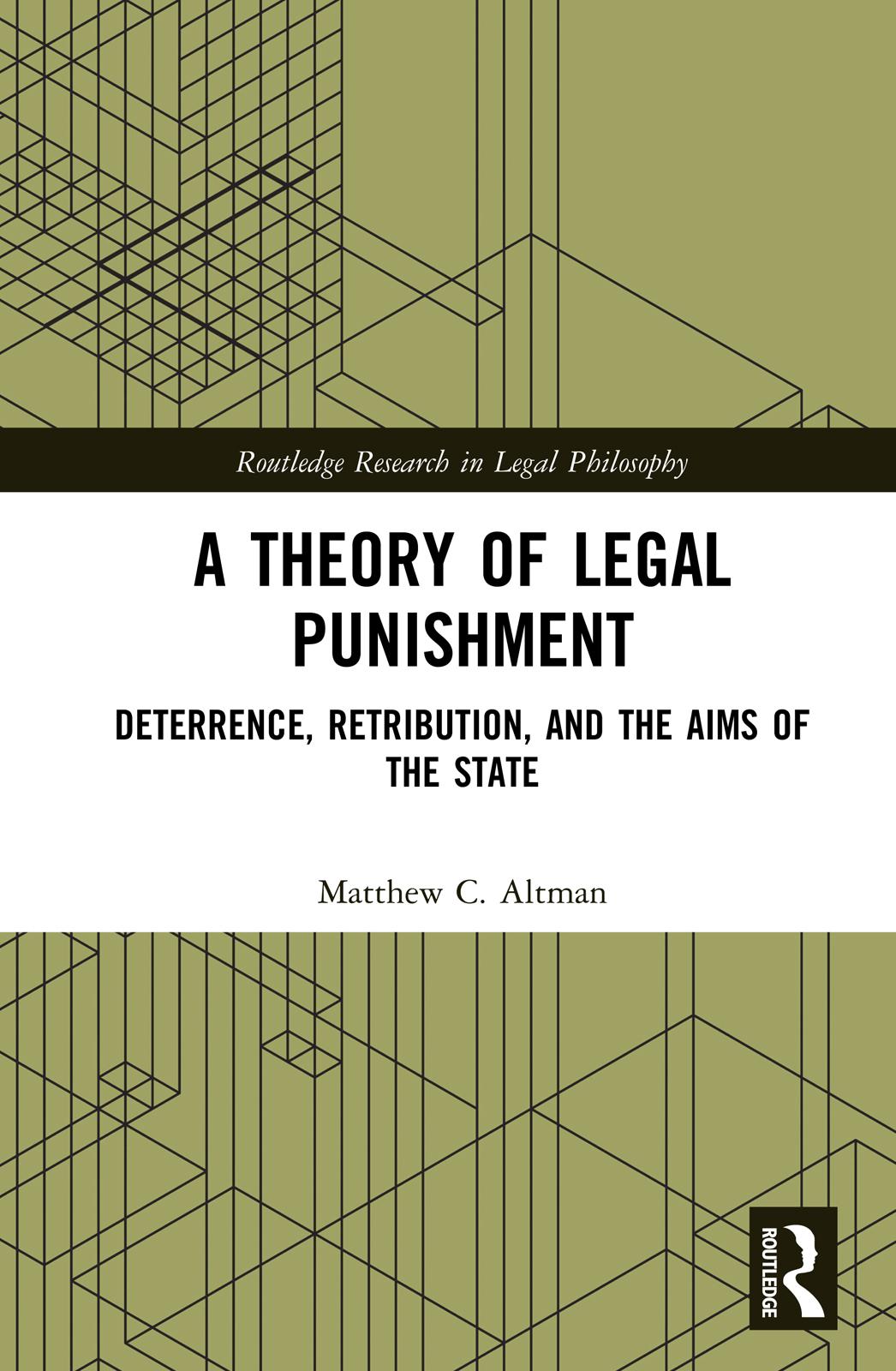
This book argues for a mixed theory of legal punishment that treats both crime reduction and retribution as important aims of the state.
A central question in the philosophy of law is why the state’s punishment of its own citizens is justified. Traditionally, two theories of punishment have dominated the field: consequentialism and retributivism. According to consequentialism, punishment is justified when it maximizes positive outcomes. According to retributivism, criminals should be punished because they deserve it. This book recognizes the strength of both positions. According to the two-tiered model, the institution of punishment and statutory penalties, as set by the legislature, are justified based on their costs and benefits, in terms of deterrence and rehabilitation. The law exists to preserve the public order. Criminal courts, by contrast, determine who is punished and how much based on what offenders deserve. The courts express the community’s collective sense of resentment at being wronged.
This book supports the two-tiered model by showing that it accords with our moral intuitions, commonly held (compatibilist) theories of freedom, and assumptions about how the extent of our knowledge affects our obligations. It engages classic and contemporary work in the philosophy of law and explains the theory’s advantages over competing approaches from retributivists and other mixed theorists. The book also defends consequentialism against a longstanding objection that the social sciences give us little guidance regarding which policies to adopt. Drawing on recent criminological research, the two-tiered model can help us to address some of our most pressing social issues, including the death penalty, drug policy, and mass incarceration. This book will be of interest to philosophers, legal scholars, policymakers, and social scientists, especially criminologists, economists, and political scientists.
Pay easily by card, Klarna, Apple Pay or Google Pay. Not happy? You always have a 14-day money-back guarantee. Read more in our terms. If you have any questions, email us at hello@memmo.org.
Memmo makes studying easier – wherever you are in the world. We bring your course books and smart study tools together in one place: summaries, quizzes, podcasts and flashcards. Plus Ted, your study buddy who answers anything you wonder. Over 50,000 students already study here – built to help you learn faster and stress less.