
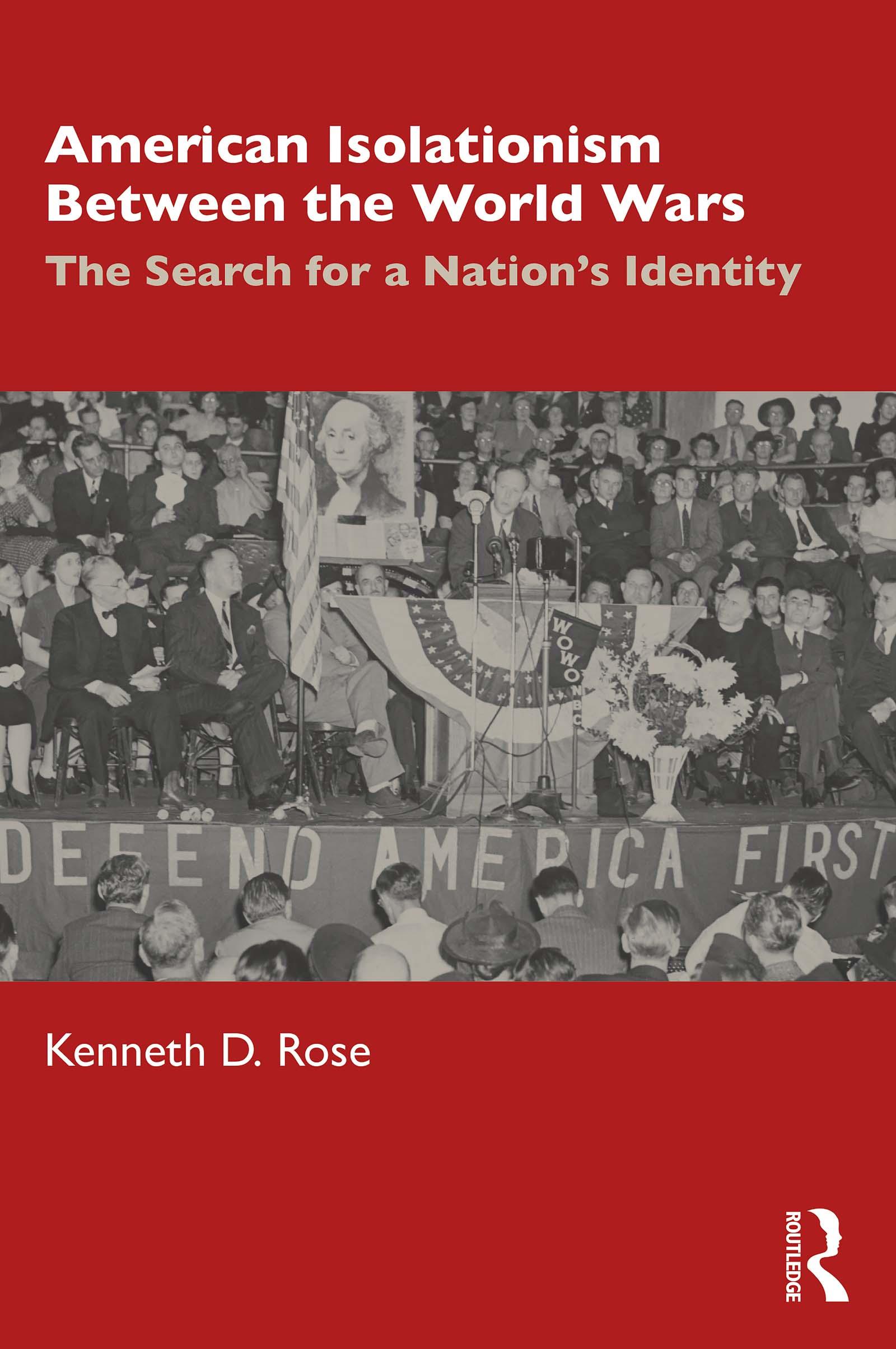
American Isolationism Between the World Wars: The Search for a Nation's Identity examines the theory of isolationism in America between the world wars, arguing that it is an ideal that has dominated the Republic since its founding.
During the interwar period, isolationists could be found among Republicans and Democrats, Catholics and Protestants, pacifists and militarists, rich and poor. While the dominant historical assessment of isolationism — that it was "provincial" and "short-sighted" — will be examined, this book argues that American isolationism between 1919 and the mid-1930s was a rational foreign policy simply because the European reversion back to politics as usual insured that the continent would remain unstable. Drawing on a wide range of newspaper and journal articles, biographies, congressional hearings, personal papers, and numerous secondary sources, Kenneth D. Rose suggests the time has come for a paradigm shift in how American isolationism is viewed. The text also offers a reflection on isolationism since the end of World War II, particularly the nature of isolationism during the Trump era.
This book will be of interest to students and scholars of U.S. Foreign Relations and twentieth-century American history.
Pay easily by card, Klarna, Apple Pay or Google Pay. Not happy? You always have a 14-day money-back guarantee. Read more in our terms. If you have any questions, email us at hello@memmo.org.
Memmo makes studying easier – wherever you are in the world. We bring your course books and smart study tools together in one place: summaries, quizzes, podcasts and flashcards. Plus Ted, your study buddy who answers anything you wonder. Over 50,000 students already study here – built to help you learn faster and stress less.