
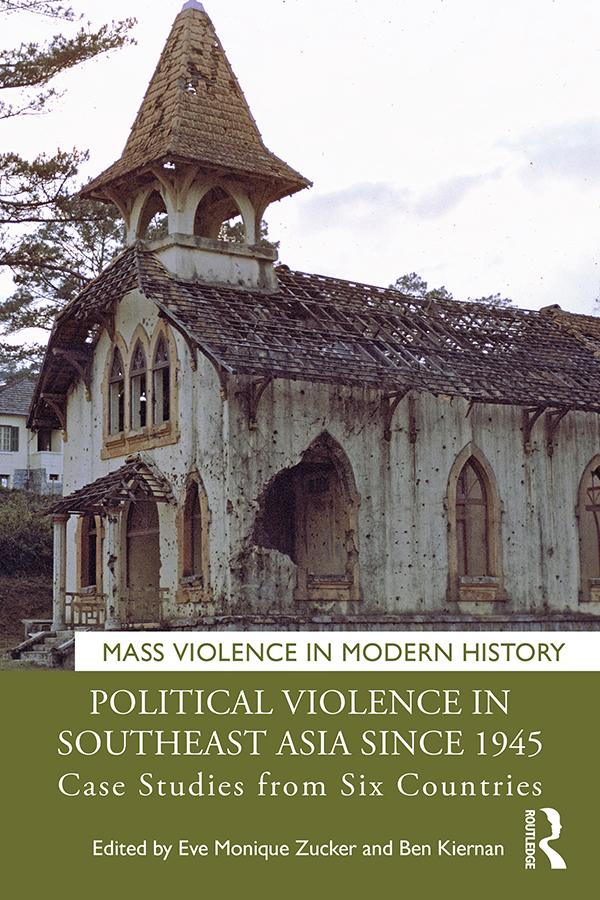
This book examines postwar waves of political violence that affected six Southeast Asian countries – Indonesia, Burma/Myanmar, Cambodia, Thailand, the Philippines, and Vietnam – from the wars of independence in the mid-twentieth century to the recent Rohingya genocide.
Featuring cases not previously explored, and offering fresh insights into more familiar cases, the chapters cover a range of topics including the technologies of violence, the politics of fear, inclusion and exclusion, justice and ethics, repetitions of mass violence events, impunity, law, ethnic and racial killings, crimes against humanity, and genocide. The book delves into the violence that has reverberated across the region spurred by local and global politics and ideologies, through the examination of such themes as identity ascription and formation, existential and ontological questions, collective memories of violence, and social and political transformation. In our current era of global social and political transition, the volume’s case studies provide an opportunity to consider potential repercussions and outcomes of various political and ideological positionings and policies.
Enhancing our understanding of the technologies, techniques, motives, causes, consequences, and connections between violent episodes in the Southeast Asian cases, the book raises key questions for the study of mass violence worldwide.
Pay easily by card, Klarna, Apple Pay or Google Pay. Not happy? You always have a 14-day money-back guarantee. Read more in our terms. If you have any questions, email us at hello@memmo.org.
Memmo makes studying easier – wherever you are in the world. We bring your course books and smart study tools together in one place: summaries, quizzes, podcasts and flashcards. Plus Ted, your study buddy who answers anything you wonder. Over 50,000 students already study here – built to help you learn faster and stress less.