
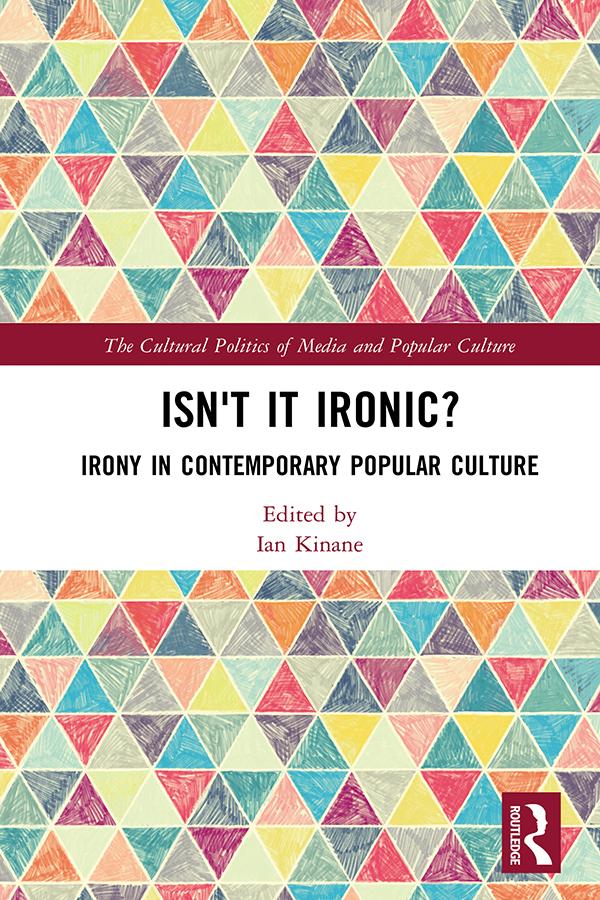
This volume addresses the relationship between irony and popular culture and the role of the consumer in determining and disseminating meaning. Arguing that in a cultural climate largely characterised by fractious communications and perilous linguistic exchanges, the very role of irony in popular culture needs to come under greater scrutiny, it focuses on the many uses, abuses, and misunderstandings of irony in contemporary popular culture, and explores the troubling political populism at the heart of many supposedly satirical and (apparently) non-satirical texts. In an environment in which irony is frequently claimed as a defence for material and behaviour judged controversial, how do we, as a society entrenched in forms of popular culture and media, interpret work that is intended as satire but which reads as unironic? How do we accurately decode works of popular film, literature, television, music, and other cultural forms which sell themselves as bitingly ironic commentaries on current society, but which are also problematic celebrations of the very issues they purport to critique? And what happens when texts intended and received in one manner are themselves ironically recontextualised in another? Bringing together studies across a range of cultural texts including popular music, film and television, Isn’t it Ironic? will appeal to scholars of the social sciences and humanities with interests in cultural studies, media studies, popular culture, literary studies and sociology.
Pay easily by card, Klarna, Apple Pay or Google Pay. Not happy? You always have a 14-day money-back guarantee. Read more in our terms. If you have any questions, email us at hello@memmo.org.
Memmo makes studying easier – wherever you are in the world. We bring your course books and smart study tools together in one place: summaries, quizzes, podcasts and flashcards. Plus Ted, your study buddy who answers anything you wonder. Over 50,000 students already study here – built to help you learn faster and stress less.