
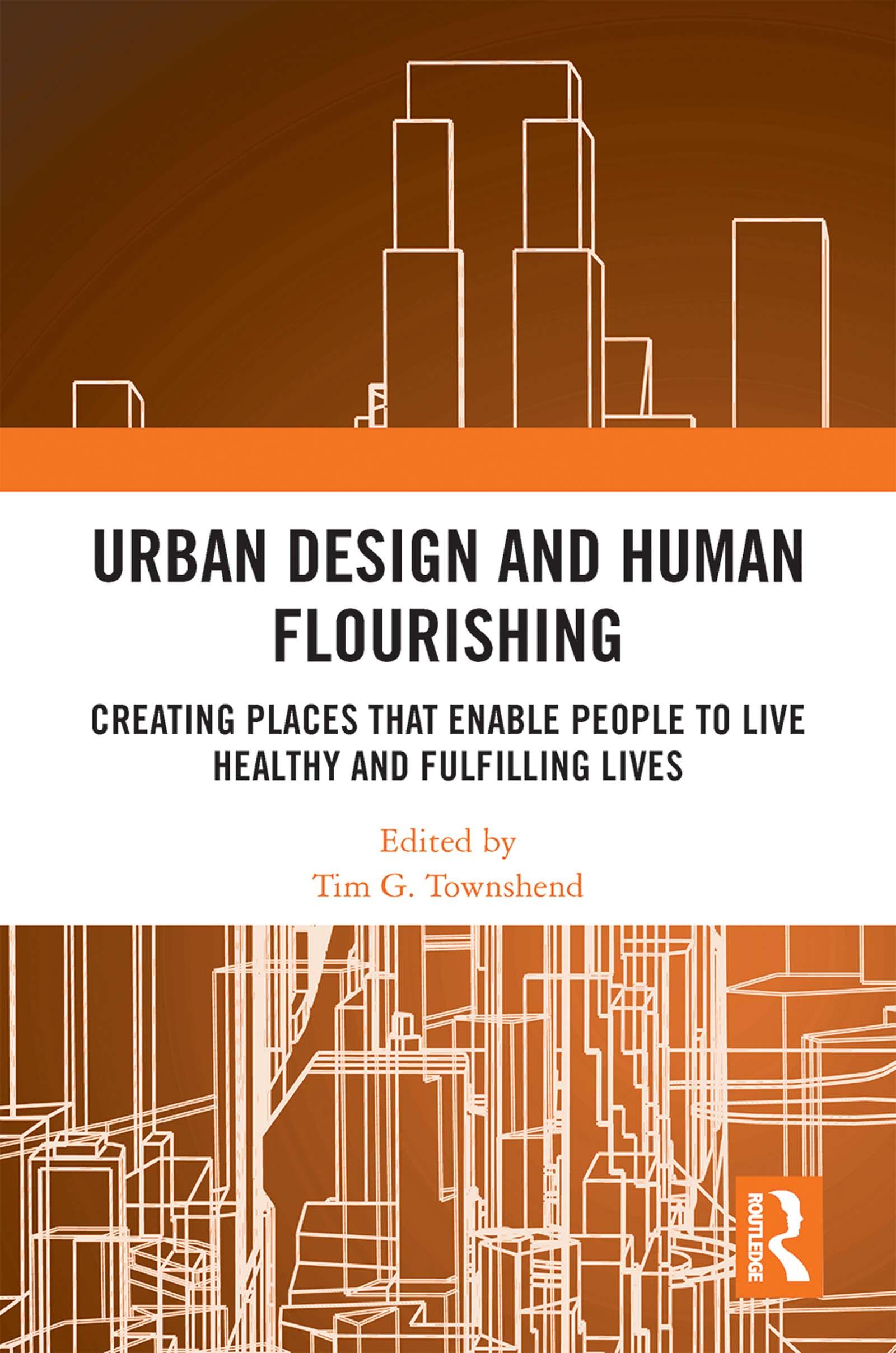
The built environment influences health and well-being in a myriad of ways. Some neighbourhoods are plagued by busy roads that are a constant source of danger, noise, and air pollution. In some cities there is inadequate green space for children to play and socialise safely. Yet, this book argues, it does not have to be this way. With focus on human health, well-being, and flourishing, this book explores the ways in which people’s lives are impacted by the built environment and how we can create, adapt, and design healthy and inclusive places.
The volume explores the relationship between urban design and human flourishing and initiates broad discussions around relevant questions such as ‘What is a healthy place?’, ‘What influences our perceptions of built environment more? Is it our age or our cultural background?’. The book includes six chapters from internationally renowned authors who attempt to unpack some of the key aspects that urban designers need to consider in order to create places that enable – rather than constrain – individuals and communities to live rich fulfilling lives.
This book will be of great value to students, scholars, and researchers interested in urban design, planning, and in exploring how built environment impacts health and happiness.
The chapters in this book were originally published as a special issue of the Journal of Urban Design.
Pay easily by card, Klarna, Apple Pay or Google Pay. Not happy? You always have a 14-day money-back guarantee. Read more in our terms. If you have any questions, email us at hello@memmo.org.
Memmo makes studying easier – wherever you are in the world. We bring your course books and smart study tools together in one place: summaries, quizzes, podcasts and flashcards. Plus Ted, your study buddy who answers anything you wonder. Over 75,000 students already study here – built to help you learn faster and stress less.