
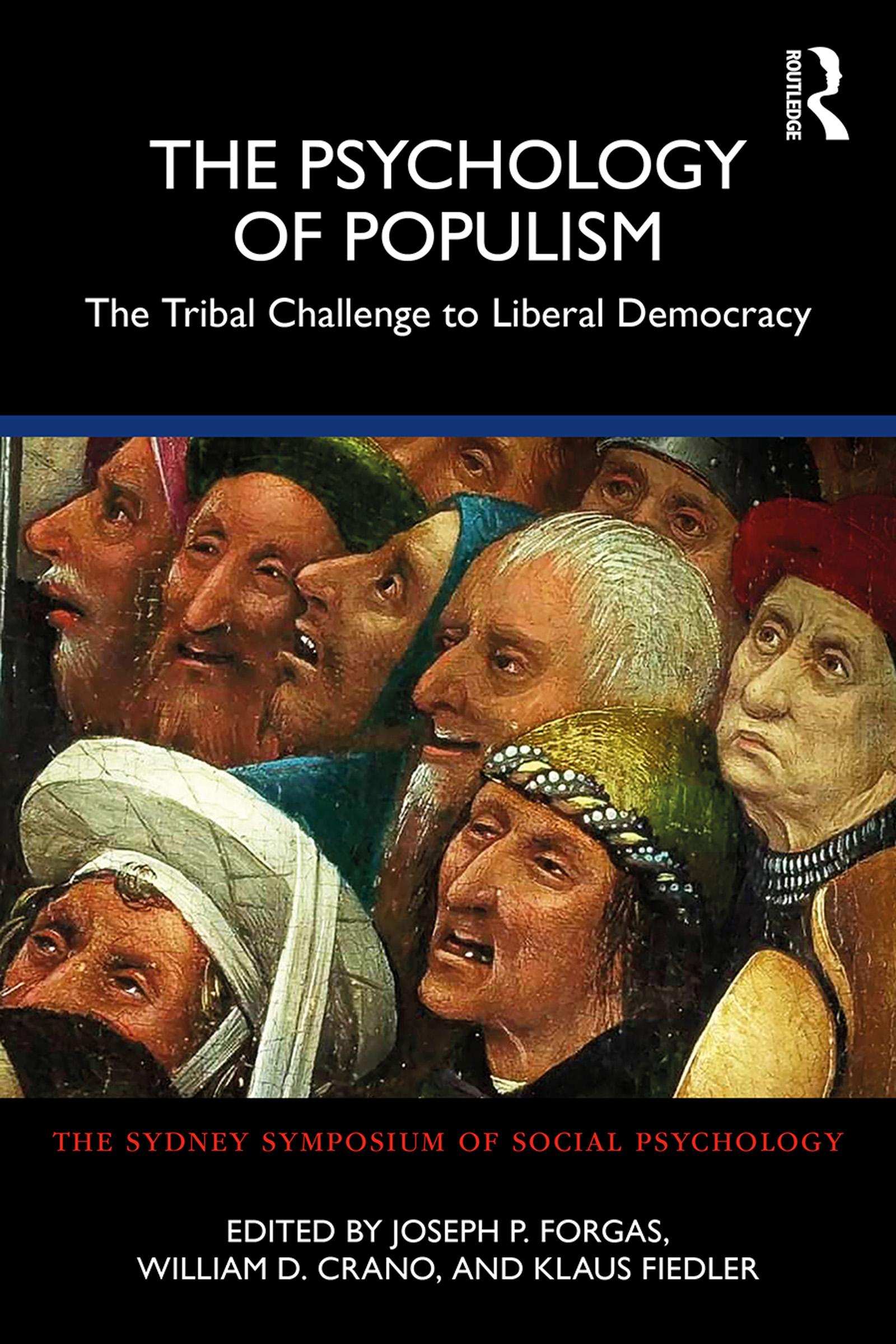
The recent rise of populist politics represent a major challenge for liberal democracies. This important book explores the psychological reasons for the rise of populism, featuring contributions from leading international researchers in the fields of psychology and political science.
Unlike liberal democracy based on the Enlightenment values of individual freedom, autonomy and rationality, both right-wing and left-wing populism offer collectivist, autocratic formulations reminiscent of the evolutionary history and tribal instincts of our species. The book offers a comprehensive overview of the psychology of populism, covering such phenomena as identity seeking, anger and fear, collective narcissism, grievance, norms, perceptions of powerlessness and deprivation, authoritarianism, nationalism, radicalism, propaganda and persuasion, ethnocentrism, xenophobia and the effects of globalization.
The book is divided into four parts. Part I deals with the motivational and emotional factors that attract voters to populist causes, and the human needs and values that populist movements satisfy. Part II analyzes the cognitive features of populist appeals, especially their emphasis on simplicity, epistemic certainty and moral absolutism. Part III turns to one of the defining features of populism: its offer of a powerful tribal identity and collectivist ideology that provide meaning and personal significance to its followers. Finally, in Part IV, the propaganda tactics used by populist movements are analysed, including the role of charismatic leadership, authoritarianism, and nationalism and the use of conspiracy narratives and persuasive strategies.
This is fascinating reading on a highly topical issue. The book will be of interest to students, researchers, and applied professionals in all areas of psychology and the social sciences as a textbook or reference book, and to anyone interested in the global rise of populism.
Please follow this link for an insightful interview by one of the editors of the book - Joseph P. Forgas: https://www.routledge.com/blog/article/editor-interview-the-psychology-of-populism
We have also created a short promotional video for the book here - https://www.youtube.com/watch?v=iK1BEF8WyMA.
Pay easily by card, Klarna, Apple Pay or Google Pay. Not happy? You always have a 14-day money-back guarantee. Read more in our terms. If you have any questions, email us at hello@memmo.org.
Memmo makes studying easier – wherever you are in the world. We bring your course books and smart study tools together in one place: summaries, quizzes, podcasts and flashcards. Plus Ted, your study buddy who answers anything you wonder. Over 50,000 students already study here – built to help you learn faster and stress less.