
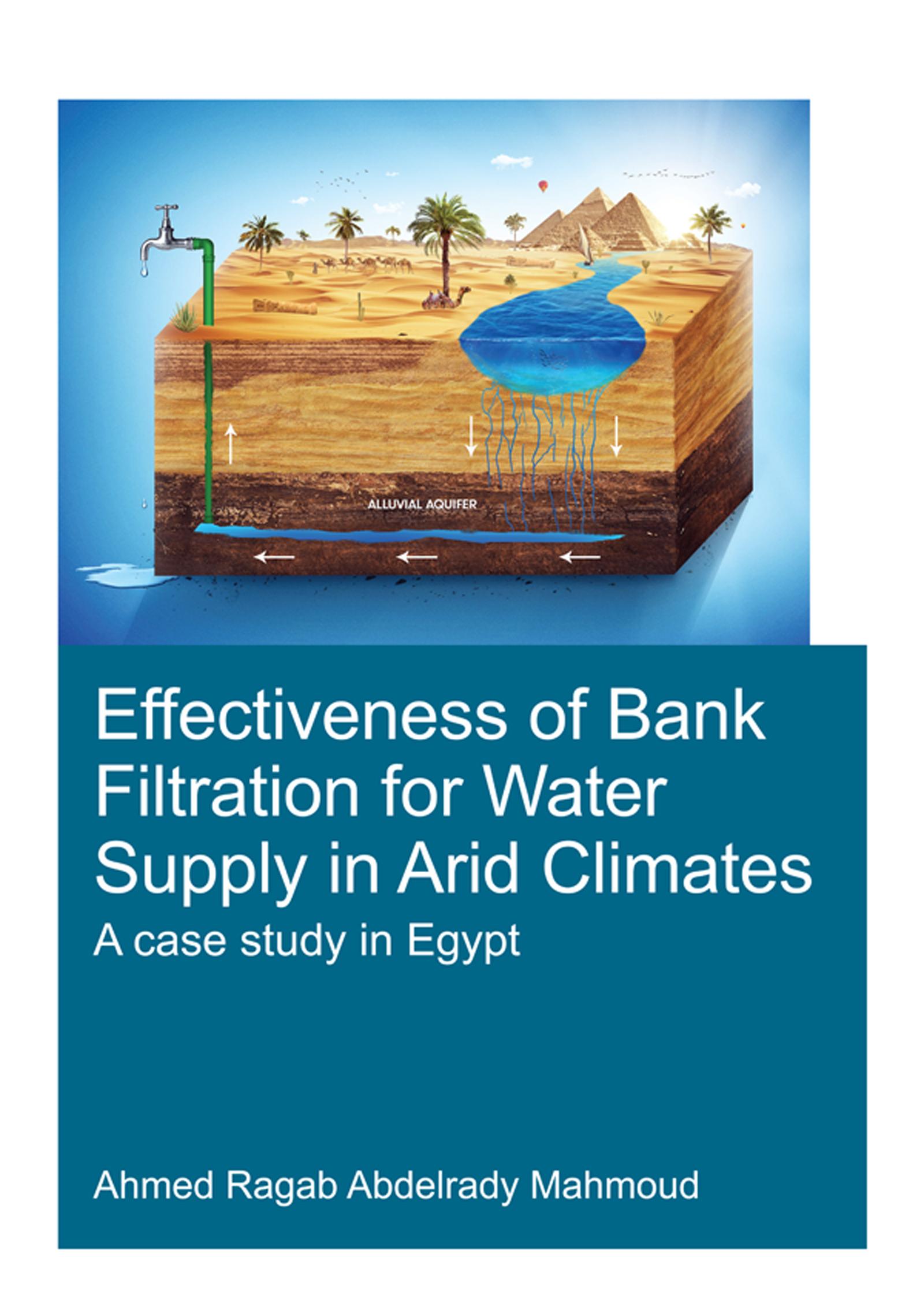
In many developing countries, water demand is increasing while surface- and groundwater resources are threatened by pollution and overexploitation. Hence, a more sustainable approach to water resources management and water treatment is required. In this capacity, bank filtration is a natural treatment process that makes use of the storage and contaminant attenuation capacity of natural soil/rock. However, BF is site-specific and a significant knowledge gap exists regarding the design and management of bank filtration systems, particularly in developing countries. This research aimed to address these gaps and contribute to the transfer of bank filtration to developing countries. This study comprised both column and batch laboratory-scale experiments to determine the effect of environmental variables such as temperature, raw water organic composition and redox conditions on the removal of chemical pollutants such as organic matter, micro-pollutants and heavy metals as well as the mobility of iron, manganese and arsenic under anaerobic conditions. Ultimately, the effectiveness of BF for supplying high drinking water quality was assessed in a case study in Egypt. The study showed that more than 80% of biodegradable organic matter was removed during infiltration at temperatures between 20 and 30 °C. However, humic compounds enriched during BF, required post-treatment. Moreover, high humic content of infiltrating water reduced the removal of heavy metal and promoted the release of metal (loids) into the infiltrating water, rendering it more feasible to install BF wells within surface water systems with low levels of organic matter. Moderately-hydrophobic organic micropollutants were most persistent and required infiltration times longer than 30 days for complete elimination even at high temperatures (>20 °C). Finally, design parameters such as the number of infiltration wells should be configured to minimise the proportion of polluted groundwater in the pumped water. Overall, this study provides insight into the effectiveness of BF in removing chemical pollutants from surface water and proposes guidelines for the successful application of BF in developing countries where arid conditions and high temperatures prevail.
Pay easily by card, Klarna, Apple Pay or Google Pay. Not happy? You always have a 14-day money-back guarantee. Read more in our terms. If you have any questions, email us at hello@memmo.org.
Memmo makes studying easier – wherever you are in the world. We bring your course books and smart study tools together in one place: summaries, quizzes, podcasts and flashcards. Plus Ted, your study buddy who answers anything you wonder. Over 50,000 students already study here – built to help you learn faster and stress less.