
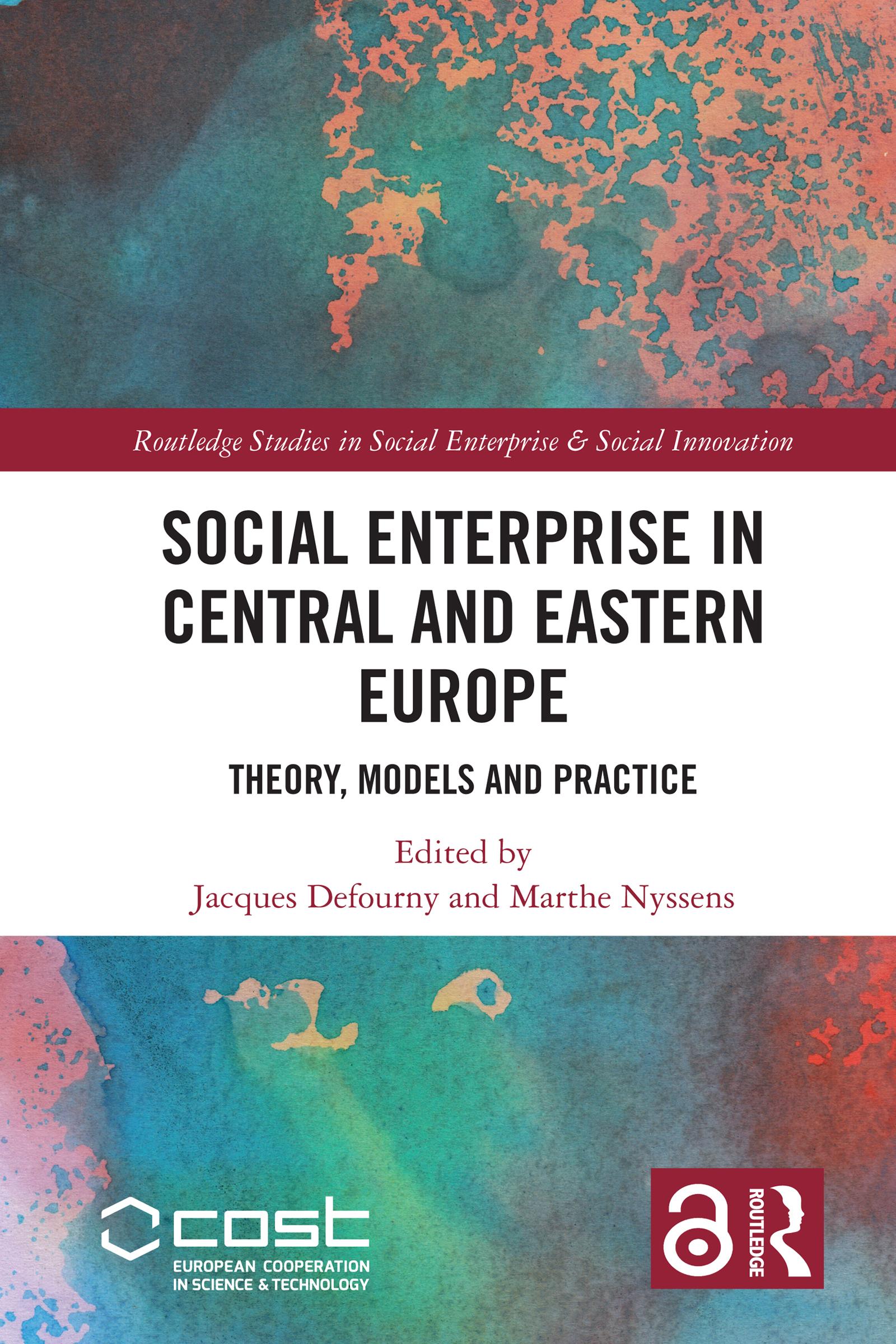
In the last two decades, the quest for a widely accepted definition of social enterprise has been a central issue in a great number of publications.
The main objective of the ICSEM Project (on which this book is based) was to show that the social enterprise field would benefit much more from linking conceptualisation efforts to the huge diversity of social enterprises than from an additional and ambitious attempt at providing an encompassing definition. Starting from a hypothesis that could be termed "the impossibility of a unified definition", the ICSEM research strategy relied on bottom-up approaches to capture the social enterprise phenomenon in its local and national contexts. This strategy made it possible to take into account and give legitimacy to locally embedded approaches, while simultaneously allowing for the identification of major social enterprise models to delineate the field on common grounds at the international level.
Social Enterprise in Central and Eastern Europe – the last volume in a series of four ICSEM-based books on social enterprise worldwide — will serve as a key reference and resource for teachers, researchers, students, experts, policy makers, journalists and others who want to acquire a broad understanding of the social enterprise and social entrepreneurship phenomena as they emerge and develop in this region.
Pay easily by card, Klarna, Apple Pay or Google Pay. Not happy? You always have a 14-day money-back guarantee. Read more in our terms. If you have any questions, email us at hello@memmo.org.
Memmo makes studying easier – wherever you are in the world. We bring your course books and smart study tools together in one place: summaries, quizzes, podcasts and flashcards. Plus Ted, your study buddy who answers anything you wonder. Over 50,000 students already study here – built to help you learn faster and stress less.