
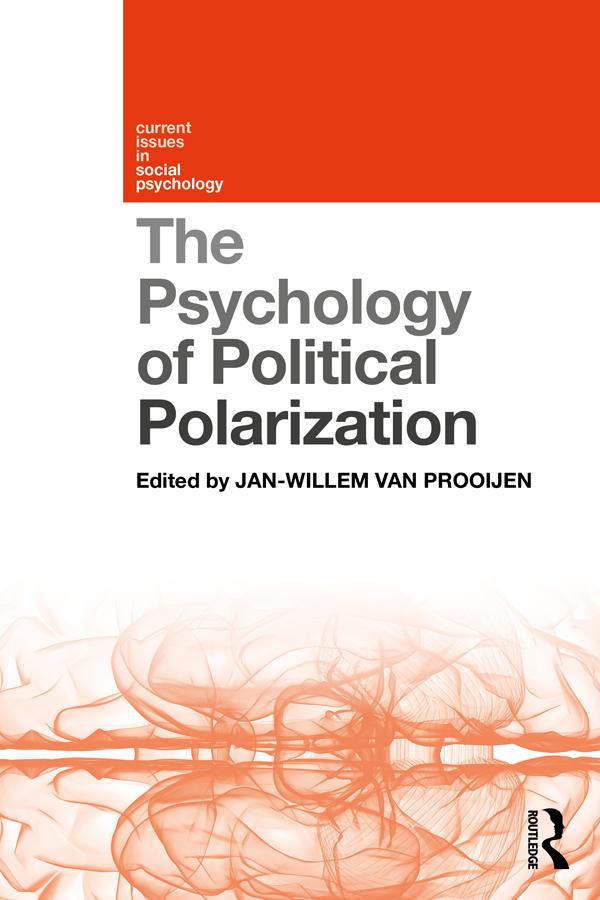
The Psychology of Political Polarization was inspired by the notion that, to understand the momentum of radical political movements, it is important to understand the attitudes of individual citizens who support such movements.
Leading political psychologists have contributed to this important book, in which they share their latest ideas about political polarization – a complex phenomenon that cannot be traced back to a single cause, and that is associated with intolerance, overconfidence, and irrational beliefs. The book explores the basis of political polarization as being how citizens think and feel about people with a different worldview, how they perceive minority groups, and how much they trust leaders and experts on pressing societal issues such as climate change, health, international relations, and poverty. The chapters are organized into two sections that examine what psychological processes and what social factors contribute to polarization among regular citizens. The book also describes practical strategies and interventions to depolarize people.
The book offers a state-of-the-art introduction to the psychology of political polarization which will appeal to the academic market and political professionals.
Pay easily by card, Klarna, Apple Pay or Google Pay. Not happy? You always have a 14-day money-back guarantee. Read more in our terms. If you have any questions, email us at hello@memmo.org.
Memmo makes studying easier – wherever you are in the world. We bring your course books and smart study tools together in one place: summaries, quizzes, podcasts and flashcards. Plus Ted, your study buddy who answers anything you wonder. Over 50,000 students already study here – built to help you learn faster and stress less.