
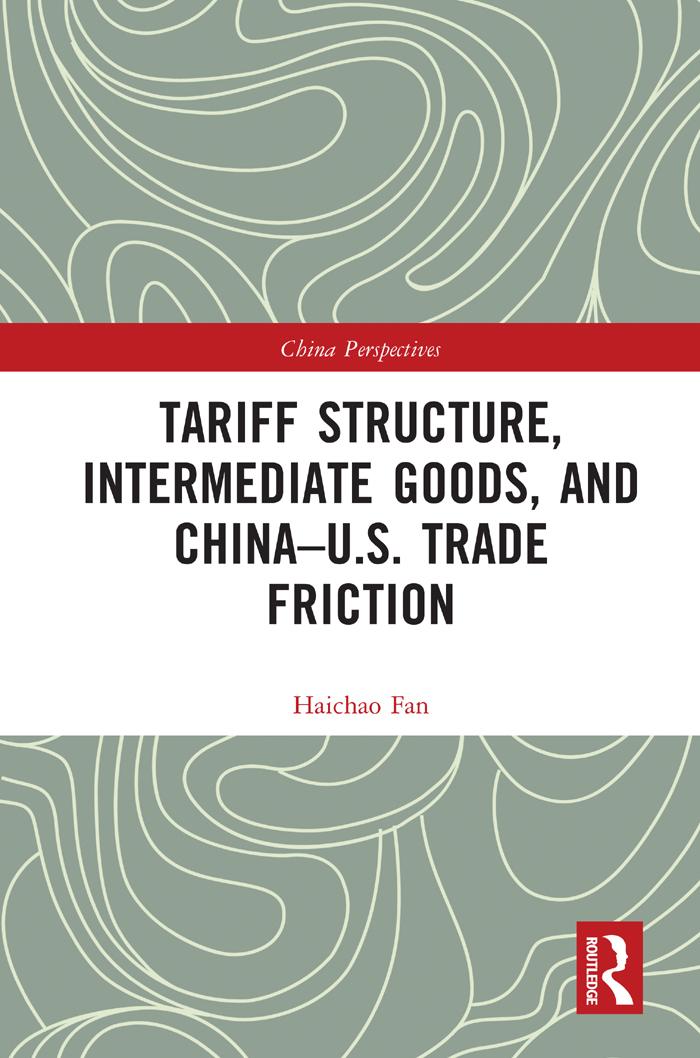
Focusing on the interconnection of tariff structure, international trade and welfare evaluation, the book investigates the characteristics of tariff structures of China and the U.S. in recent years and measures the impact of the Sino–U.S. trade friction that started in 2018. The first part of the book discusses levels and evolution trends of tariff systems of China and the U.S. from 2000 to 2014 and makes a comparison between the two countries' tariff structures. The second part centers on the Sino–U.S. trade friction in 2018, analyzing its development, overall impact on welfare, and relevant impact mechanisms. The author draws on the quantitative analysis method currently prevailing in the field of international trade, taking global value chains, intermediate goods, and variable markup into consideration. In contrast to the research conclusion applying standard trade theory, the result indicates that either unilateral imposition of additional tariffs or bilateral tariff friction will give rise to the deteriorated welfare level of both countries. The book will appeal to academics and policy makers interested in international trade, China–U.S. relation and the trade friction.
Pay easily by card, Klarna, Apple Pay or Google Pay. Not happy? You always have a 14-day money-back guarantee. Read more in our terms. If you have any questions, email us at hello@memmo.org.
Memmo makes studying easier – wherever you are in the world. We bring your course books and smart study tools together in one place: summaries, quizzes, podcasts and flashcards. Plus Ted, your study buddy who answers anything you wonder. Over 50,000 students already study here – built to help you learn faster and stress less.