
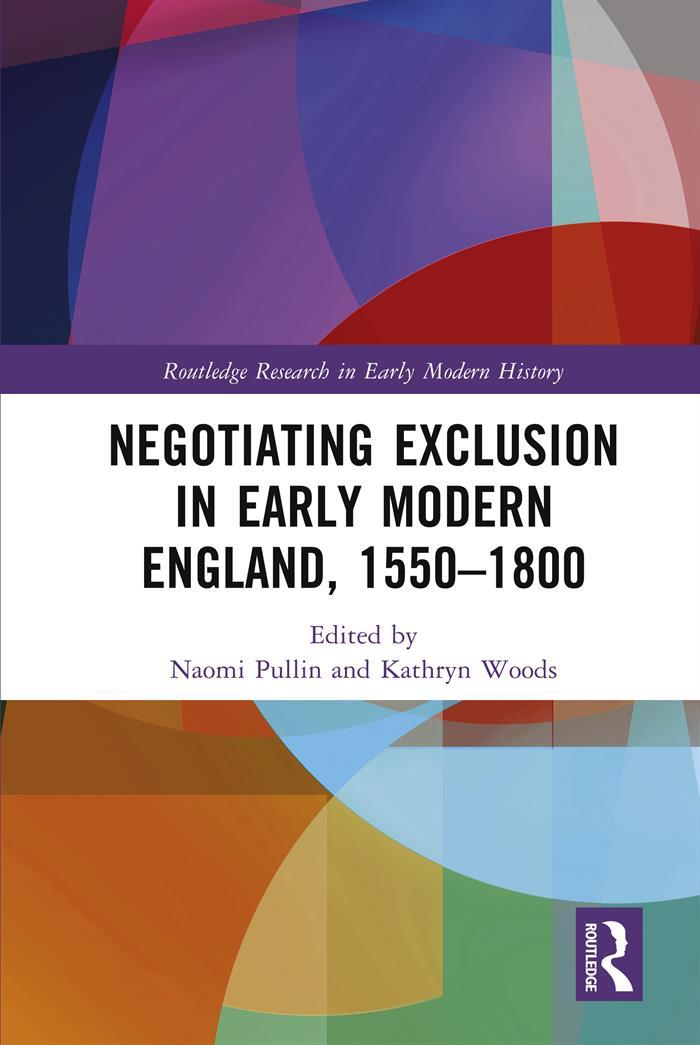
This edited volume examines how individuals and communities defined and negotiated the boundaries between inclusion and exclusion in England between 1550 and 1800. It aims to uncover how men, women, and children from a wide range of social and religious backgrounds experienced and enacted exclusion in their everyday lives.
Negotiating Exclusion takes a fresh and challenging look at early modern England’s distinctive cultures of exclusion under three broad themes: exclusion and social relations; the boundaries of community; and exclusions in ritual, law, and bureaucracy. The volume shows that exclusion was a central feature of everyday life and social relationships in this period. Its chapters also offer new insights into how the history of exclusion can be usefully investigated through different sources and innovative methodologies, and in relation to the experiences of people not traditionally defined as "marginal."
The book includes a comprehensive overview of the historiography of exclusion and chapters from leading scholars. This makes it an ideal introduction to exclusion for students and researchers of early modern English and European history. Due to its strong theoretical underpinnings, it will also appeal to modern historians and sociologists interested in themes of identity, inclusion, exclusion, and community.
Pay easily by card, Klarna, Apple Pay or Google Pay. Not happy? You always have a 14-day money-back guarantee. Read more in our terms. If you have any questions, email us at hello@memmo.org.
Memmo makes studying easier – wherever you are in the world. We bring your course books and smart study tools together in one place: summaries, quizzes, podcasts and flashcards. Plus Ted, your study buddy who answers anything you wonder. Over 50,000 students already study here – built to help you learn faster and stress less.