
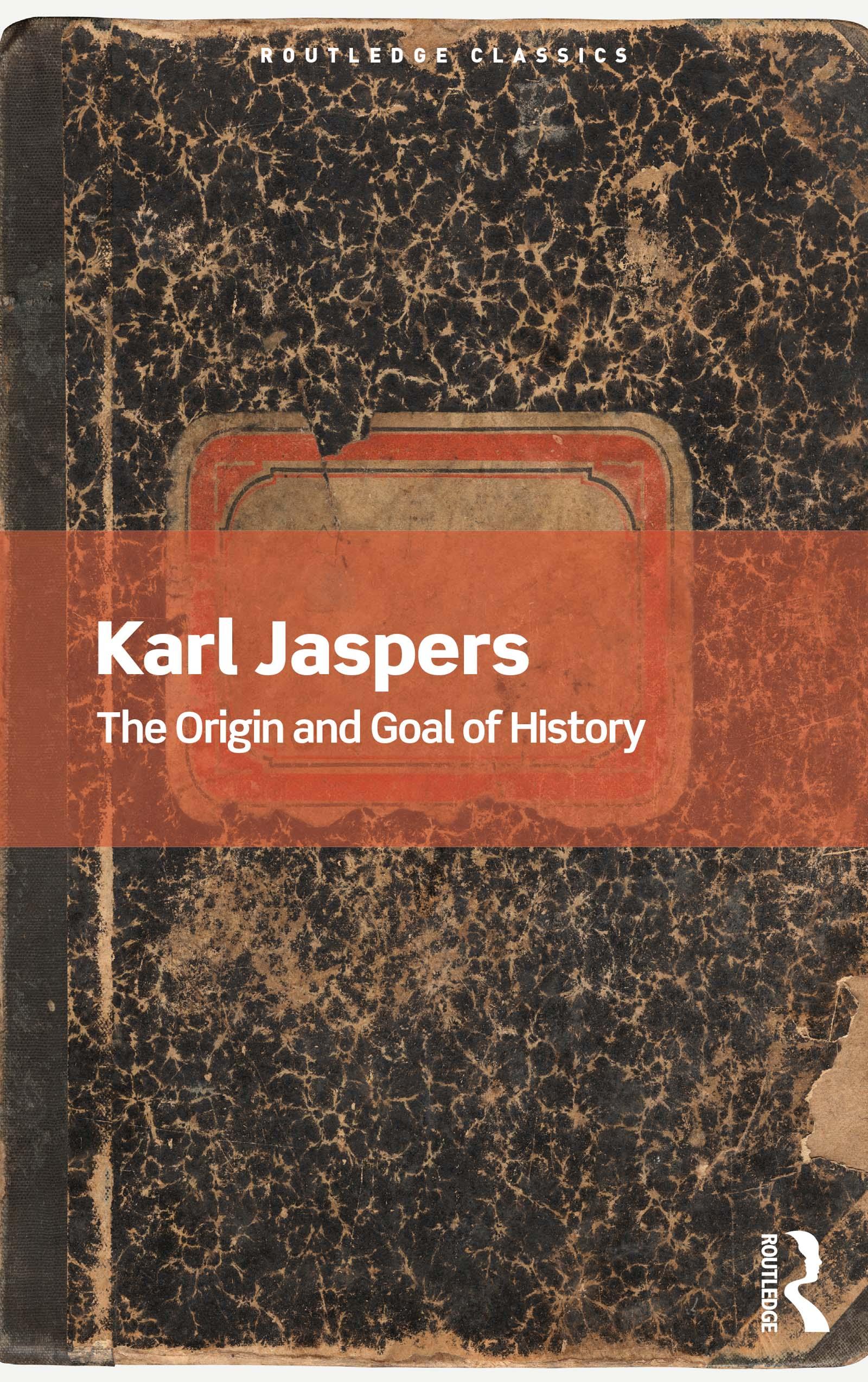
Karl Jaspers (1883–1969) was a German psychiatrist and philosopher and one of the most original European thinkers of the twentieth century. As a major exponent of existentialism in Germany, he had a strong influence on modern theology, psychiatry and philosophy. He was Hannah Arendt’s supervisor before her emigration to the United States in the 1930s and himself experienced the consequences of Nazi persecution. He was removed from his position at the University of Heidelberg in 1937, due to his wife being Jewish.
Published in 1949, the year in which the Federal Republic of Germany was founded, The Origin and Goal of History is a vitally important book. It is renowned for Jaspers' theory of an 'Axial Age', running from the 8th to the 3rd century BCE. Jaspers argues that this period witnessed a remarkable flowering of new ways of thinking that appeared in Persia, India, China and the Greco-Roman world, in striking parallel development but without any obvious direct cultural contact between them. Jaspers identifies key thinkers from this age, including Confucius, Buddha, Zarathustra, Homer and Plato, who had a profound influence on the trajectory of future philosophies and religions. For Jaspers, crucially, it is here that we see the flowering of diverse philosophical beliefs such as scepticism, materialism, sophism, nihilism, and debates about good and evil, which taken together demonstrate human beings' shared ability to engage with universal, humanistic questions as opposed to those mired in nationality or authoritarianism.
At a deeper level, The Origin and Goal of History provides a crucial philosophical framework for the liberal renewal of German intellectual life after 1945, and indeed of European intellectual life more widely, as a shattered continent attempted to find answers to what had happened in the preceding years.
This Routledge Classics edition includes a new Foreword by Christopher Thornhill.
Pay easily by card, Klarna, Apple Pay or Google Pay. Not happy? You always have a 14-day money-back guarantee. Read more in our terms. If you have any questions, email us at hello@memmo.org.
Memmo makes studying easier – wherever you are in the world. We bring your course books and smart study tools together in one place: summaries, quizzes, podcasts and flashcards. Plus Ted, your study buddy who answers anything you wonder. Over 50,000 students already study here – built to help you learn faster and stress less.