
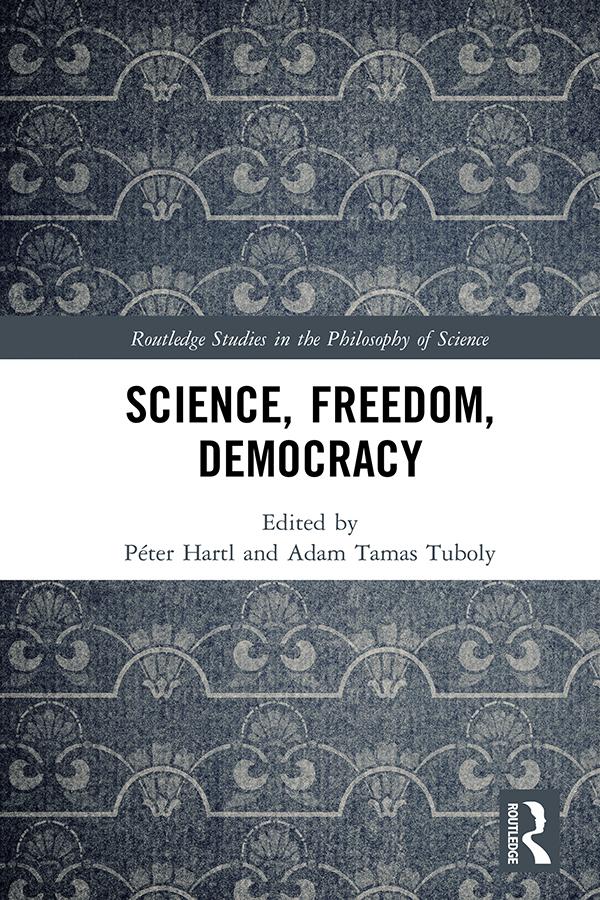
This book addresses the complex relationship between the values of liberal democracy and the values associated with scientific research. The chapters explore how these values mutually reinforce or conflict with one another, in both historical and contemporary contexts.
The contributors utilize various approaches to address this timely subject, including historical studies, philosophical analysis, and sociological case studies. The chapters cover a range of topics including academic freedom and autonomy, public control of science, the relationship between scientific pluralism and deliberative democracy, lay-expert relations in a democracy, and the threat of populism and autocracy to scientific inquiry. Taken together the essays demonstrate how democratic values and the epistemic and non-epistemic values associated with science are interconnected.
Science, Freedom, Democracy will be of interest to scholars and graduate students working in philosophy of science, history of philosophy, sociology of science, political philosophy, and epistemology.
Pay easily by card, Klarna, Apple Pay or Google Pay. Not happy? You always have a 14-day money-back guarantee. Read more in our terms. If you have any questions, email us at hello@memmo.org.
Memmo makes studying easier – wherever you are in the world. We bring your course books and smart study tools together in one place: summaries, quizzes, podcasts and flashcards. Plus Ted, your study buddy who answers anything you wonder. Over 50,000 students already study here – built to help you learn faster and stress less.