
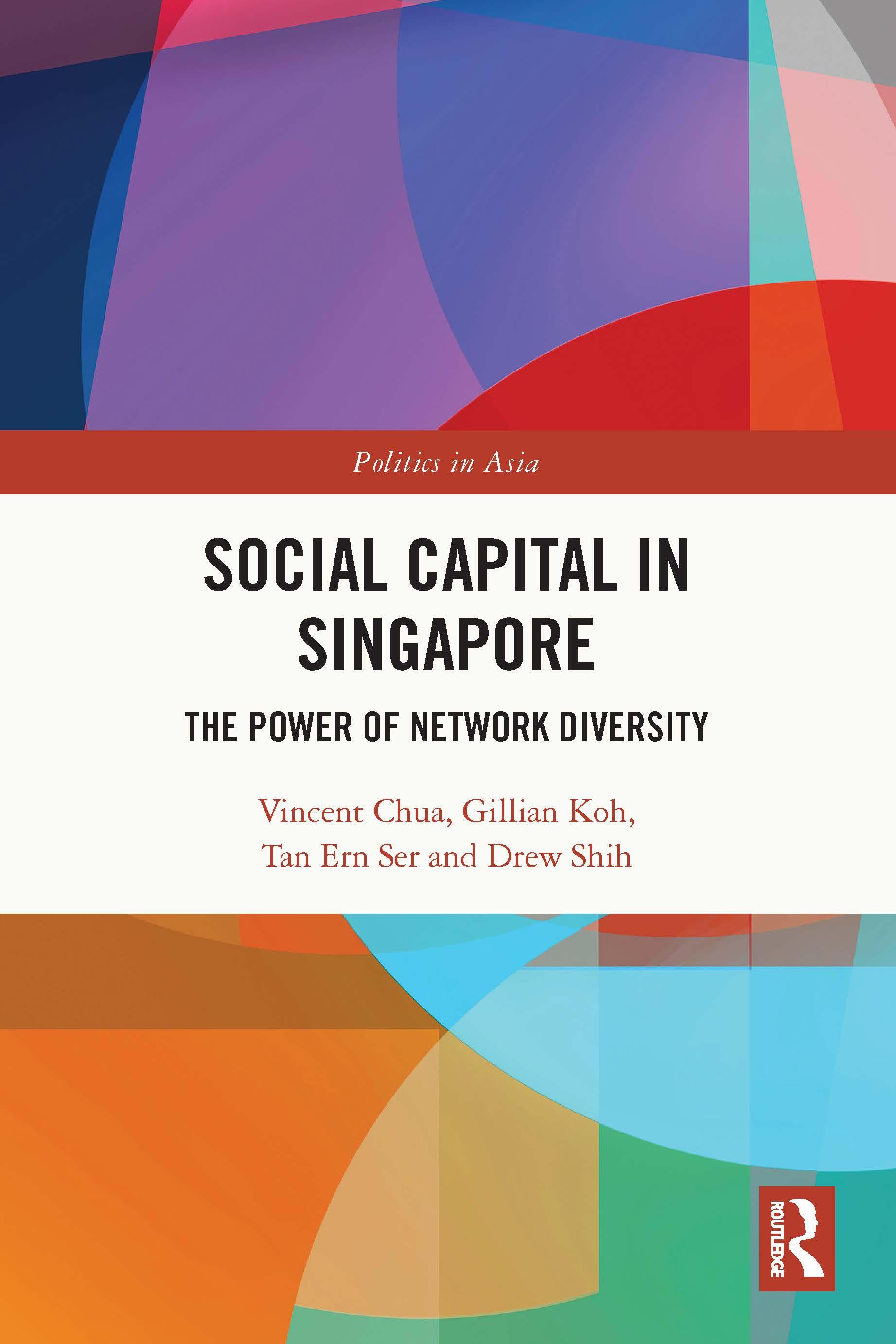
How can social cohesion be achieved in a meritocratic and multicultural global city-state?
Meritocracy poses a paradox: On one hand, it integrates individuals through frameworks of equal treatment, equal justice and opportunity regardless of race, language or religion. On the other hand, individuals are then segregating through academic sorting, they are rewarded based on credentials and performance which also results in elite identification and bonding. After a generation, without mitigation action, social stratification can result. Distinctive circles differentiating social elites from non-elites, the professional classes from non-professional classes emerge.
The remedy the authors propose is network diversity which is the organic forming of ties across class and other social boundaries built on deliberate policies, programmes and platforms designed to facilitate that. This social mixing, forged in social infrastructure such as schools, workplaces, and voluntary associations pays off by producing the collective goods of national identity and trust. This hypothesis has been tested in the case of Singapore society and the empirical results from the research on the power of network diversity and bridging social capital are found in this volume.
An insightful read for scholars and practitioners in public policy and social network analysis looking to understand the challenges faced by and the experiences that have emerged from the case of Singapore with its multicultural and cosmopolitan setting.
Pay easily by card, Klarna, Apple Pay or Google Pay. Not happy? You always have a 14-day money-back guarantee. Read more in our terms. If you have any questions, email us at hello@memmo.org.
Memmo makes studying easier – wherever you are in the world. We bring your course books and smart study tools together in one place: summaries, quizzes, podcasts and flashcards. Plus Ted, your study buddy who answers anything you wonder. Over 50,000 students already study here – built to help you learn faster and stress less.