
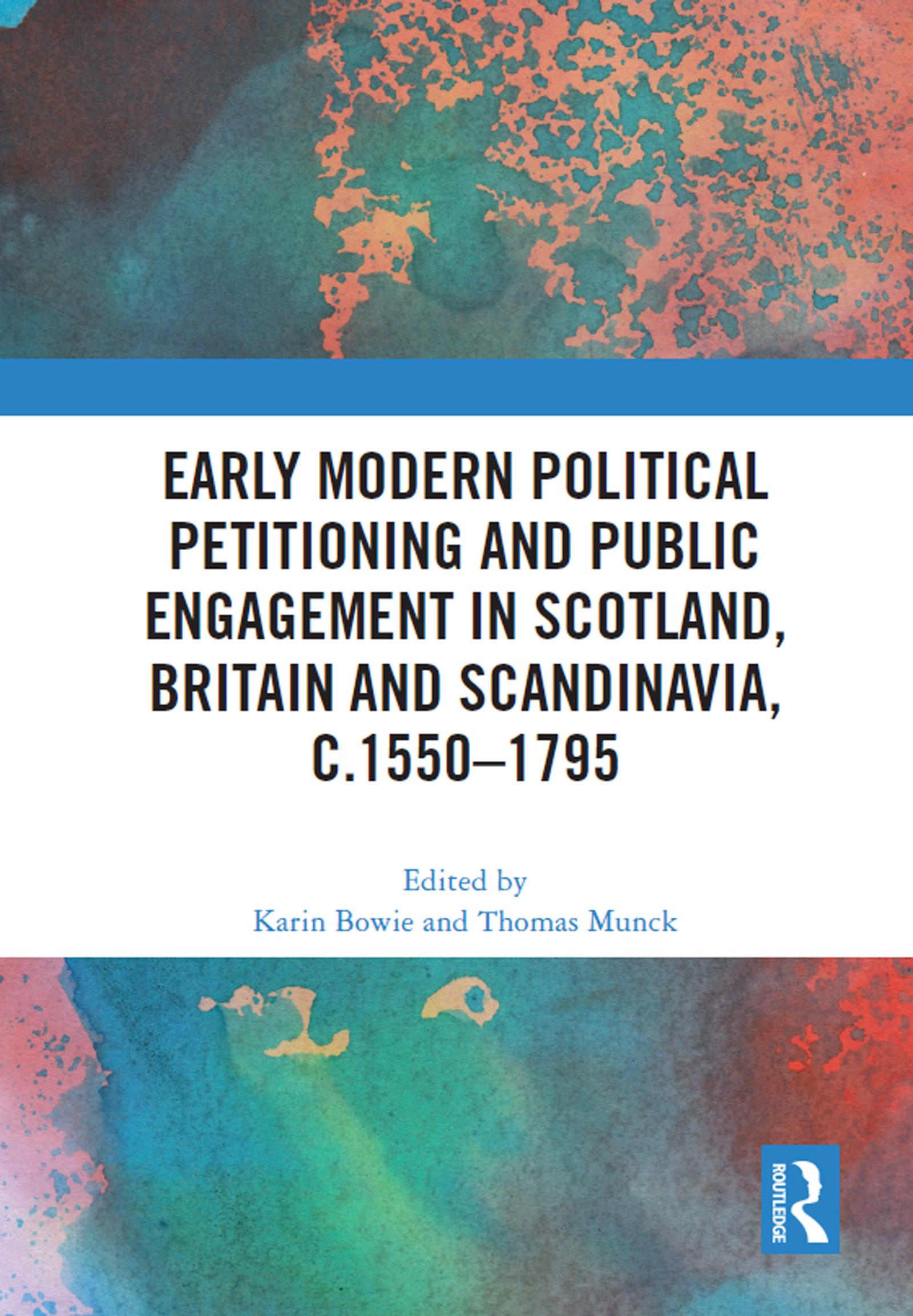
This book assesses the everyday use of petitions in administrative and judicial settings and contrasts these with more assertive forms of political petitioning addressed to assemblies or rulers.
A petition used to be a humble means of asking a favour, but in the early modern period, petitioning became more assertive and participative. This book shows how this contrasted to ordinary petitioning, often to the consternation of authorities. By evaluating petitioning practices in Scotland, England and Denmark, the book traces the boundaries between ordinary and adversarial petitioning and shows how non-elites could become involved in politics through petitioning. Also observed are the responses of authorities to participative petitions, including the suppression or forgetting of unwelcome petitions and consequent struggles to establish petitioning as a right rather than a privilege. Together the chapters in this book indicate the significance of collective petitioning in articulating early modern public opinion and shaping contemporary ideas about opinion at large.
The chapters in this book were originally published in the journal Parliaments, Estates & Representation.
Pay easily by card, Klarna, Apple Pay or Google Pay. Not happy? You always have a 14-day money-back guarantee. Read more in our terms. If you have any questions, email us at hello@memmo.org.
Memmo makes studying easier – wherever you are in the world. We bring your course books and smart study tools together in one place: summaries, quizzes, podcasts and flashcards. Plus Ted, your study buddy who answers anything you wonder. Over 50,000 students already study here – built to help you learn faster and stress less.