
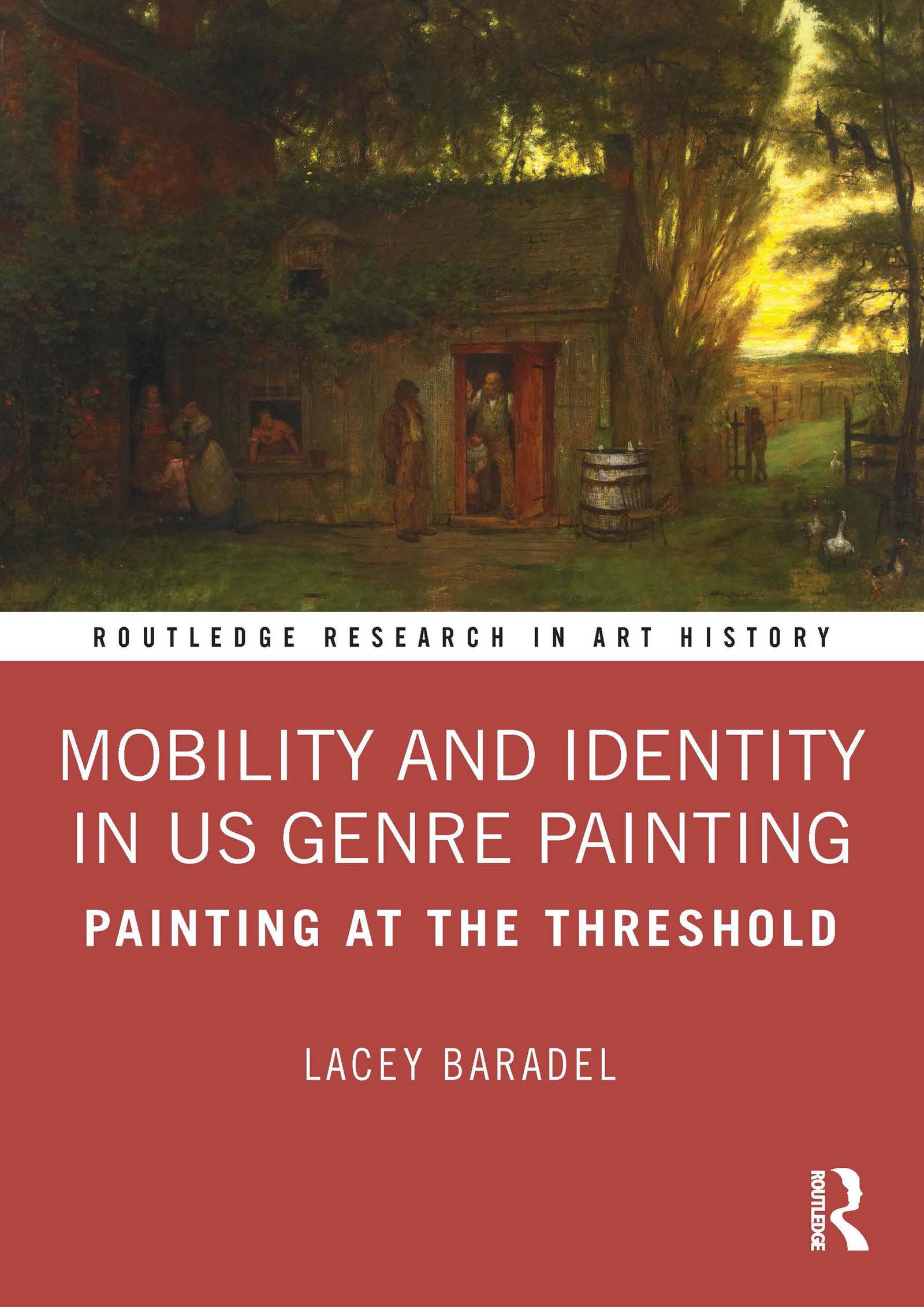
This book examines the portrayal of themes of boundary crossing, itinerancy, relocation, and displacement in US genre paintings during the second half of the long nineteenth century (c. 1860–1910).
Through four diachronic case studies, the book reveals how the high-stakes politics of mobility and identity during this period informed the production and reception of works of art by Eastman Johnson (1824–1906), Enoch Wood Perry, Jr. (1831–1915), Thomas Hovenden (1840–95), and John Sloan (1871–1951). It also complicates art history’s canonical understandings of genre painting as a category that seeks to reinforce social hierarchies and emphasize more rooted connections to place by, instead, privileging portrayals of social flux and geographic instability.
The book will be of interest to scholars working in art history, literature, American studies, and cultural geography.
Pay easily by card, Klarna, Apple Pay or Google Pay. Not happy? You always have a 14-day money-back guarantee. Read more in our terms. If you have any questions, email us at hello@memmo.org.
Memmo makes studying easier – wherever you are in the world. We bring your course books and smart study tools together in one place: summaries, quizzes, podcasts and flashcards. Plus Ted, your study buddy who answers anything you wonder. Over 50,000 students already study here – built to help you learn faster and stress less.