
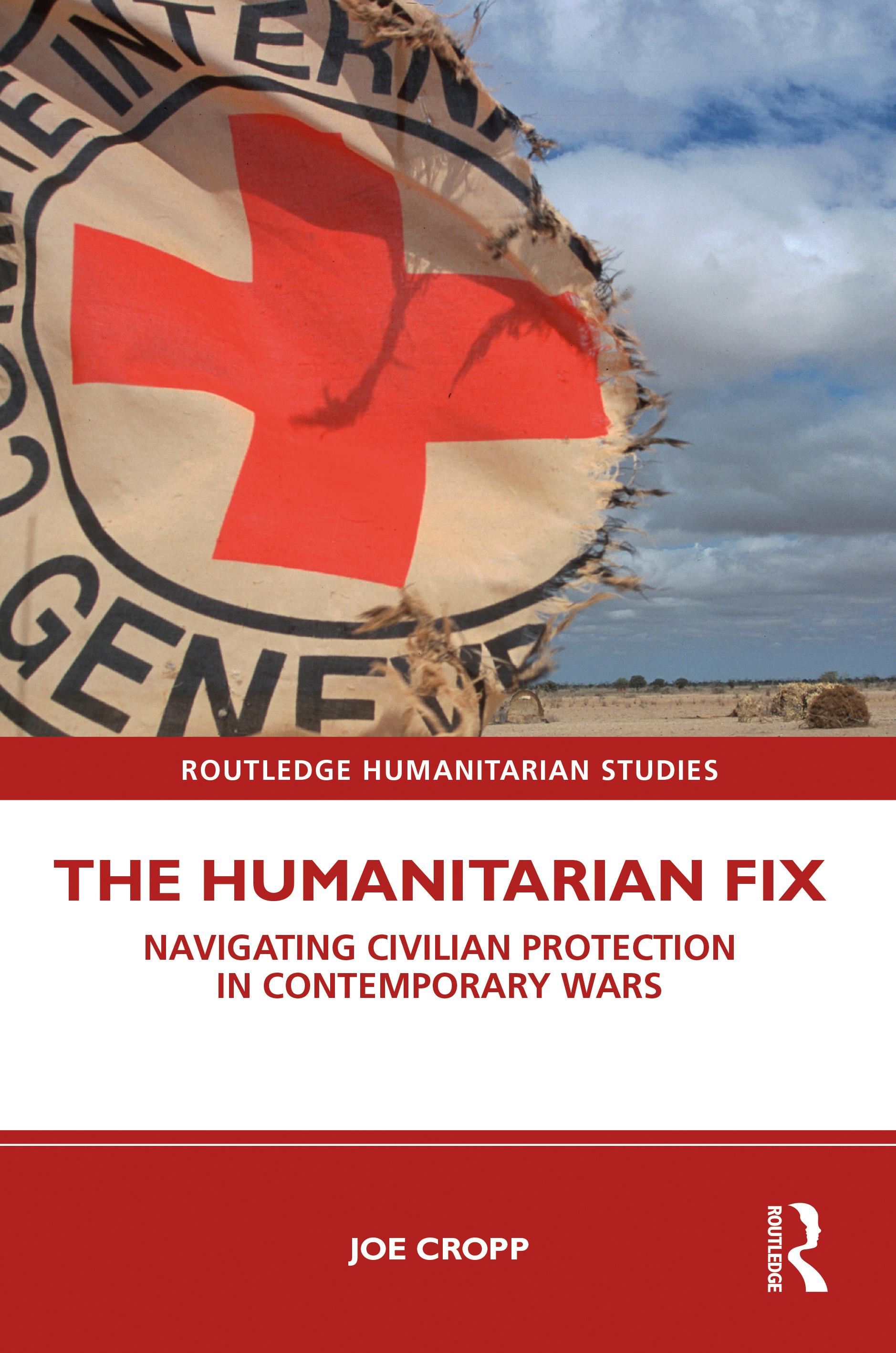
This book investigates how humanitarians balance the laws and principles of civilian protection with the realities of contemporary warzones, where non-state armed actors assert cultural, political and religious traditions that are often at odds with official frameworks.
This book argues that humanitarian protection on the ground is driven not by official frameworks in the traditional sense, but by the relationships between the complex mix of actors involved in contemporary wars. The frameworks, in turn, act as a unifying narrative that preserves these relationships. As humanitarian practitioners navigate this complex space, they act as unofficial brokers, translating the official frameworks to align with the often-divergent agendas of non-state armed actors. In doing so, they provide an unofficial humanitarian fix for the challenges inherent in applying the official frameworks in contemporary wars.
Drawing on rich ethnographic observations from the author’s time in northern Iraq, and complemented by interviews with a range of fieldworkers and humanitarian policy makers and lawyers, this book will be a compelling read for researchers and students within humanitarian and development studies, and to practitioners and policy makers who are grappling with the contradictions this book explores.
Pay easily by card, Klarna, Apple Pay or Google Pay. Not happy? You always have a 14-day money-back guarantee. Read more in our terms. If you have any questions, email us at hello@memmo.org.
Memmo makes studying easier – wherever you are in the world. We bring your course books and smart study tools together in one place: summaries, quizzes, podcasts and flashcards. Plus Ted, your study buddy who answers anything you wonder. Over 50,000 students already study here – built to help you learn faster and stress less.