
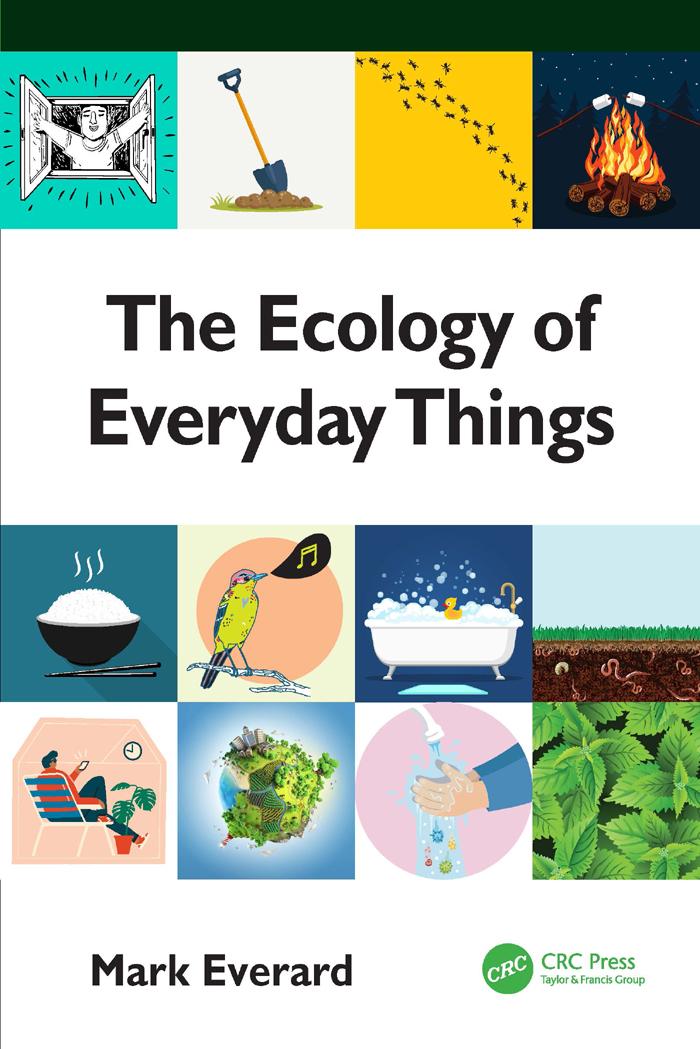
Nature is all around us, in the beautiful but also in the unappealing and functional, and from the awe-inspiring to the mundane. It is vital that we learn to see the agency of the natural world in all things that make our lives possible, comfortable and profitable. The Ecology of Everyday Things pulls back the veil of our familiarity on a range of ‘everyday things’ that surround us, and which we perhaps take too much for granted. This key into the magic world of the everyday can enable us to take better account of our common natural inheritance.
Professor James Longhurst, Assistant Vice Chancellor, University of the West of England (UWE Bristol)
For many people, ecosystems may be a remote concept, yet we eat, drink, breathe and interface with them in every moment of our lives. In this engaging textbook, ecosystems scientist Dr. Mark Everard considers a diversity of ‘everyday things’, including fascinating facts about their ecological origins: from the tea we drink, to the things we wear, read and enjoy, to the ecology of communities and space flight, and the important roles played by germs and ‘unappealing creatures’ such as slugs and wasps.
In today’s society, we are so umbilically connected to ecosystems that we fail to notice them, and this oversight blinds us to the unsustainability of everyday life and the industries and policy environment that supports it. The Ecology of Everyday Things takes the reader on an enlightening, fascinating voyage of discovery, all the while soundly rooted in robust science. It will stimulate awareness about how connected we all are to the natural world and its processes, and how important it is to learn to better treat our environment. Ideal for use in undergraduate- and school-level teaching, it will also interest, educate, engage and enthuse a wide range of less technical audiences.
Pay easily by card, Klarna, Apple Pay or Google Pay. Not happy? You always have a 14-day money-back guarantee. Read more in our terms. If you have any questions, email us at hello@memmo.org.
Memmo makes studying easier – wherever you are in the world. We bring your course books and smart study tools together in one place: summaries, quizzes, podcasts and flashcards. Plus Ted, your study buddy who answers anything you wonder. Over 50,000 students already study here – built to help you learn faster and stress less.