
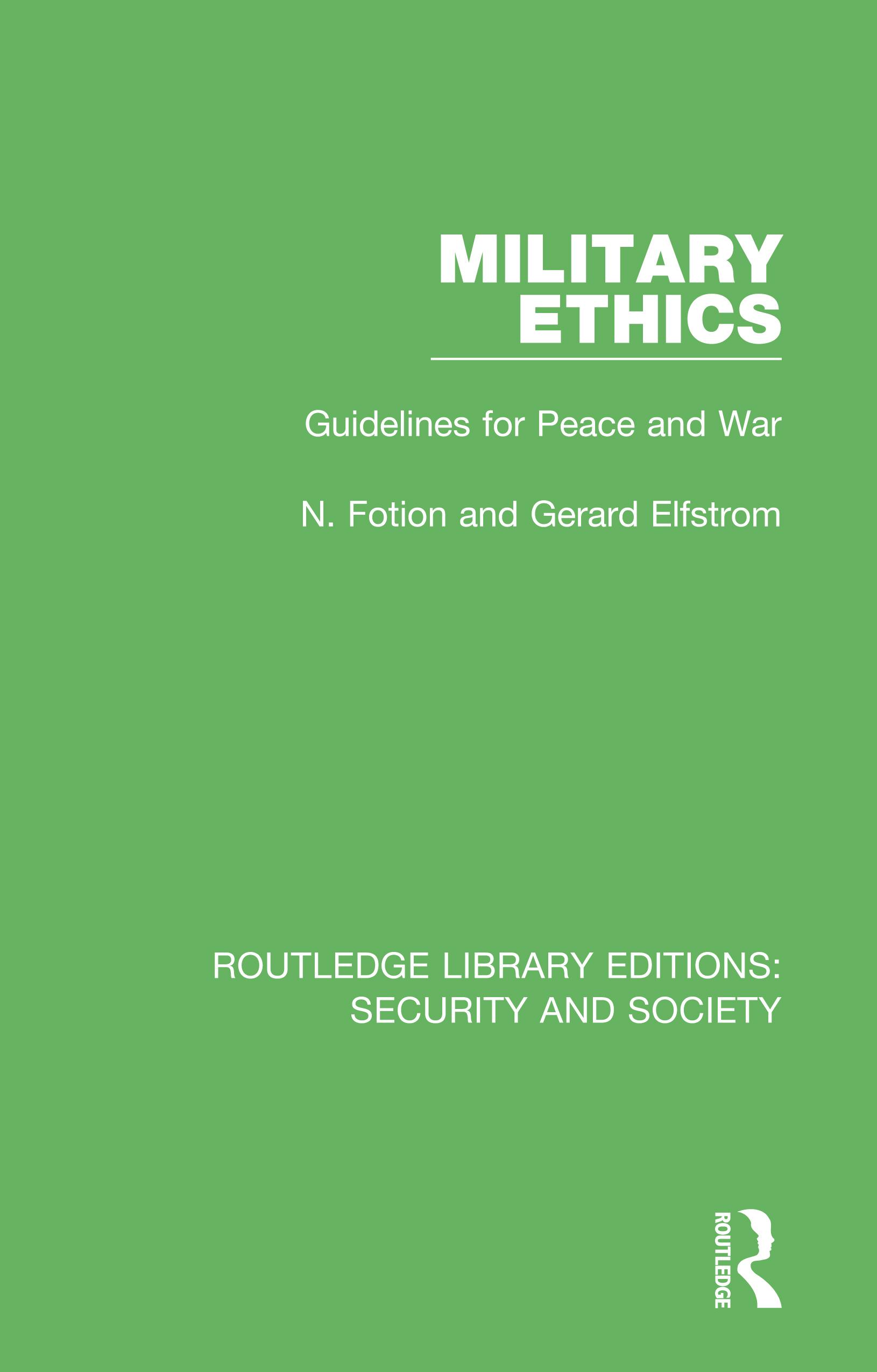
Many people believe that the violent and disruptive nature of war makes a military ethic impossible. The authors of this book, originally published in 1986 however, develop an ethical system that aims to control the military monster at least to some degree, rather than one that preaches to it idealistically – with little or no effect. Military ethics, they believe, must be an ethics for peacetime as well as an ethics for war, an ethics for soldiers in the field as well as an ethics for political leaders, and their book is designed to meet these needs. It presents a practical, utilitarian approach: an ethics of what is possible rather than what is ideal, drawing on real military experience and different from any other work previously published.
The authors argue that both the pacifists, who claim that the horrible and ungovernable nature of war makes it morally wrong, and the realists, who believe that wars must be fought, but fought without moral scruple, are mistaken. They show that careful attention to the actual circumstances in which individual combatants function and the social institutions shaping their action allows genuine moral constraint.
With its emphasis on real problems, Military Ethics will be of practical help to policy makers and military personnel at all levels, as well as being of great interest to students of applied philosophy and ethics.
Pay easily by card, Klarna, Apple Pay or Google Pay. Not happy? You always have a 14-day money-back guarantee. Read more in our terms. If you have any questions, email us at hello@memmo.org.
Memmo makes studying easier – wherever you are in the world. We bring your course books and smart study tools together in one place: summaries, quizzes, podcasts and flashcards. Plus Ted, your study buddy who answers anything you wonder. Over 50,000 students already study here – built to help you learn faster and stress less.