
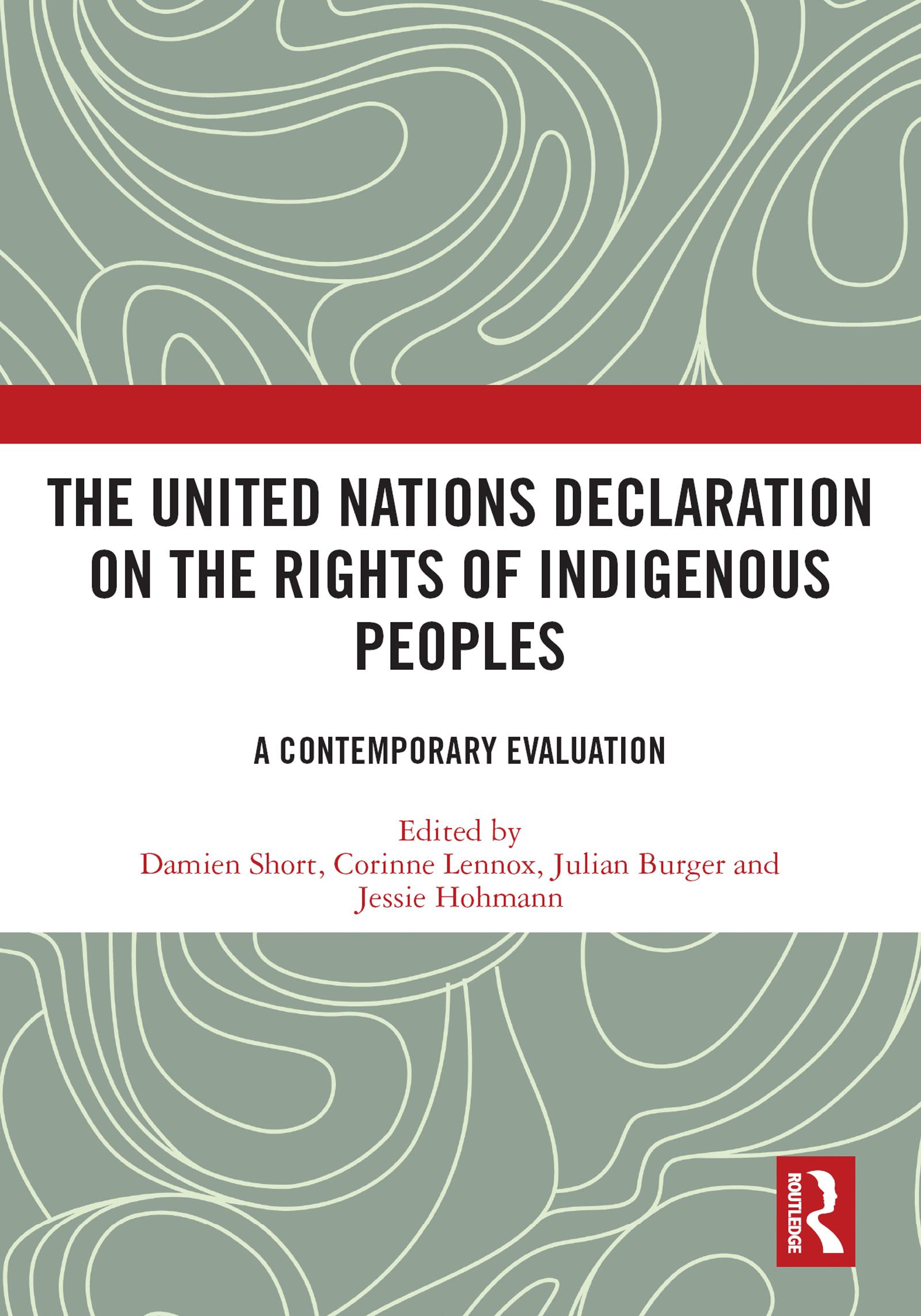
The development and adoption of the United Nations Declaration on the Rights of Indigenous Peoples (UNDRIP) was a huge success for the global indigenous movement. This book offers an insightful and nuanced contemporary evaluation of the progress and challenges that indigenous peoples have faced in securing the implementation of this new instrument, as well as its normative impact, at both the national and international levels.
The chapters in this collection offer a multi-disciplinary analysis of the UNDRIP as it enters the second decade since its adoption by the UN General Assembly in 2007. Following centuries of resistance by Indigenous peoples to state, and state sponsored, dispossession, violence, cultural appropriation, murder, neglect and derision, the UNDRIP is an achievement with deep implications in international law, policy and politics. In many ways, it also represents just the beginning – the opening of new ways forward that include advocacy, activism, and the careful and hard-fought crafting of new relationships between Indigenous peoples and states and their dominant populations and interests.
This book was originally published as a special issue of The International Journal of Human Rights.
Pay easily by card, Klarna, Apple Pay or Google Pay. Not happy? You always have a 14-day money-back guarantee. Read more in our terms. If you have any questions, email us at hello@memmo.org.
Memmo makes studying easier – wherever you are in the world. We bring your course books and smart study tools together in one place: summaries, quizzes, podcasts and flashcards. Plus Ted, your study buddy who answers anything you wonder. Over 50,000 students already study here – built to help you learn faster and stress less.