
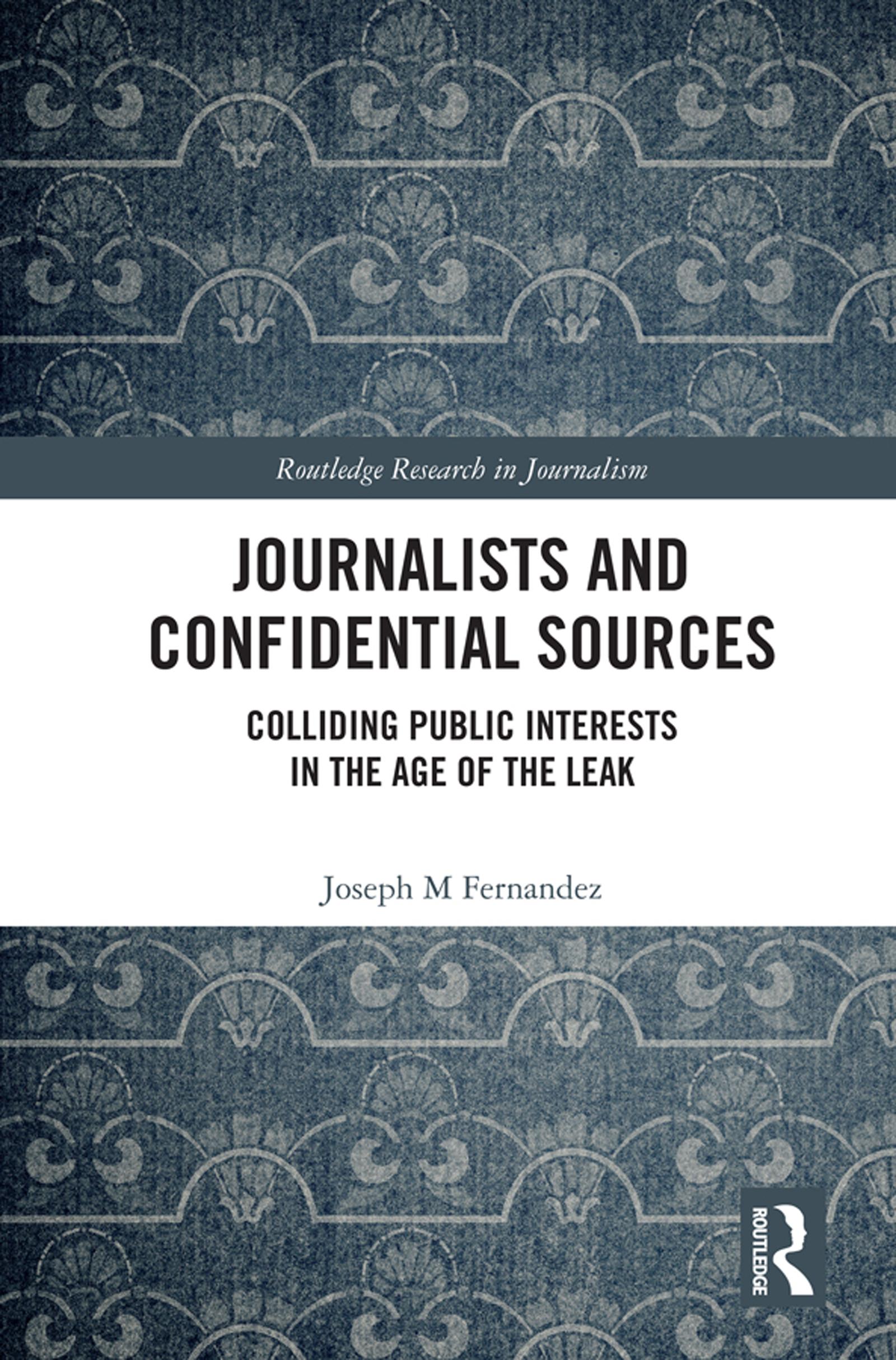
Journalists and Confidential Sources explores the fraught and widespread reliance by journalists on anonymous sources, whistleblowers, and others to whom they owe an obligation of confidentiality. It examines the difficulties afflicting such relationships; analyses the deteriorating "right to know" and freedom of expression frameworks; and explores solutions and reforms.
The book discusses key Australian and international source protection ethics rules, statutes, court cases, law enforcement actions, and case studies. It highlights weakness in journalists’ professional practice codes governing confidentiality obligations; discusses inadequate journalistic appreciation of the importance of establishing clear terms and conditions underpinning confidentiality obligations; and identifies shortcomings in the law governing source protection. The book argues that despite source protection being widely recognised as an important ideal, source protection is under sustained assault, thereby undermining public access to information, and democracy itself. The work focusses on Australia but takes into account source protection in the United Kingdom, the United States, Canada, and New Zealand.
This timely contribution to the global discussion on the subject will greatly interest journalists, scholars, educators, and students especially in the areas of media law and policy, journalism, media and communication studies, and public relations; the legal fraternity; and anyone who communicates with journalists.
Pay easily by card, Klarna, Apple Pay or Google Pay. Not happy? You always have a 14-day money-back guarantee. Read more in our terms. If you have any questions, email us at hello@memmo.org.
Memmo makes studying easier – wherever you are in the world. We bring your course books and smart study tools together in one place: summaries, quizzes, podcasts and flashcards. Plus Ted, your study buddy who answers anything you wonder. Over 75,000 students already study here – built to help you learn faster and stress less.