
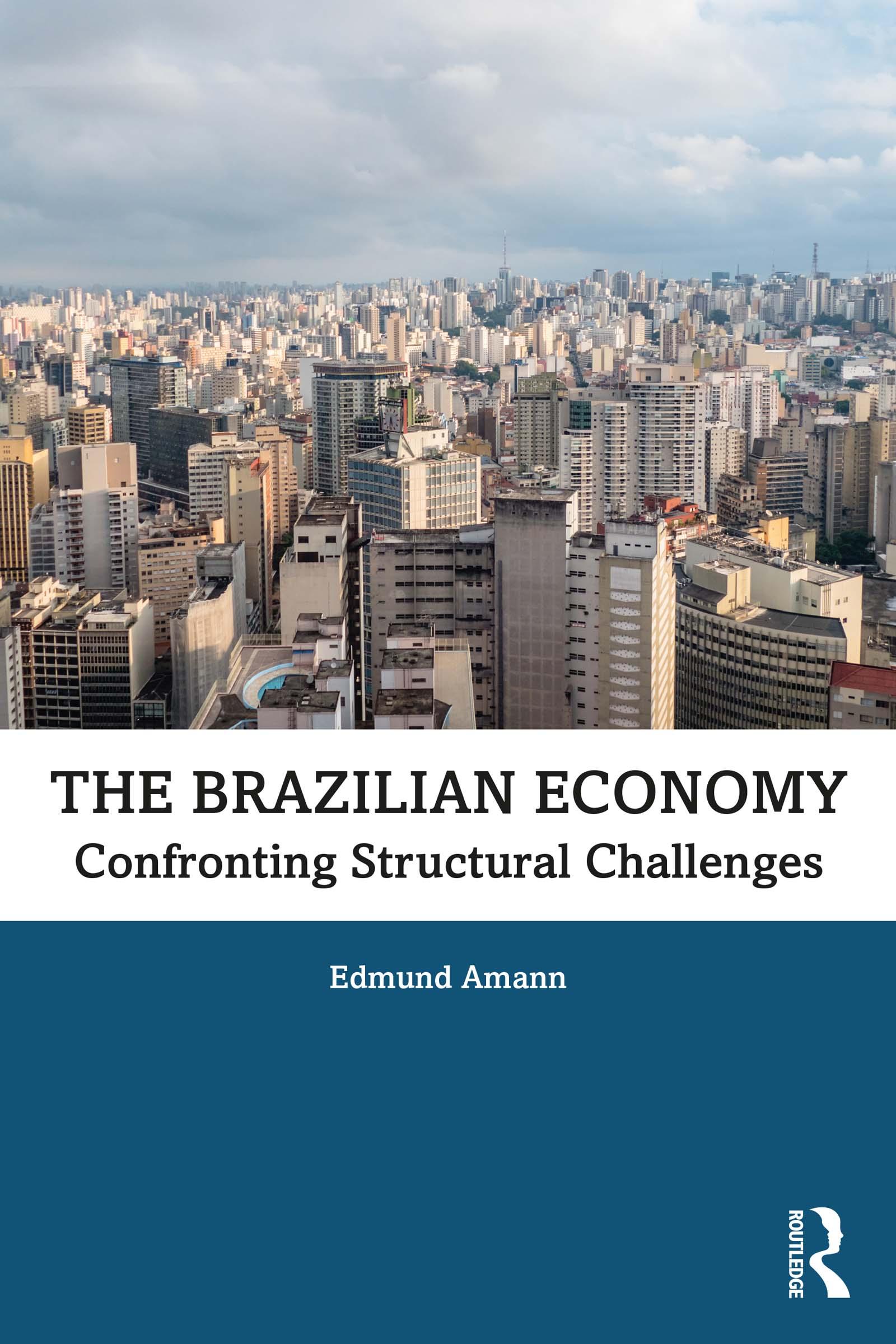
The Brazilian economy has long been defined by its enormous potential. Over the past 30 years, some of this has at last been realised. Latin America’s largest economy has rapidly risen in global importance while poverty at home has declined. Yet, despite periods of progress, Brazil remains prone to economic crisis. It is also beset with stubborn inefficiencies and income disparities. This book considers the structural challenges which will need to be overcome if Brazil is to break with the past and finally embark on a path of sustained, inclusive growth.
This book aims to give the reader a clear knowledge of the nature of these structural challenges, why they exist and the effectiveness of attempts to overcome them. Through this, readers will gain a deep understanding of the contemporary Brazilian economy. The challenges discussed fall into three areas: those centring on competitiveness and the supply side, those arising from critical macroeconomic issues and those connected with environmental sustainability and social inclusion. This volume systematically examines each of these domains, highlighting such vital topics as export competitiveness, human capital formation, environmental policy and the role of financial market reform. Where appropriate, this book sets Brazil’s experience in an international comparative context. It points out that many of the challenges faced by Brazil are shared by other emerging economies. In this sense, the policy lessons which stem from this volume have broader international relevance.
This book will be vital reading for all those seeking in-depth understanding of one of the world’s most important, yet troubled, economies. This readership is likely to include undergraduate and postgraduate students on development economics and Latin American area studies programmes, policymakers wanting an up-to-date and coherent analysis of Latin America’s largest economy, and financial professionals.
Pay easily by card, Klarna, Apple Pay or Google Pay. Not happy? You always have a 14-day money-back guarantee. Read more in our terms. If you have any questions, email us at hello@memmo.org.
Memmo makes studying easier – wherever you are in the world. We bring your course books and smart study tools together in one place: summaries, quizzes, podcasts and flashcards. Plus Ted, your study buddy who answers anything you wonder. Over 50,000 students already study here – built to help you learn faster and stress less.