
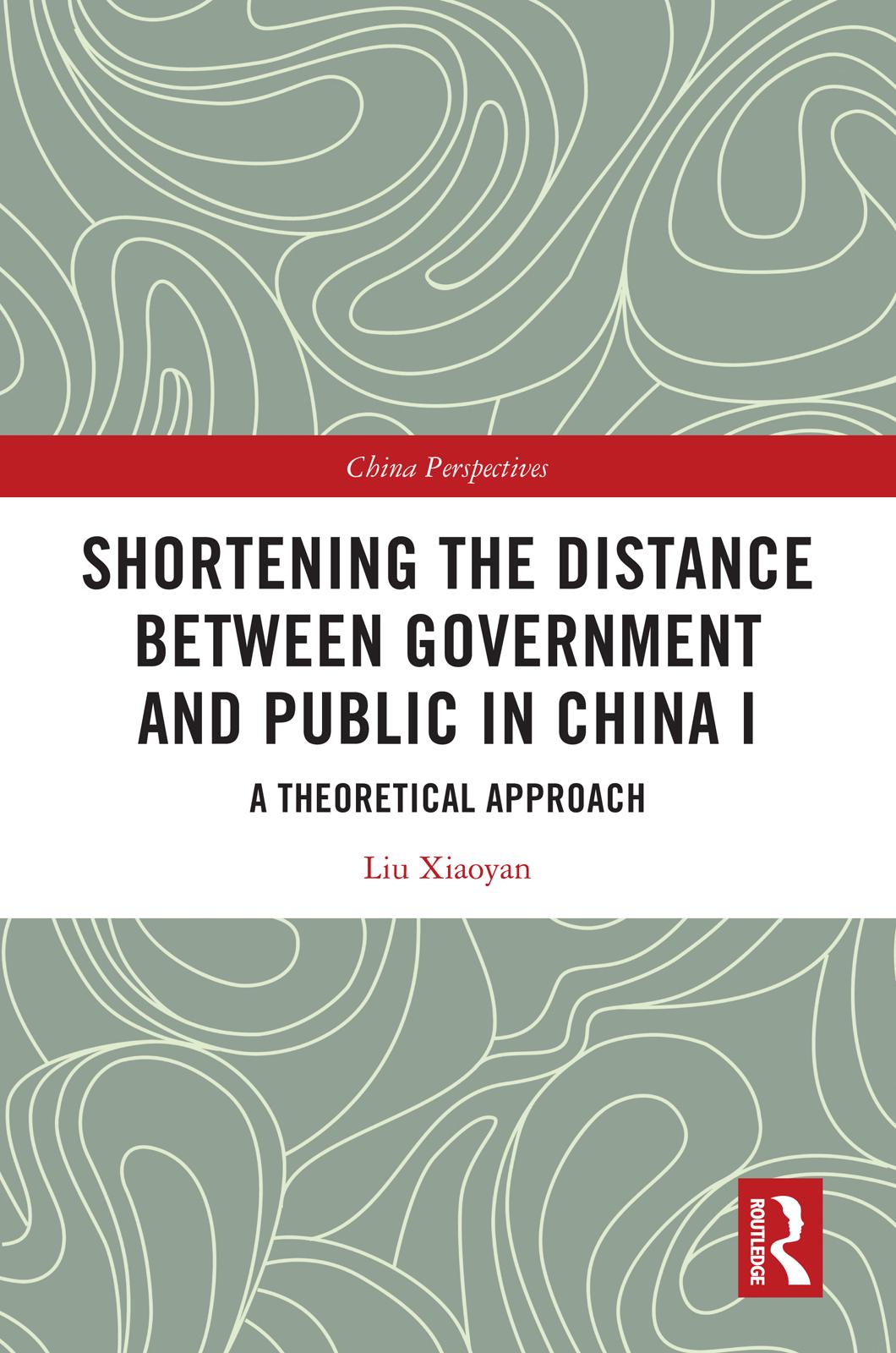
Distance, in its traditional sense, connotates "estrangement" and "division". But in the context of modern political studies, it means a controllable resource that can be manipulated to change the relationship between the government and the public.
Drawing on this concept from Western political science, the author explores the law and mechanisms of China’s political communication. In this volume, the author introduces a creative theoretical framework of distance, which is a dynamic system comprised of physical and psychological distance, ideal distance and real distance, and natural distance and consequent distance. Psychological distance is the core, because it signifies not only whether there is trust between a government and the public, but also whether the political community can maintain a high degree of harmony, stability, unity, and vitality. Events in the past five years in China are used as cases to illustrate the point.
Students and scholars who are interested in political science and political communication, especially Chinese politics, would find this title a useful reference.
Pay easily by card, Klarna, Apple Pay or Google Pay. Not happy? You always have a 14-day money-back guarantee. Read more in our terms. If you have any questions, email us at hello@memmo.org.
Memmo makes studying easier – wherever you are in the world. We bring your course books and smart study tools together in one place: summaries, quizzes, podcasts and flashcards. Plus Ted, your study buddy who answers anything you wonder. Over 50,000 students already study here – built to help you learn faster and stress less.