
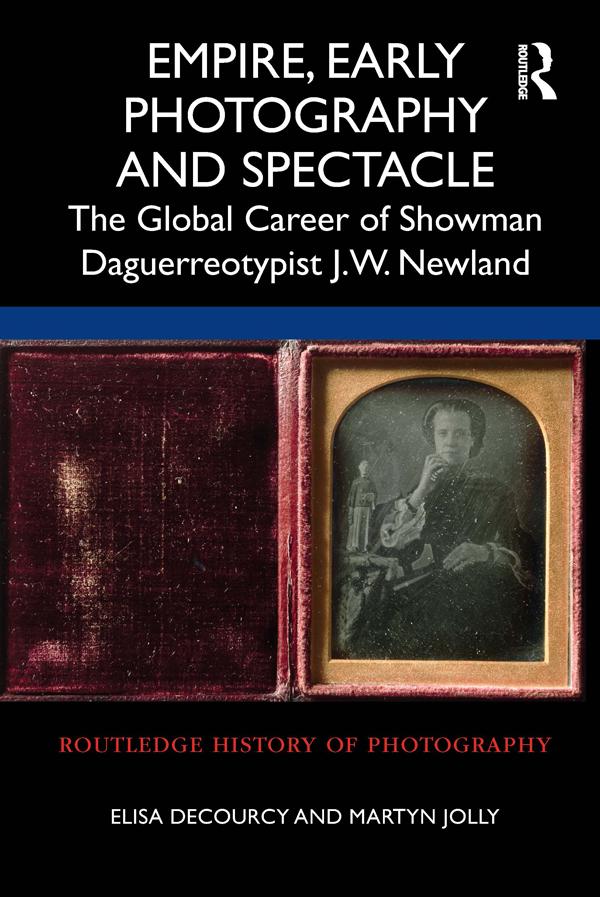
James William Newland’s (1810–1857) career as a showman daguerreotypist began in the United States but expanded into Central and South America, across the Pacific to New Zealand and colonial Australia and onto India.
Newland used the latest developments in photography, theatre and spectacle to create powerful new visual experiences for audiences in each of these volatile colonial societies. This book assesses his surviving, vivid portraits against other visual ephemera and archival records of his time. Newland’s magic lantern and theatre shows are imaginatively reconstructed from textual sources and analysed, with his short, rich career casting a new light on the complex worlds of the mid-nineteenth century. It provides a revealing case study of someone brokering new experiences with optical technologies for varied audiences at the forefront of the age of modern vision.
This book will be of interest to scholars in art and visual culture, photography, the history of photography and Victorian history.
Pay easily by card, Klarna, Apple Pay or Google Pay. Not happy? You always have a 14-day money-back guarantee. Read more in our terms. If you have any questions, email us at hello@memmo.org.
Memmo makes studying easier – wherever you are in the world. We bring your course books and smart study tools together in one place: summaries, quizzes, podcasts and flashcards. Plus Ted, your study buddy who answers anything you wonder. Over 50,000 students already study here – built to help you learn faster and stress less.