
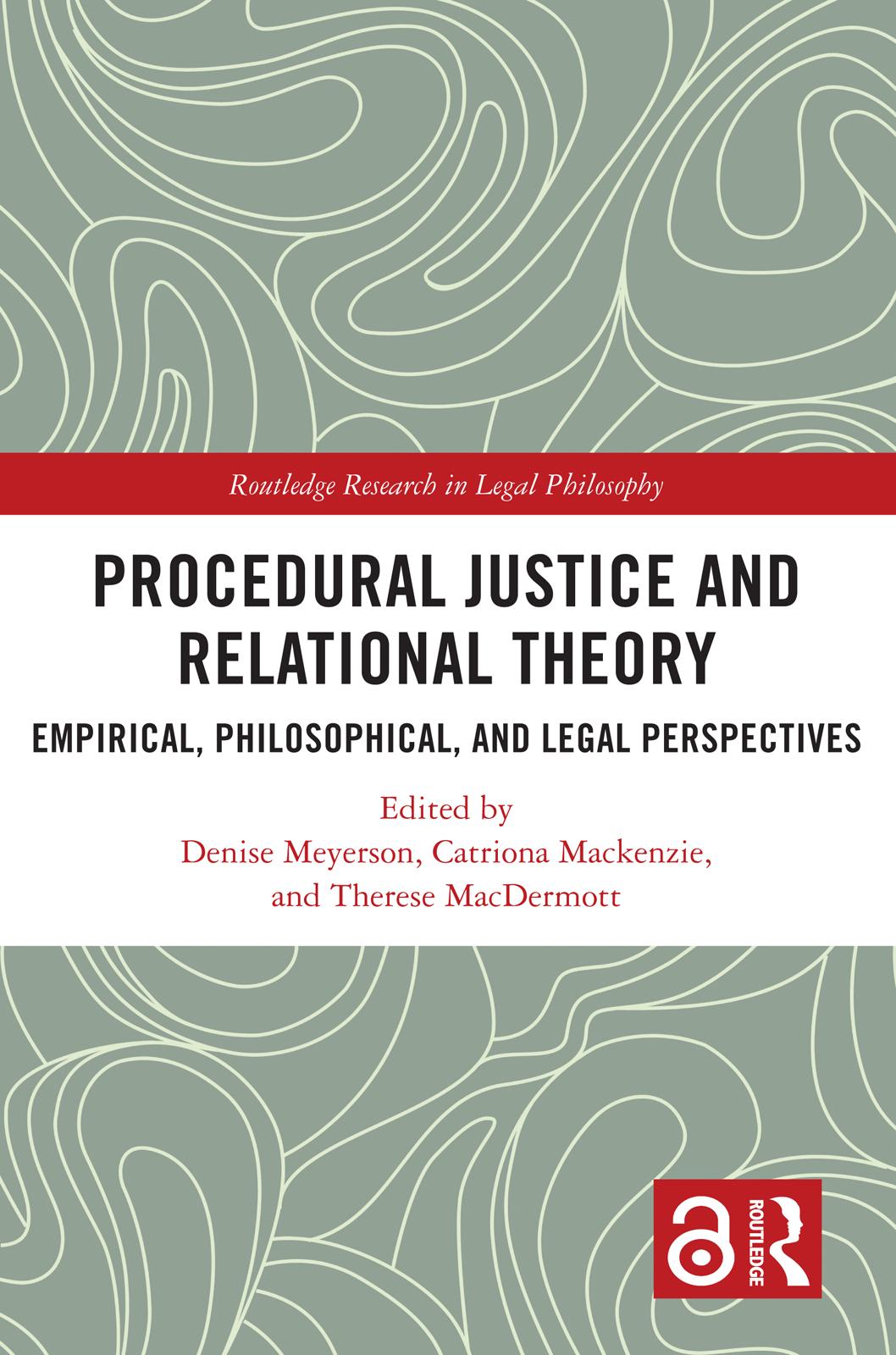
This book bridges a scholarly divide between empirical and normative theorizing about procedural justice in the context of relations of power between citizens and the state.
Empirical research establishes that people’s understanding of procedural justice is shaped by relational factors. A central premise of this volume is that this research is significant but needs to be complemented by normative theorizing that draws on relational theories of ethics and justice to explain the moral significance of procedures and make normative sense of people’s concerns about relational factors. The chapters in Part 1 provide comprehensive reviews of empirical studies of procedural justice in policing, courts and prisons. Part 2 explores empirical and normative perspectives on procedural justice and legitimacy. Part 3 examines philosophical approaches to procedural justice. Part 4 considers the implications of a relational perspective for the design of procedures in a range of legal contexts.
This collection will be of interest to a wide academic readership in philosophy, law, psychology and criminology.
Pay easily by card, Klarna, Apple Pay or Google Pay. Not happy? You always have a 14-day money-back guarantee. Read more in our terms. If you have any questions, email us at hello@memmo.org.
Memmo makes studying easier – wherever you are in the world. We bring your course books and smart study tools together in one place: summaries, quizzes, podcasts and flashcards. Plus Ted, your study buddy who answers anything you wonder. Over 50,000 students already study here – built to help you learn faster and stress less.