
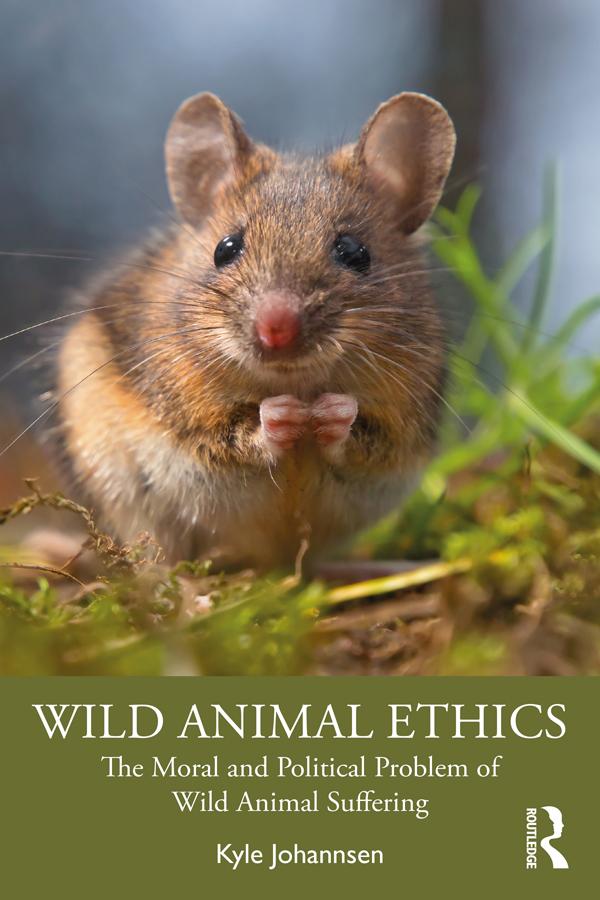
Though many ethicists have the intuition that we should leave nature alone, Kyle Johannsen argues that we have a duty to research safe ways of providing large-scale assistance to wild animals. Using concepts from moral and political philosophy to analyze the issue of wild animal suffering (WAS), Johannsen explores how a collective, institutional obligation to assist wild animals should be understood. He claims that with enough research, genetic editing may one day give us the power to safely intervene without perpetually interfering with wild animals’ liberties.
Questions addressed include:
- In what way is nature valuable and is intervention compatible with that value?
- Is intervention a requirement of justice?
- What are the implications of WAS for animal rights advocacy? What types of intervention are promising?
Expertly moving the debate about human relations with wild animals beyond its traditional confines, Wild Animal Ethics is essential reading for students and scholars of political philosophy and political theory studying animal ethics, environmental ethics, and environmental philosophy.
Pay easily by card, Klarna, Apple Pay or Google Pay. Not happy? You always have a 14-day money-back guarantee. Read more in our terms. If you have any questions, email us at hello@memmo.org.
Memmo makes studying easier – wherever you are in the world. We bring your course books and smart study tools together in one place: summaries, quizzes, podcasts and flashcards. Plus Ted, your study buddy who answers anything you wonder. Over 50,000 students already study here – built to help you learn faster and stress less.