
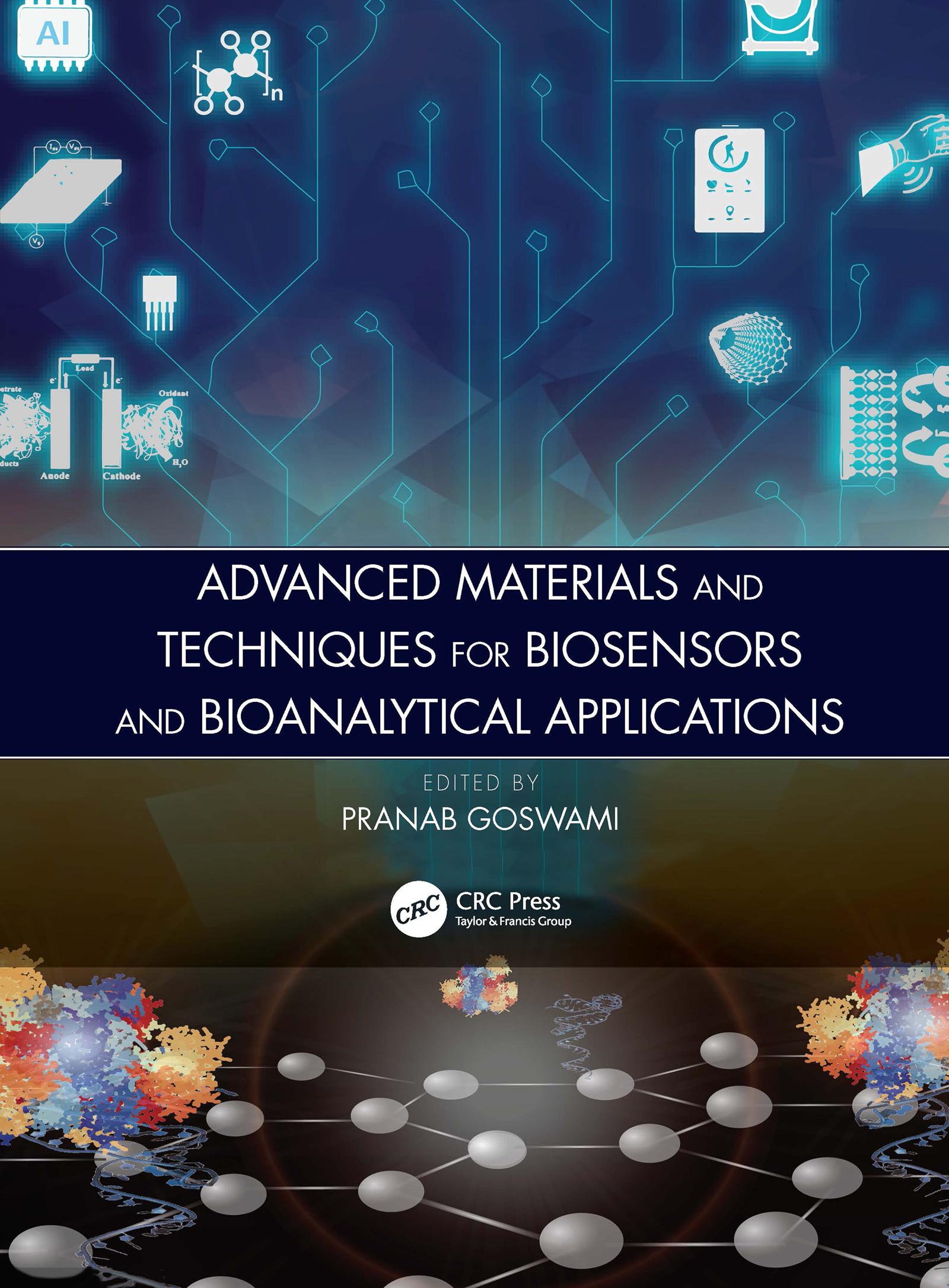
Bioanalytical science and its technological subdomain, biosensors, are ever-evolving subjects, striving for rapid improvement in terms of performance and expanding the target range to meet the vast societal and market demands. The key performance factors for a biosensor that drive the research are selectivity, sensitivity, response time, accuracy, and reproducibility, with additional requirements of its portability and inexpensive nature. These performance factors are largely governed by the materials and techniques being used in these bioanalytical platforms. The selection of materials to meet these requirements is critical, as their interaction or involvement with the biological recognition elements should initiate or improve these performance factors. The technique discussed primarily applies to transducers involved in converting a biochemical signal to optical or electrical signals. Over the years, the emergence of novel materials and techniques has drastically improved the performance of these bioanalytical systems, enabling them to expand their analytical horizon. These advanced materials and techniques are central to modern bioanalytical and biosensor research.
Advanced Materials and Techniques for Biosensors and Bioanalytical Applications provides a comprehensive review of the subject, including a knowledge platform for both academics and researchers. Considering biosensors as a central theme to this book, an outline on this subject with background principles has been included, with a scope of extending the utility of the book to coursework in graduate and postgraduate schools.
Features:
• Basic principles on different classes of biosensors, recent advances and applications
• Smart materials for biosensors and other rapid, portable detection devices
• Metal nanoparticles and nanocrystals for analytical applications
• Carbon-based nanoparticles and quantum dots for sensing applications
• Nanozymes as potential catalysts for sensing applications
• Bioelectrochemiluminescence and photoelectrochemical-based biosensors
• Paper electronics and paper-based biosensors
• Microbial biosensors: artificial intelligence, genetic engineering, and synthetic biology
• Biofuel cells as a signal transduction platform
• FET-based biosensors, including ISFET and BioFET
This book serves as a reference for scientific investigators and a textbook for a graduate-level course in biosensors and advanced bioanalytical techniques.
Pay easily by card, Klarna, Apple Pay or Google Pay. Not happy? You always have a 14-day money-back guarantee. Read more in our terms. If you have any questions, email us at hello@memmo.org.
Memmo makes studying easier – wherever you are in the world. We bring your course books and smart study tools together in one place: summaries, quizzes, podcasts and flashcards. Plus Ted, your study buddy who answers anything you wonder. Over 50,000 students already study here – built to help you learn faster and stress less.