
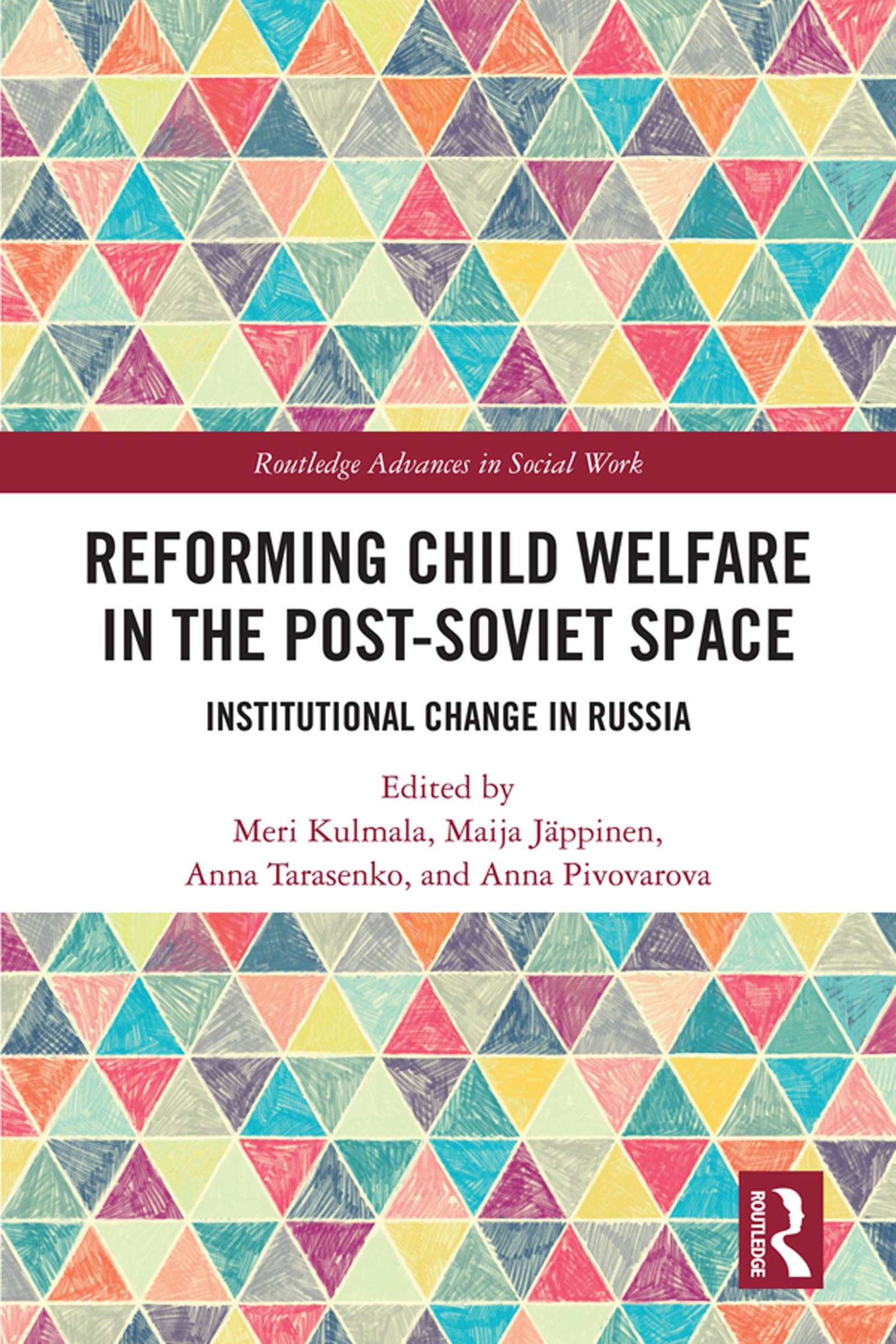
This book provides new and empirically grounded research-based knowledge and insights into the current transformation of the Russian child welfare system. It focuses on the major shift in Russia’s child welfare policy: deinstitutionalisation of the system of children’s homes inherited from the Soviet era and an increase in fostering and adoption.
Divided into four sections, this book details both the changing role and function of residential institutions within the Russian child welfare system and the rapidly developing form of alternative care in foster families, as well as work undertaken with birth families. By analysing the consequences of deinstitutionalisation and its effects on children and young people as well as their foster and birth parents, it provides a model for understanding this process across the whole of the post-Soviet space.
It will be of interest to academics and students of social work, sociology, child welfare, social policy, political science, and Russian and East European politics more generally.
Pay easily by card, Klarna, Apple Pay or Google Pay. Not happy? You always have a 14-day money-back guarantee. Read more in our terms. If you have any questions, email us at hello@memmo.org.
Memmo makes studying easier – wherever you are in the world. We bring your course books and smart study tools together in one place: summaries, quizzes, podcasts and flashcards. Plus Ted, your study buddy who answers anything you wonder. Over 50,000 students already study here – built to help you learn faster and stress less.