
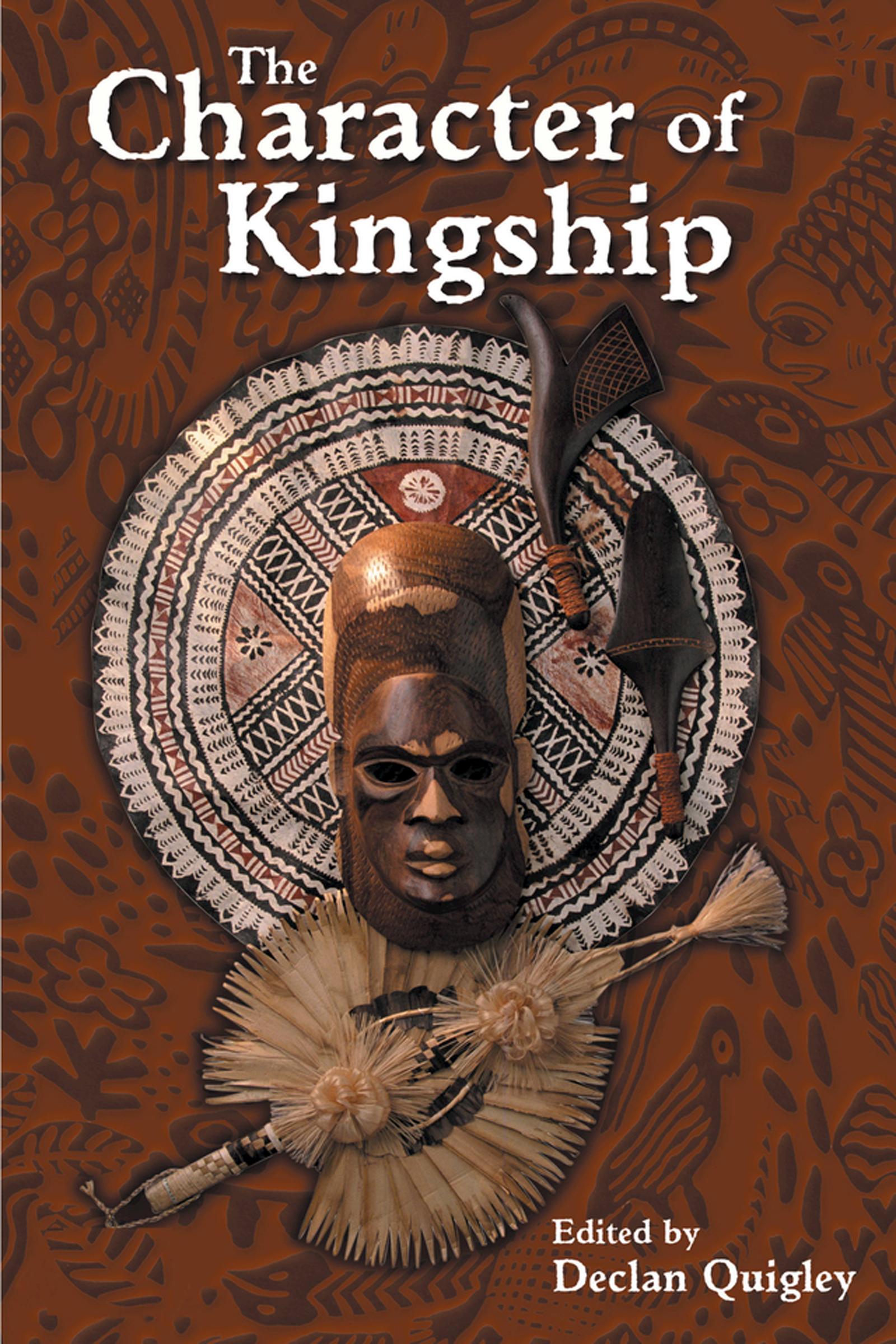
Why has monarchy been such a prevalent institution throughout history and in such a diverse range of societies? Kingship is at the heart of both ritual and politics and has major implications for the theory of social and cultural anthropology. Yet, despite the contemporary fascination with royalty, anthropologists have sorely neglected the subject in recent decades. This book combines a strong theoretical argument with a wealth of ethnography from kingships in Africa, Asia and the Pacific. Quigley gives a timely and much-needed overview of the anthropology of kingship and a crucial reassessment of the contributions of Frazer and Hocart to debates about the nature and function of royal ritual. From diverse fieldwork sites, a number of eminent anthropologists demonstrate how ritual and power intertwine to produce a series of variations around myth, tragedy and historical realities. However, underneath this diversity, two common themes invariably emerge: the attempt to portray kingship as timeless and perfect, and the dual nature of the king as sacred being and scapegoat.
Pay easily by card, Klarna, Apple Pay or Google Pay. Not happy? You always have a 14-day money-back guarantee. Read more in our terms. If you have any questions, email us at hello@memmo.org.
Memmo makes studying easier – wherever you are in the world. We bring your course books and smart study tools together in one place: summaries, quizzes, podcasts and flashcards. Plus Ted, your study buddy who answers anything you wonder. Over 50,000 students already study here – built to help you learn faster and stress less.
You might also like
Buy the book0