
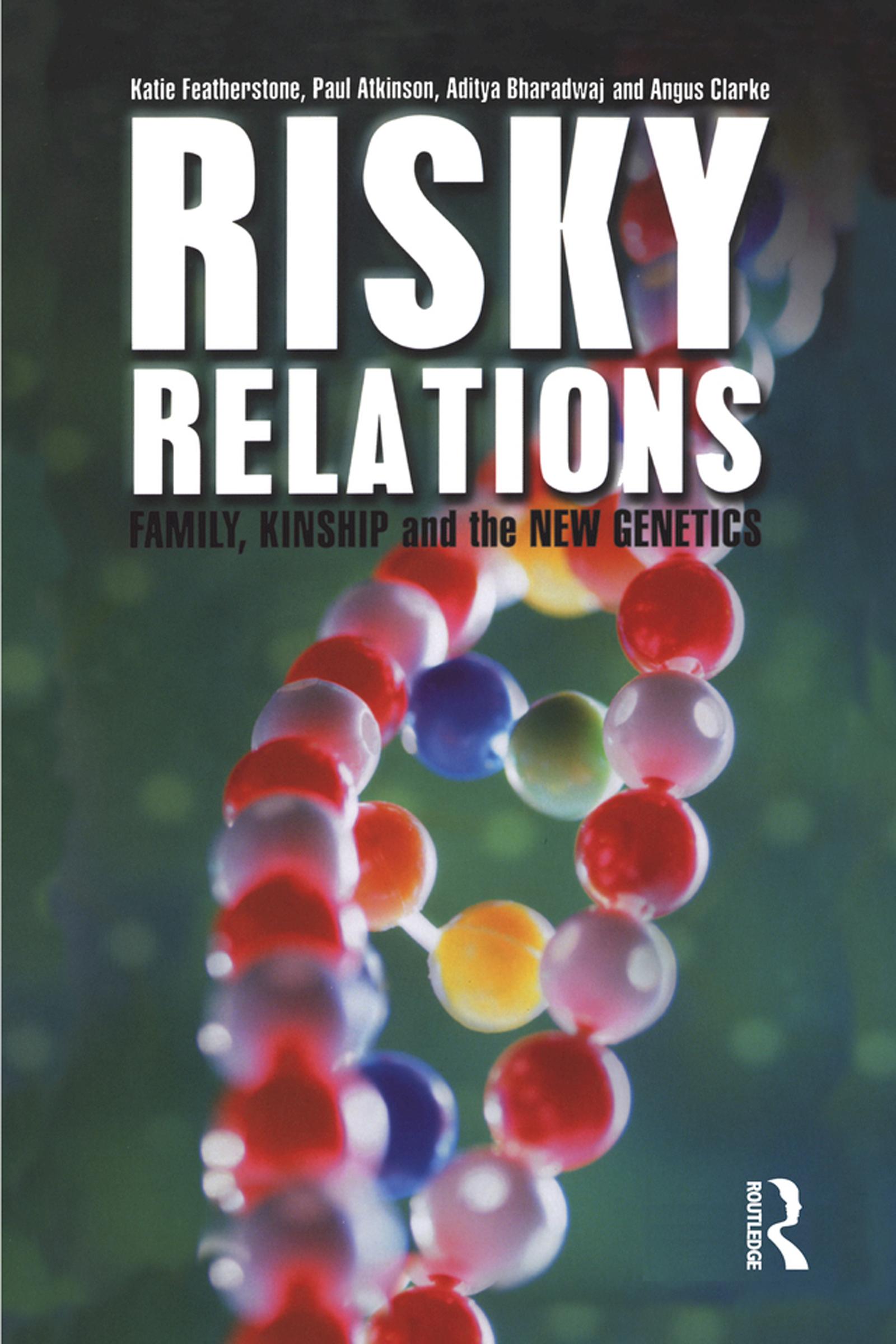
Increasingly more conditions are now being identified as having a genetic component, and controversial new genetic technologies potentially have major consequences for social relations and self-identity. How do family members respond to the information that they have a genetically transmitted disease or condition? How do they communicate (or not communicate) about their shared heritage? How do they decide who to tell and who not to tell within their family? Richly illustrated with the real experiences of individuals and families, Risky Relations is essential reading for anthropologists and sociologists of health and medicine, specialists in family and kinship, and health professionals concerned with the treatment and counselling of clients with genetic conditions. The lived impact of genetic technology on understanding within families with genetic conditions has never been systematically explored. This book fills a major gap by placing ethical, medical and social debates surrounding this charged issue firmly in context.
Pay easily by card, Klarna, Apple Pay or Google Pay. Not happy? You always have a 14-day money-back guarantee. Read more in our terms. If you have any questions, email us at hello@memmo.org.
Memmo makes studying easier – wherever you are in the world. We bring your course books and smart study tools together in one place: summaries, quizzes, podcasts and flashcards. Plus Ted, your study buddy who answers anything you wonder. Over 50,000 students already study here – built to help you learn faster and stress less.
You might also like
Buy the book0