
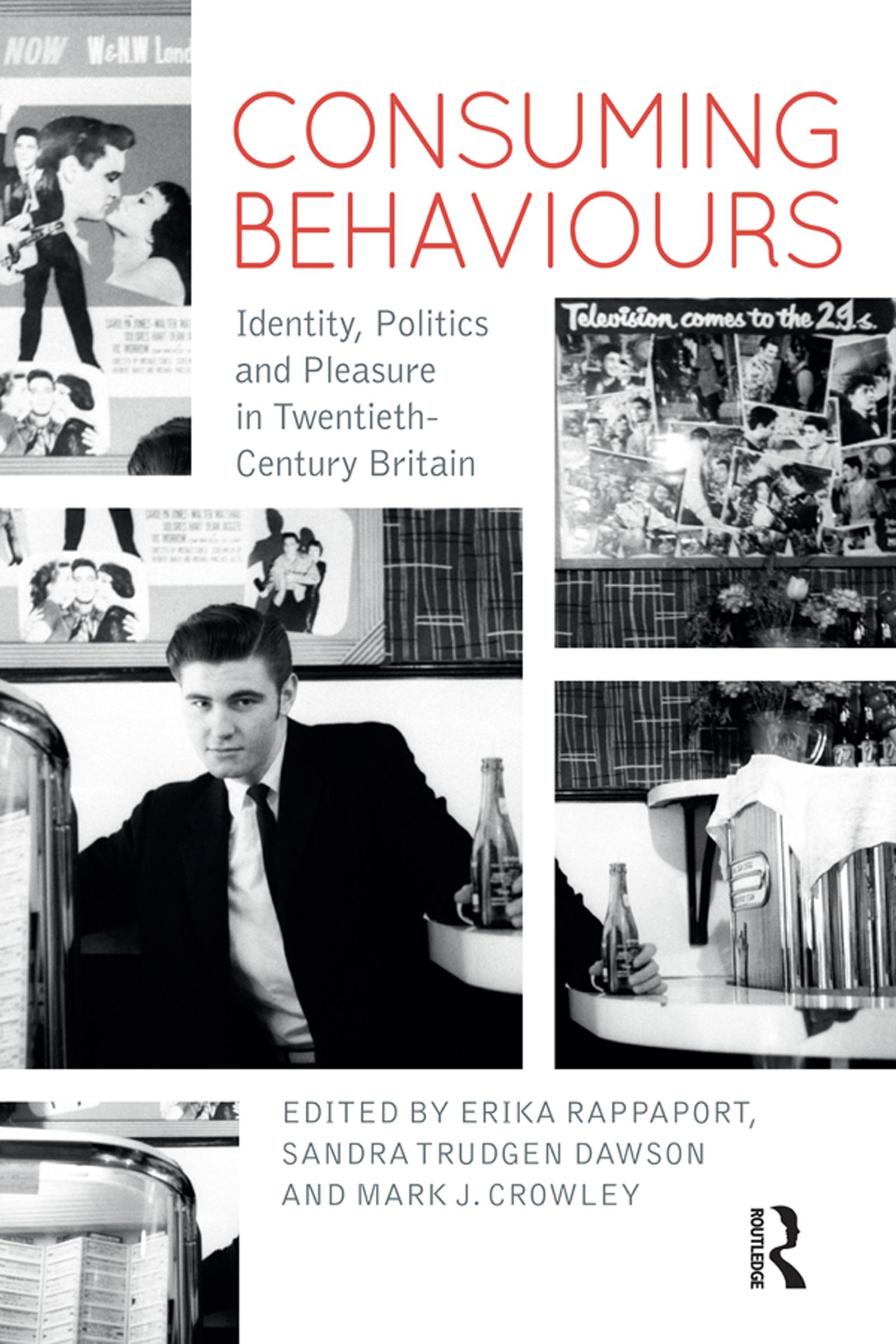
In twentieth-century Britain, consumerism increasingly defined and redefined individual and social identities. New types of consumers emerged: the idealized working-class consumer, the African consumer and the teenager challenged the prominent position of the middle and upper-class female shopper. Linking politics and pleasure, Consuming Behaviours explores how individual consumers and groups reacted to changes in marketing, government control, popular leisure and the availability of consumer goods.From football to male fashion, tea to savings banks, leading scholars consider a wide range of products, ideas and services and how these were marketed to the British public through periods of imperial decline, economic instability, war, austerity and prosperity. The development of mass consumer society in Britain is examined in relation to the growing cultural hegemony and economic power of the United States, offering comparisons between British consumption patterns and those of other nations.Bridging the divide between historical and cultural studies approaches, Consuming Behaviours discusses what makes British consumer culture distinctive, while acknowledging how these consumer identities are inextricably a product of both Britain’s domestic history and its relationship with its Empire, with Europe and with the United States.
Pay easily by card, Klarna, Apple Pay or Google Pay. Not happy? You always have a 14-day money-back guarantee. Read more in our terms. If you have any questions, email us at hello@memmo.org.
Memmo makes studying easier – wherever you are in the world. We bring your course books and smart study tools together in one place: summaries, quizzes, podcasts and flashcards. Plus Ted, your study buddy who answers anything you wonder. Over 50,000 students already study here – built to help you learn faster and stress less.
You might also like
Buy the book0