
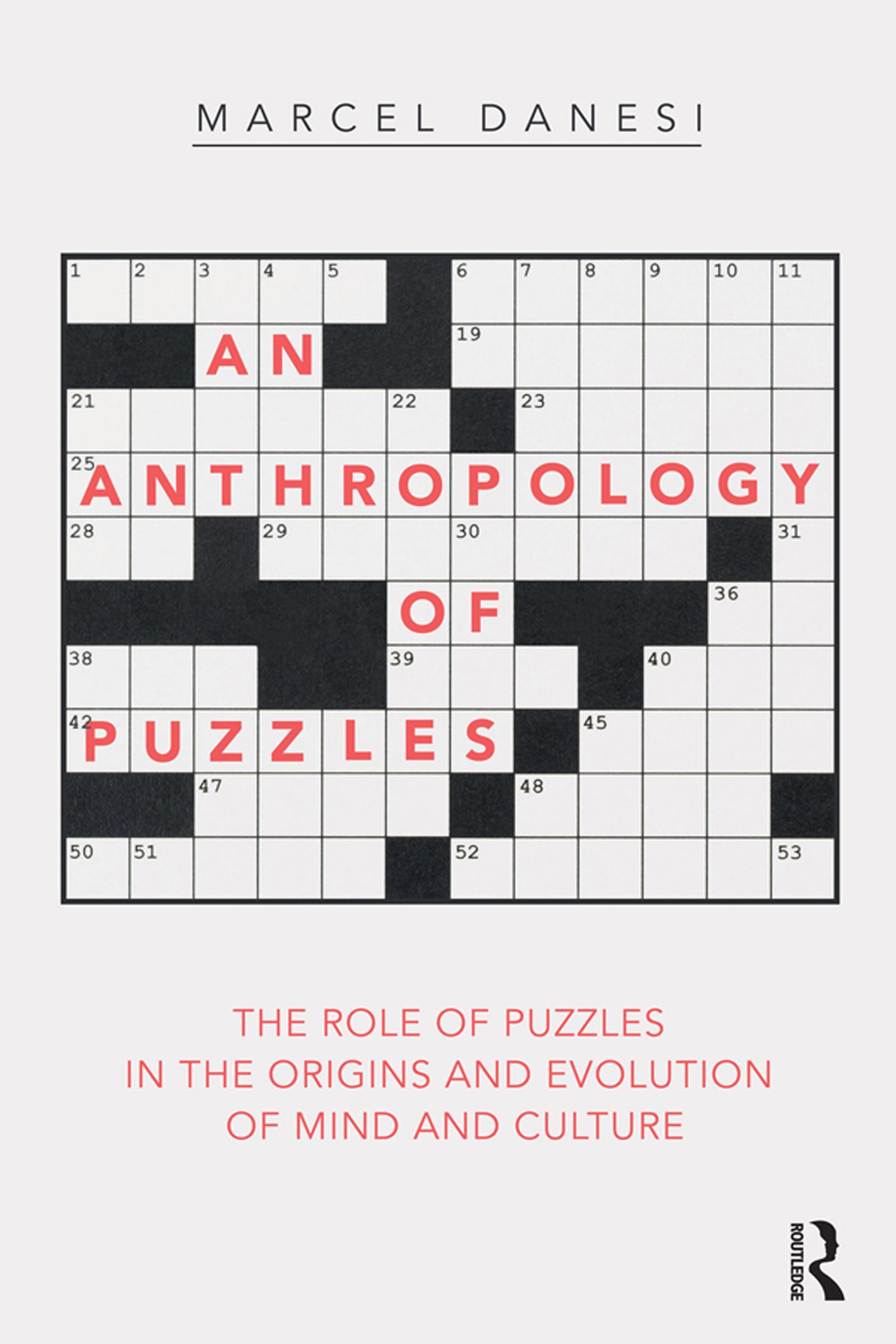
An Anthropology of Puzzles argues that the human brain is a "puzzling organ" which allows humans to literally solve their own problems of existence through puzzle format. Noting the presence of puzzles everywhere in everyday life, Marcel Danesi looks at puzzles in society since the dawn of history, showing how their presence has guided large sections of human history, from discoveries in mathematics to disquisitions in philosophy. Danesi examines the cognitive processes that are involved in puzzle making and solving, and connects them to the actual physical manifestations of classic puzzles. Building on a concept of puzzles as based on Jungian archetypes, such as the river crossing image, the path metaphor, and the journey, Danesi suggests this could be one way to understand the public fascination with puzzles. As well as drawing on underlying mental archetypes, the act of solving puzzles also provides an outlet to move beyond biological evolution, and Danesi shows that puzzles could be the product of the same basic neural mechanism that produces language and culture. Finally, Danesi explores how understanding puzzles can be a new way of understanding our human culture.
Pay easily by card, Klarna, Apple Pay or Google Pay. Not happy? You always have a 14-day money-back guarantee. Read more in our terms. If you have any questions, email us at hello@memmo.org.
Memmo makes studying easier – wherever you are in the world. We bring your course books and smart study tools together in one place: summaries, quizzes, podcasts and flashcards. Plus Ted, your study buddy who answers anything you wonder. Over 50,000 students already study here – built to help you learn faster and stress less.
You might also like
Buy the book0