
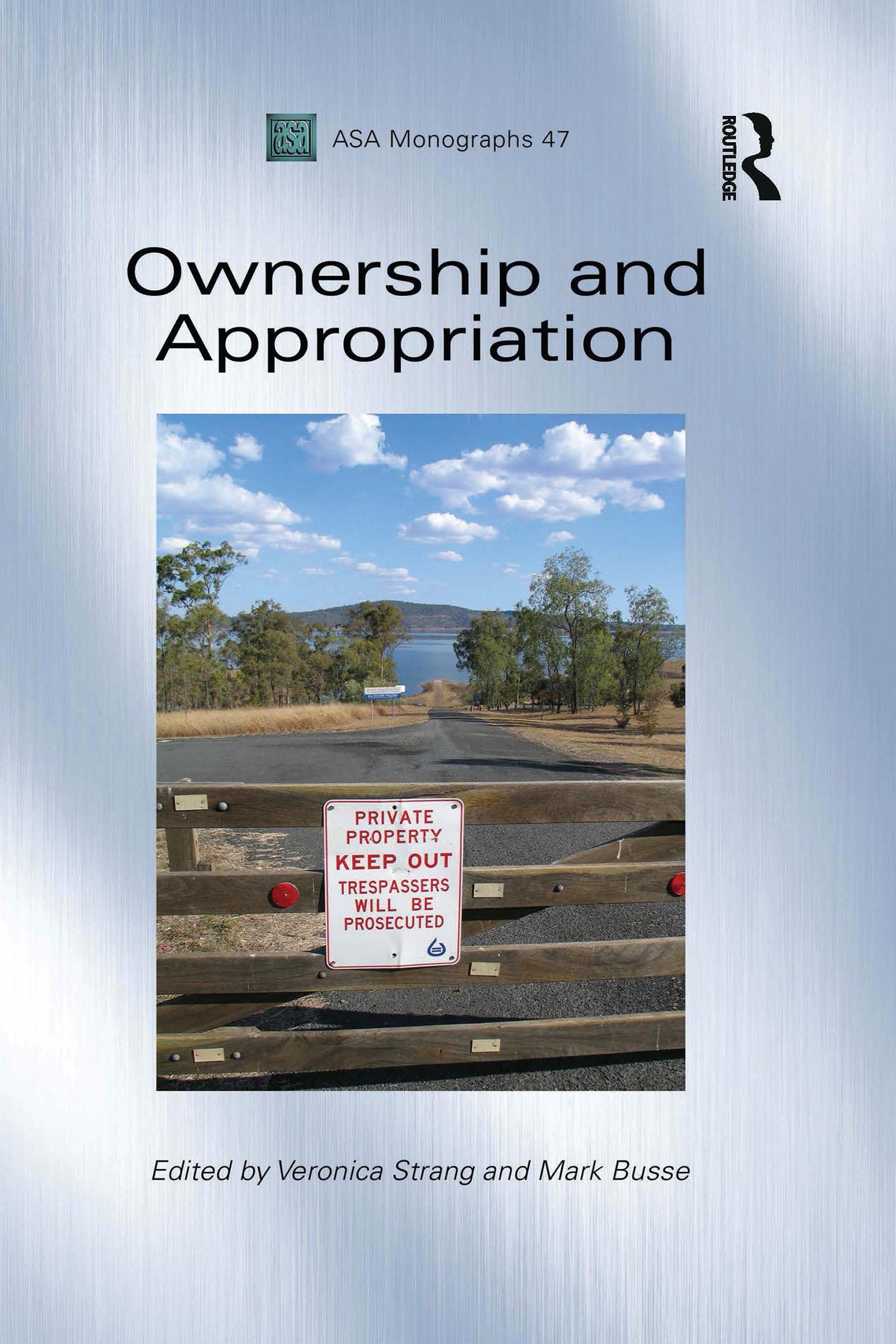
In a world of finite resources, expanding populations and widening structural inequalities, the ownership of things is increasingly contested. Not only are the commons being rapidly enclosed and privatized, but the very idea of what can be owned is expanding, generating conflicts over the ownership of resources, ideas, culture, people, and even parts of people. Understanding processes of ownership and appropriation is not only central to anthropological theorizing but also has major practical applications, for policy, legislative development and conflict resolution.Ownership and Appropriation significantly extends anthropology's long-term concern with property by focusing on everyday notions and acts of owning and appropriating. The chapters document the relationship between ownership, subjectivities and personhood; they demonstrate the critical consequences of materiality and immateriality on what is owned; and they examine the social relations of property. By approaching ownership as social communication and negotiation, the text points to a more dynamic and processual understanding of property, ownership and appropriation.
Pay easily by card, Klarna, Apple Pay or Google Pay. Not happy? You always have a 14-day money-back guarantee. Read more in our terms. If you have any questions, email us at hello@memmo.org.
Memmo makes studying easier – wherever you are in the world. We bring your course books and smart study tools together in one place: summaries, quizzes, podcasts and flashcards. Plus Ted, your study buddy who answers anything you wonder. Over 50,000 students already study here – built to help you learn faster and stress less.
You might also like
Buy the book0