
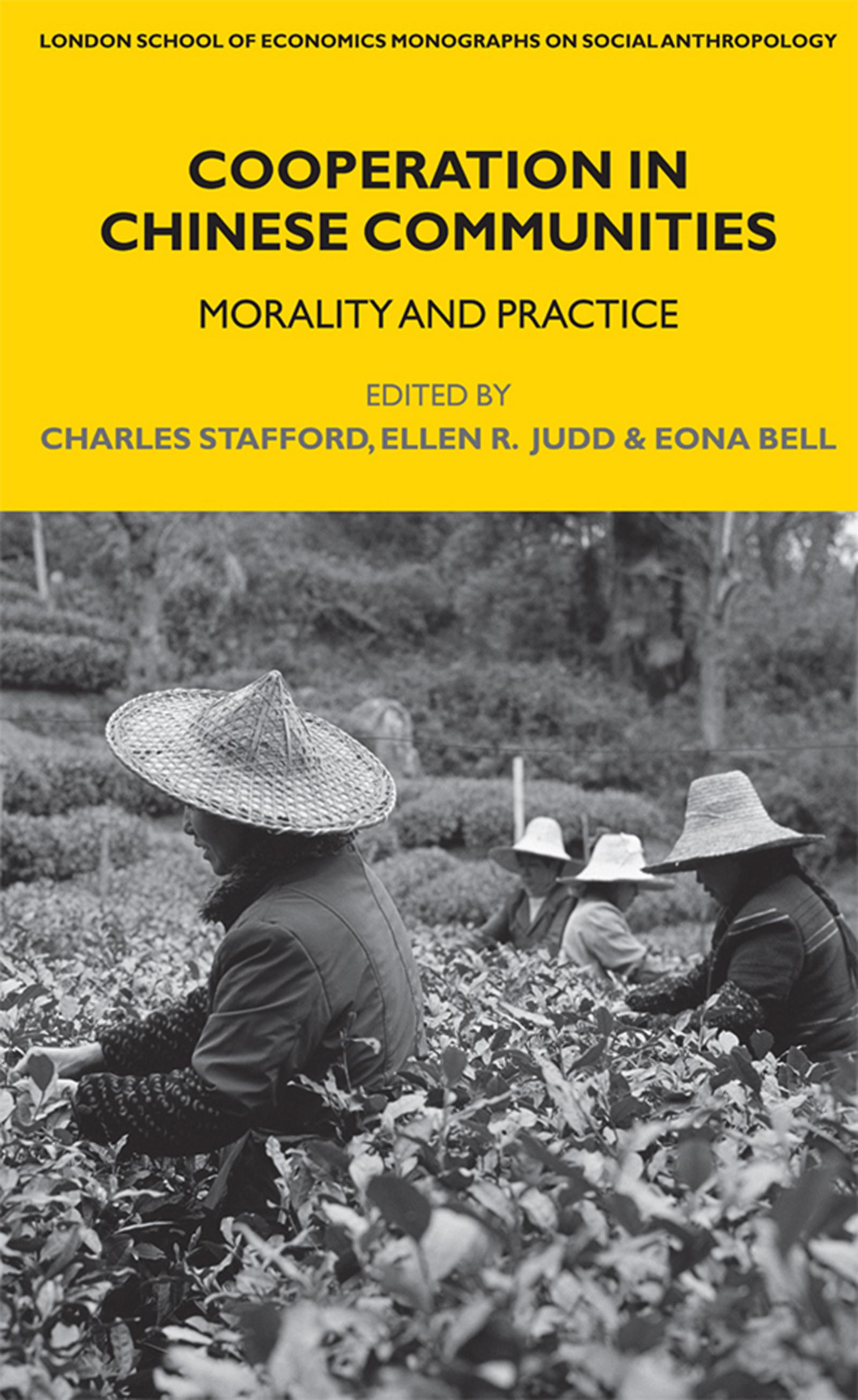
When humans cooperate, what are the social and psychological mechanisms that enable them to do so successfully? Is cooperativeness something natural for humans, built in to our species over the course of evolution, or rather something that depends on cultural learning and social interaction? This book addresses these central questions concerning human nature and the nature of cooperation. The editors present a wide range of vivid anthropological case-studies focused on everyday cooperation in Chinese communities, for example, between children in Nanjing playing a ballgame; parents in Edinburgh organising a community school; villagers in Yunnan dealing with “common pool” resource problems; and families in Kinmen in Taiwan worshipping their dead together. On the one hand, these case studies illustrate some uniquely Chinese cultural factors, such as those related to kinship ideals and institutions that shape the experience and practice of cooperation. They also illustrate, on the other hand, how China’s recent history, not least the rise and fall of collectivism in various forms, continues to shape the experience of cooperation for ordinary people in China today. Finally, they show that in spite of the cultural and historical particularity of Chinese cooperation, it does share some underlying features that would be familiar to people coming from radically different backgrounds.
Pay easily by card, Klarna, Apple Pay or Google Pay. Not happy? You always have a 14-day money-back guarantee. Read more in our terms. If you have any questions, email us at hello@memmo.org.
Memmo makes studying easier – wherever you are in the world. We bring your course books and smart study tools together in one place: summaries, quizzes, podcasts and flashcards. Plus Ted, your study buddy who answers anything you wonder. Over 50,000 students already study here – built to help you learn faster and stress less.
You might also like
Buy the book0