
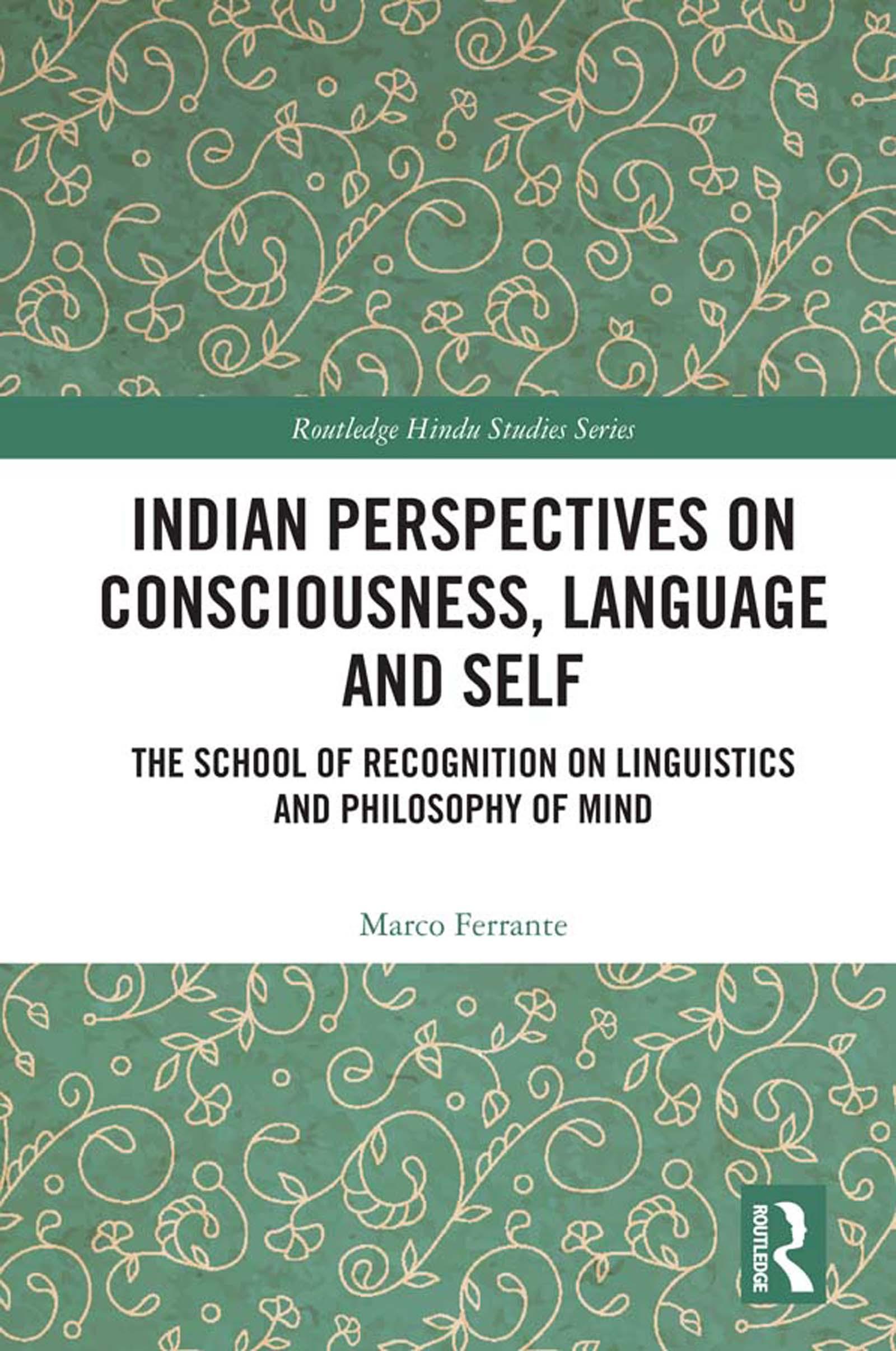
This book examines the theory of consciousness developed by the school of Recognition, an Indian philosophical tradition that thrived around the tenth c. CE in Kashmir, and argues that consciousness has a linguistic nature. It situates the doctrines of the tradition within the broader Indian philosophical context and establishes connections with the contemporary analytic debate.
The book focuses on Utpaladeva and Abhinavagupta (tenth c. CE), two Hindu intellectuals belonging to the school of Recognition, Pratyabhijñā in Sanskrit. It argues that these authors promoted ideas that bear a strong resemblance with contemporary ‘higher–order theories’ of consciousness. In addition, the book explores the relationship between the thinkers of the school of Recognition and the thought of the grammarian/philosopher Bhartṛhari (fifth c. CE). The book bridges a gap that still exists between scholars engaged with Western traditions and Sanskrit specialists focused on textual materials. In doing so, the author uses concepts from contemporary philosophy of mind to illustrate the Indian arguments and an interdisciplinary approach with abundant reference to the original sources.
Offering fresh information to historians of Indian thought, the book will also be of interest to academics working on Non-Western Philosophy, Comparative Philosophy, Indian Philosophy, Religion, Hinduism, Tantric Studies and South Asian Studies.
Pay easily by card, Klarna, Apple Pay or Google Pay. Not happy? You always have a 14-day money-back guarantee. Read more in our terms. If you have any questions, email us at hello@memmo.org.
Memmo makes studying easier – wherever you are in the world. We bring your course books and smart study tools together in one place: summaries, quizzes, podcasts and flashcards. Plus Ted, your study buddy who answers anything you wonder. Over 50,000 students already study here – built to help you learn faster and stress less.