
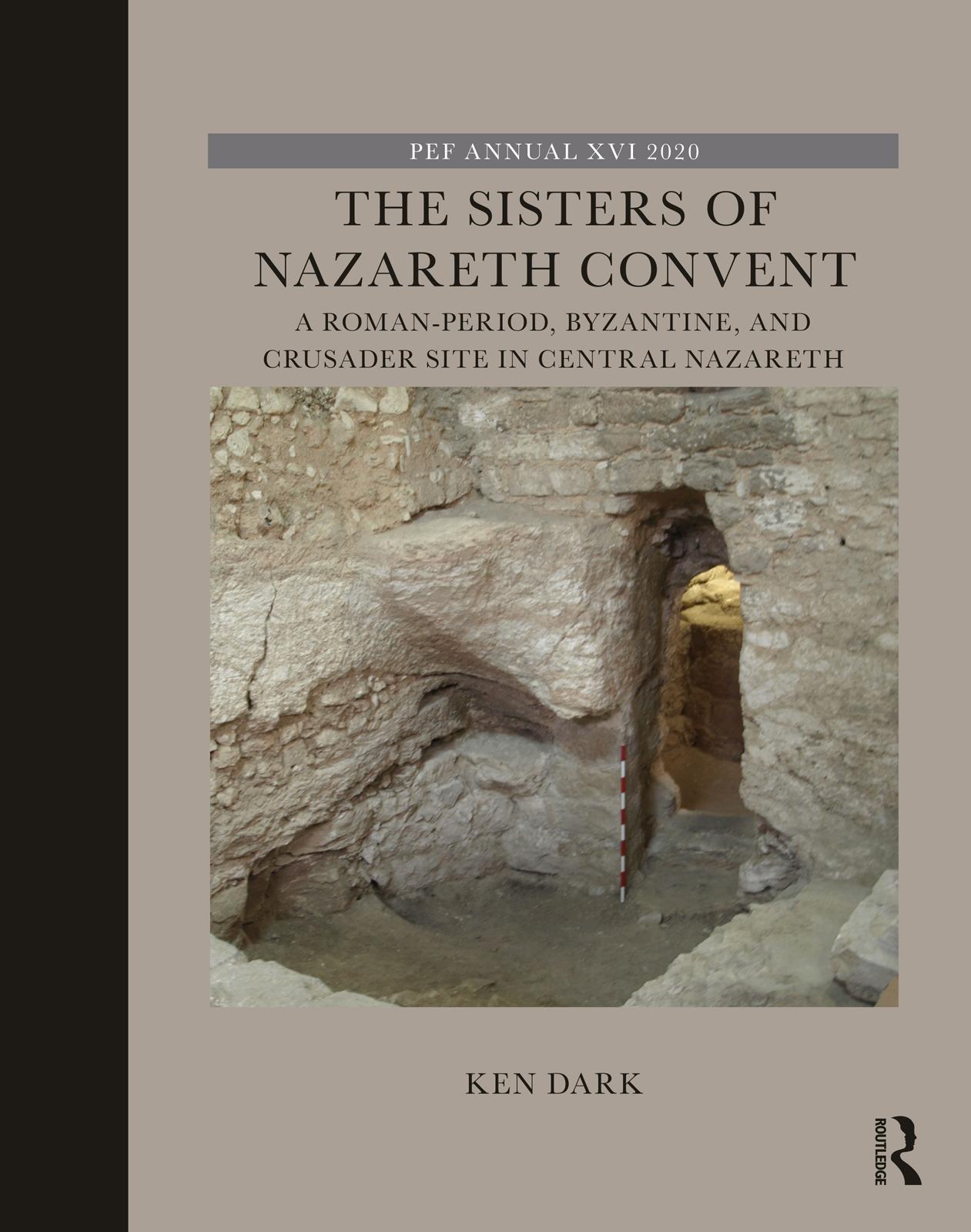
This book transforms archaeological knowledge of Nazareth by publishing over 80 years of archaeological work at the Sisters of Nazareth convent, including a detailed re-investigation in the early twenty-first century under the author's direction.
Although one of the world's most famous places and of key importance to understanding early Christianity, Nazareth has attracted little archaeological attention. Following a chance discovery in the 1880s, the site was initially explored by the nuns of the convent themselves – one of the earliest examples of a major programme of excavations initiated and directed by women – and then for decades by Henri Senès, whose excavations (like those of the nuns) have remained almost entirely unpublished. Their work revealed a complex sequence, elucidated and dated by twenty-first century study, beginning with a partly rock-cut Early Roman-period domestic building, followed by Roman-period quarrying and burial, a well-preserved cave-church, and major surface-level Byzantine and Crusader churches. The interpretation and broader implications of each phase of activity are discussed in the context of recent studies of Roman-period, Byzantine, and later archaeology and contemporary archaeological theory, and their relationship to written accounts of Nazareth is also assessed.
The Sisters of Nazareth Convent provides a crucial archaeological study for those wishing to understand the archaeology of Nazareth and its place in early Christianity and beyond.
Pay easily by card, Klarna, Apple Pay or Google Pay. Not happy? You always have a 14-day money-back guarantee. Read more in our terms. If you have any questions, email us at hello@memmo.org.
Memmo makes studying easier – wherever you are in the world. We bring your course books and smart study tools together in one place: summaries, quizzes, podcasts and flashcards. Plus Ted, your study buddy who answers anything you wonder. Over 75,000 students already study here – built to help you learn faster and stress less.