
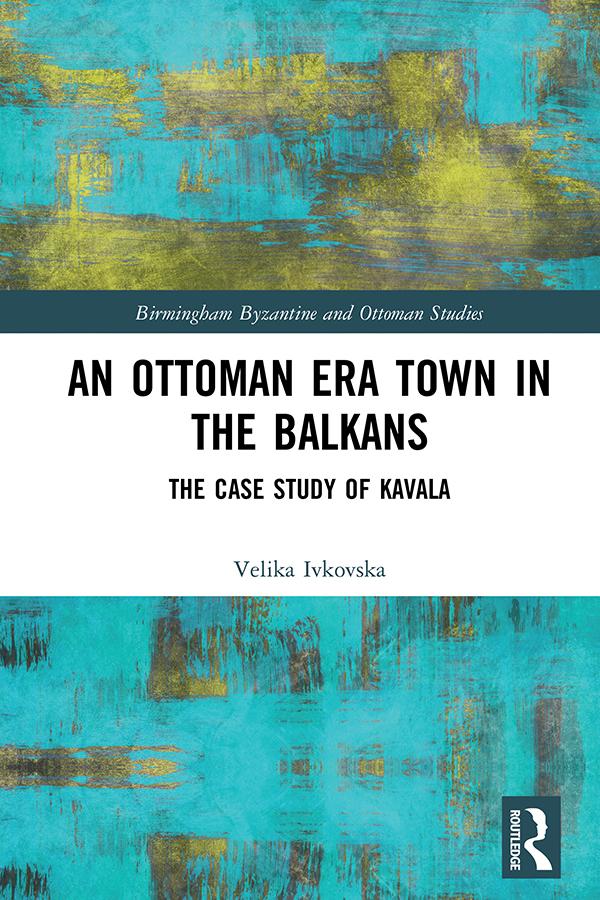
An Ottoman Era Town in the Balkans: The Case Study of Kavala presents the town of Kavala in Northern Greece as an example of Ottoman urban and residential development, covering the long period of Kavala’s expansion over five centuries under Ottoman rule. Kavala was part of the Ottoman Empire from 1387 to 1912. In the middle of the sixteenth century, Ibrahim Pasha, grand vizier of Suleiman the Magnificent, contributed to the town's prosperity and growth by the construction of an aqueduct. The Ottomans also rebuilt and extended the existing Byzantine fortress.
The book uncovers new findings about Kavala, and addresses the key question: is there an authentic "Ottoman" built environment that the town and its architecture share? Through the examination of travellers’ accounts, historical maps, and archival documents, the Ottoman influences on the urban settlement of Kavala are assessed. From its original founding by the Ottomans in the late fourteenth century to the nineteenth century when the expansion of tobacco production in the area transformed its prosperity, the development of Kavala as an Ottoman era town is explored.
The book will be of interest to scholars and students interested in Ottoman history and urban history.
Pay easily by card, Klarna, Apple Pay or Google Pay. Not happy? You always have a 14-day money-back guarantee. Read more in our terms. If you have any questions, email us at hello@memmo.org.
Memmo makes studying easier – wherever you are in the world. We bring your course books and smart study tools together in one place: summaries, quizzes, podcasts and flashcards. Plus Ted, your study buddy who answers anything you wonder. Over 75,000 students already study here – built to help you learn faster and stress less.