
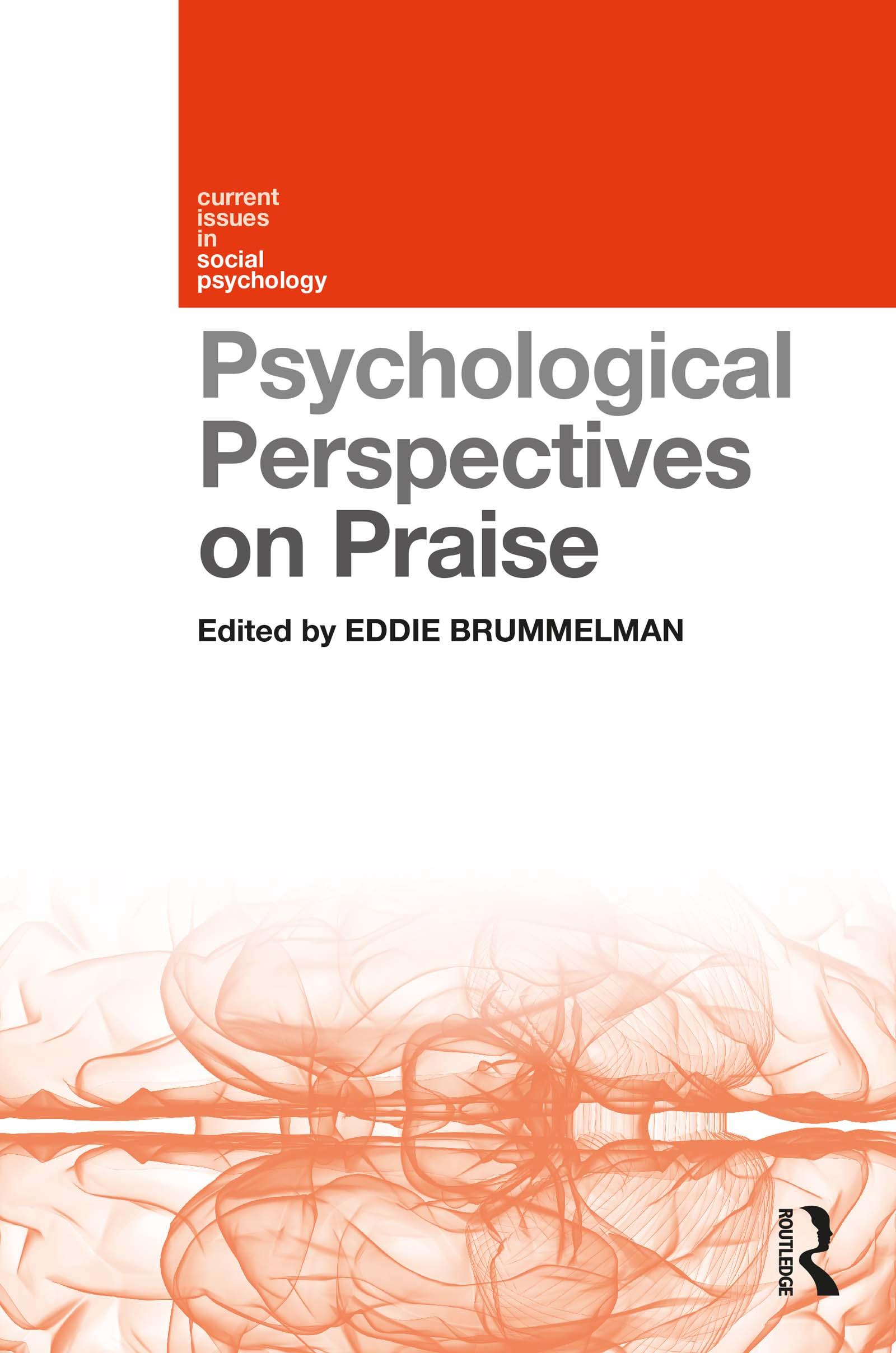
Praise is perhaps the most widely used technique to influence others. When used appropriately, praise can motivate people, make them feel better, and improve their social relationships. Often, however, praise fails to work as intended and may even cause harm. Psychological Perspectives on Praise reviews and integrates psychological theory and research to provide an overarching perspective on praise.
With contributions from leading scholars in the field, this book amalgamates diverse theoretical and empirical perspectives on praise. The book starts with providing an overview of prominent theories that seek to explain the effects of praise, including self-enhancement theory, self-verification theory, attribution theory, and self-determination theory. It then discusses several lines of empirical research on how praise impacts competence and motivation, self-perceptions (e.g., self-esteem and narcissism), and social relationships. It does so in a range of contexts, including children’s learning at school, employees’ commitment at work, and people’s behavior within romantic relationships. The book concludes by showing how praise can be understood in its developmental and cultural context.
Revealing that praise is a message rich in information about ourselves and our social environments, this book will be of interest to social, organizational, personality, developmental, and educational psychologists; students in psychology and related disciplines; and practitioners including teachers, managers, and counselors who use praise in their daily practice.
Pay easily by card, Klarna, Apple Pay or Google Pay. Not happy? You always have a 14-day money-back guarantee. Read more in our terms. If you have any questions, email us at hello@memmo.org.
Memmo makes studying easier – wherever you are in the world. We bring your course books and smart study tools together in one place: summaries, quizzes, podcasts and flashcards. Plus Ted, your study buddy who answers anything you wonder. Over 50,000 students already study here – built to help you learn faster and stress less.