
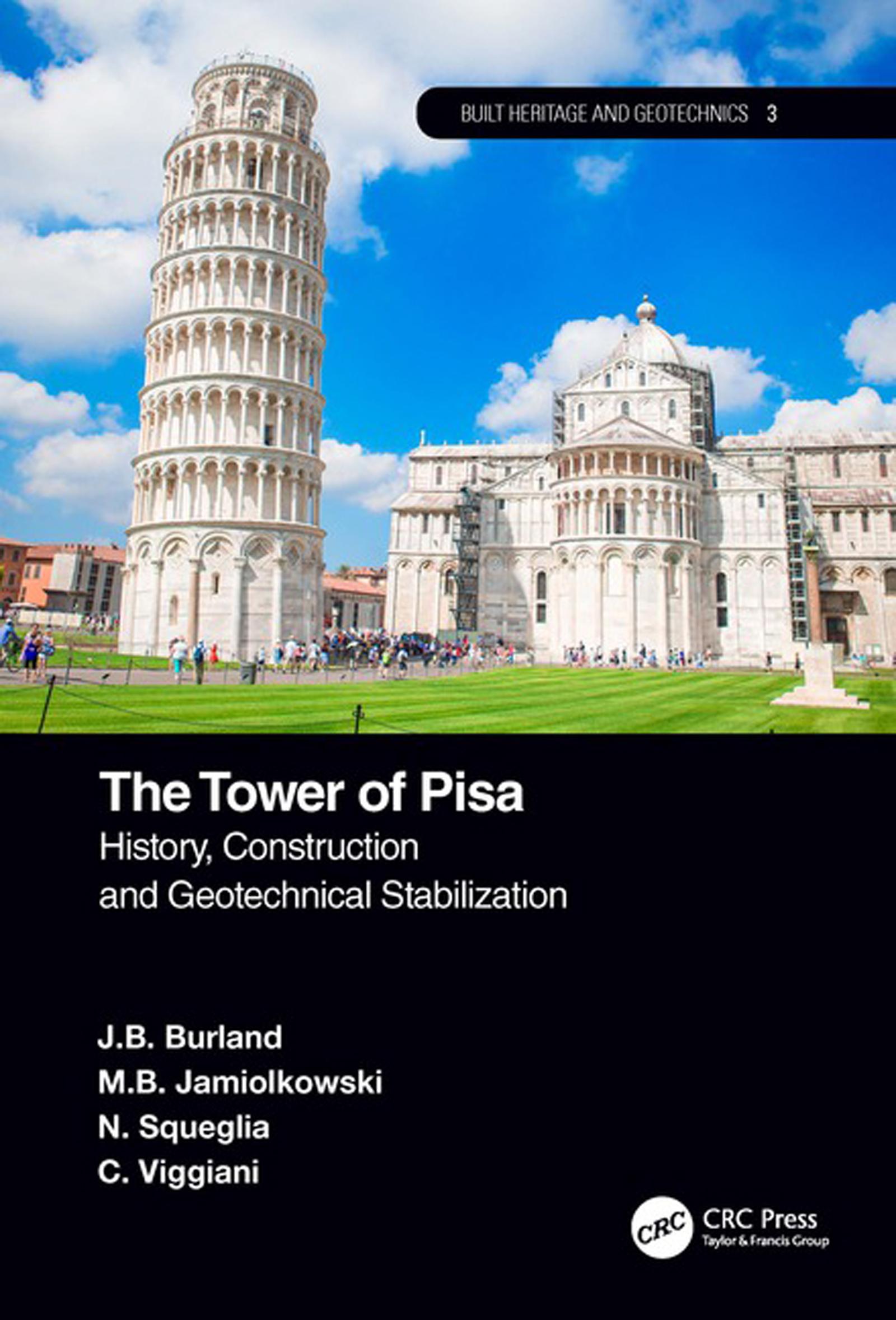
The Leaning Tower of Pisa is known worldwide for its five-degree lean. The Tower is the Campanile of the Cathedral, which together with the Baptistry and Cemetery form a breath-taking collection of monuments which are regarded as supreme examples of early Renaissance Romanesque architecture. In March 1990 the Tower was closed to the public as it was declared unsafe and close to collapse. A Commission was set up by the Italian Government with the task of developing and implementing stabilization measures.
This book begins with a brief description of the history of the Tower and its construction. The reader is then introduced to the huge challenges faced by the Commission in designing and implementing appropriate stabilization measures whilst at the same time satisfying the demanding requirements of conserving a world heritage monument. In particular, two historical studies are described which proved to be most valuable in arriving at suitable stabilization measures. The first was a deduction of the history of inclination of the tower during and subsequent to construction. The results of this study were used to calibrate a sophisticated numerical model of the tower and the underlying very soft ground which proved vital in evaluating the effectiveness of various stabilization schemes. The second study was of measurements of movement made since 1911. This latter study revealed an unexpected mechanism of foundation movement which proved crucial in developing the temporary and permanent stabilization measures and which resulted in the Tower being re-opened to the public in June 2001.
The book will appeal to both professionals and students in the fields of Architecture and Civil Engineering. It will also interest specialised audiences of geotechnical engineers and conservation architects. It may also be of wider interest to anyone planning to visit Pisa or who is intrigued as to what caused the Tower to lean and how it was stabilized.
Pay easily by card, Klarna, Apple Pay or Google Pay. Not happy? You always have a 14-day money-back guarantee. Read more in our terms. If you have any questions, email us at hello@memmo.org.
Memmo makes studying easier – wherever you are in the world. We bring your course books and smart study tools together in one place: summaries, quizzes, podcasts and flashcards. Plus Ted, your study buddy who answers anything you wonder. Over 75,000 students already study here – built to help you learn faster and stress less.