
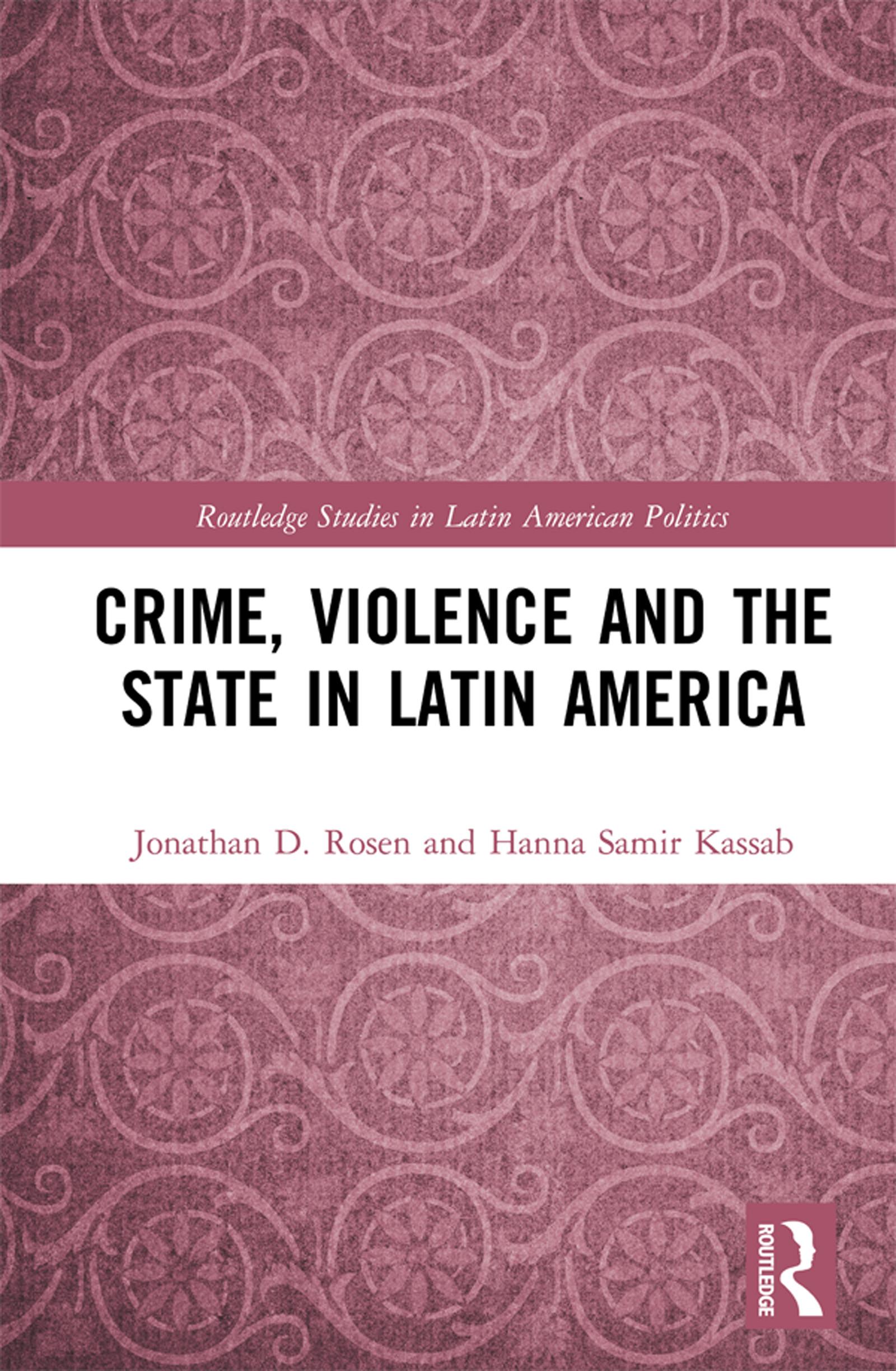
In this succinct text, Jonathan D. Rosen and Hanna Samir Kassab explore the linkage between weak institutions and government policies designed to combat drug trafficking, organized crime, and violence in Latin America.
Using quantitative analysis to examine criminal violence and publicly available survey data from the Latin American Public Opinion Project (LAPOP) to conduct regression analysis, individual case studies on Colombia, Mexico, El Salvador, and Nicaragua highlight the major challenges that governments face and how they have responded to various security issues. Rosen and Kassab later turn their attention to the role of external criminal actors in the region and offer policy recommendations and lessons learned. Questions explored include:
- What are the major trends in organized crime in this country?
- How has organized crime evolved over time?
- Who are the major criminal actors?
- How has state fragility contributed to organized crime and violence (and vice versa)?
- What has been the government’s response to drug trafficking and organized crime?
- Have such policies contributed to violence?
Crime, Violence and the State in Latin America is suitable to both undergraduate and graduate courses in criminal justice, international relations, political science, comparative politics, international political economy, organized crime, drug trafficking, and violence.
Pay easily by card, Klarna, Apple Pay or Google Pay. Not happy? You always have a 14-day money-back guarantee. Read more in our terms. If you have any questions, email us at hello@memmo.org.
Memmo makes studying easier – wherever you are in the world. We bring your course books and smart study tools together in one place: summaries, quizzes, podcasts and flashcards. Plus Ted, your study buddy who answers anything you wonder. Over 50,000 students already study here – built to help you learn faster and stress less.