
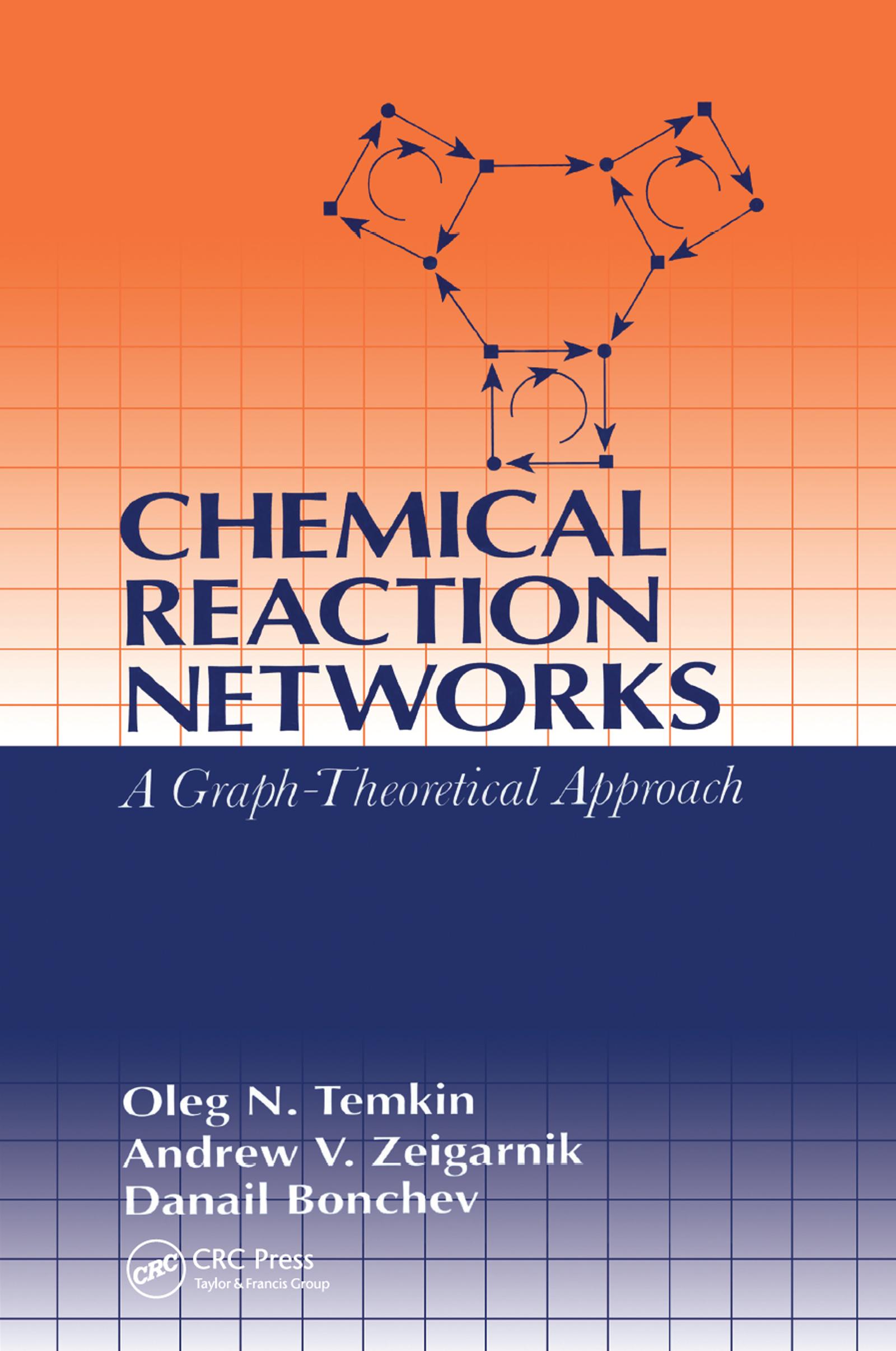
Over the last decade, increased attention to reaction dynamics, combined with the intensive application of computers in chemical studies, mathematical modeling of chemical processes, and mechanistic studies has brought graph theory to the forefront of research. It offers an advanced and powerful formalism for the description of chemical reactions and their intrinsic reaction mechanisms. Chemical Reaction Networks: A Graph-Theoretical Approach elegantly reviews and expands upon graph theory as applied to mechanistic theory, chemical kinetics, and catalysis.
The authors explore various graph-theoretical approaches to canonical representation, numbering, and coding of elementary steps and chemical reaction mechanisms, the analysis of their topological structure, the complexity estimation, and classification of reaction mechanisms. They discuss topologically distinctive features of multiroute catalytic and noncatalytic and chain reactions involving metal complexes.
With it's careful balance of clear language and mathematical rigor, the presentation of the authors' significant original work, and emphasis on practical applications and examples, Chemical Reaction Networks: A Graph Theoretical Approach is both an outstanding reference and valuable tool for chemical research.
Pay easily by card, Klarna, Apple Pay or Google Pay. Not happy? You always have a 14-day money-back guarantee. Read more in our terms. If you have any questions, email us at hello@memmo.org.
Memmo makes studying easier – wherever you are in the world. We bring your course books and smart study tools together in one place: summaries, quizzes, podcasts and flashcards. Plus Ted, your study buddy who answers anything you wonder. Over 75,000 students already study here – built to help you learn faster and stress less.
You might also like
Buy the book0