
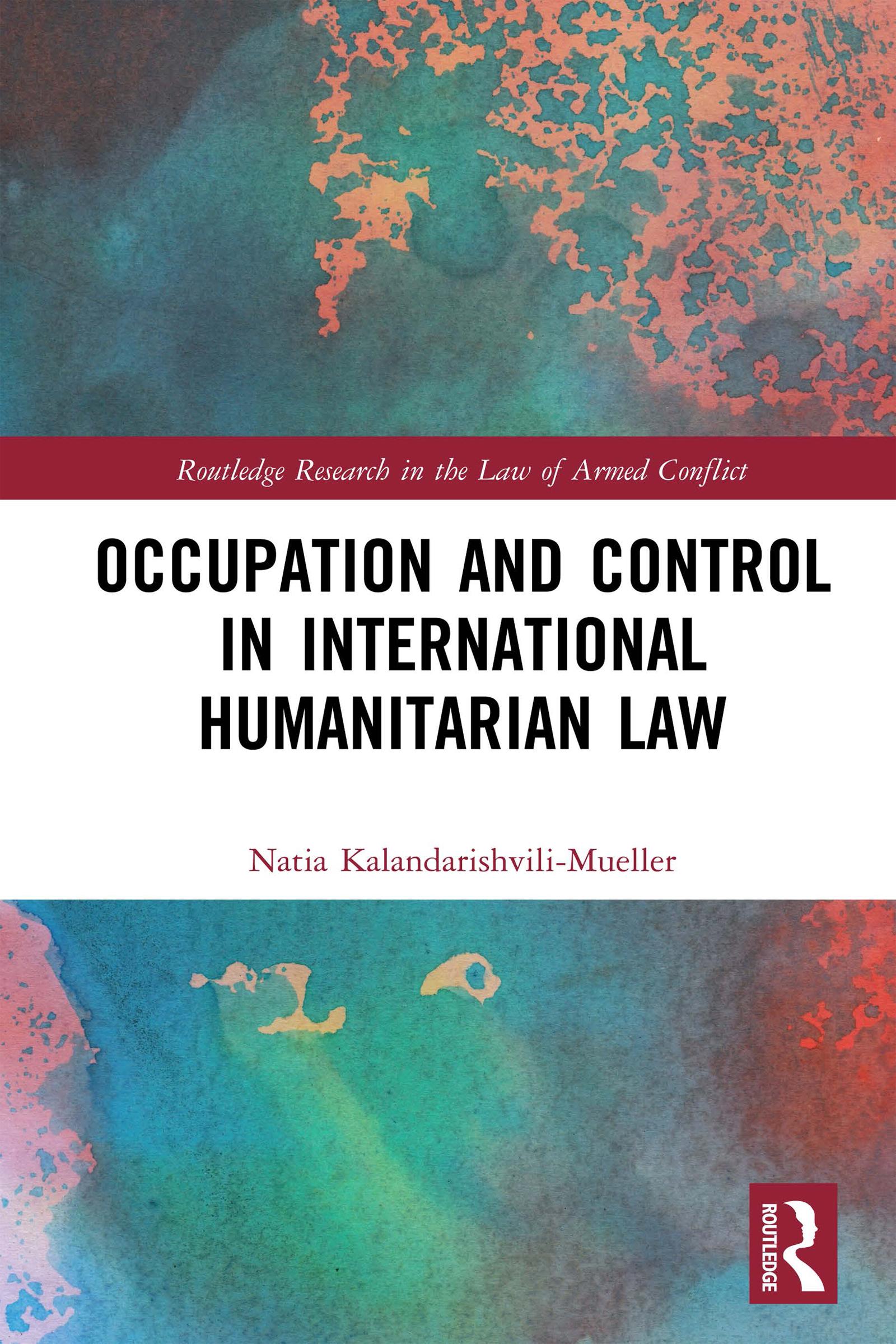
This book presents a systematic analysis of the notion of control in the law of military occupation. The work demonstrates that in present-day occupations, control as such occurs in different forms and variations. The polymorphic features of occupation can be seen in the way states establish control over territory either directly or indirectly, and in the manner in which they retain, relinquish or regain it. The question as to what level and type of control is needed to determine the existence and ending of military occupation is explored in great detail in light of various international humanitarian law instruments. The book provides an anatomy of the required tests of control in determining the existence of military occupation based on the law. It also discusses control in relation to occupation by proxy and when and how the end of control over territory occurs so that military occupation is considered terminated. The study is informed by relevant international jurisprudence. It draws on numerous pertinent case studies from all over the world, various reports by different UN entities and other international organisations, as well as legal doctrine.
The book will be a valuable resource for academics, researchers and practitioners working in the fields of international humanitarian law, international public law, and security studies
Pay easily by card, Klarna, Apple Pay or Google Pay. Not happy? You always have a 14-day money-back guarantee. Read more in our terms. If you have any questions, email us at hello@memmo.org.
Memmo makes studying easier – wherever you are in the world. We bring your course books and smart study tools together in one place: summaries, quizzes, podcasts and flashcards. Plus Ted, your study buddy who answers anything you wonder. Over 50,000 students already study here – built to help you learn faster and stress less.