
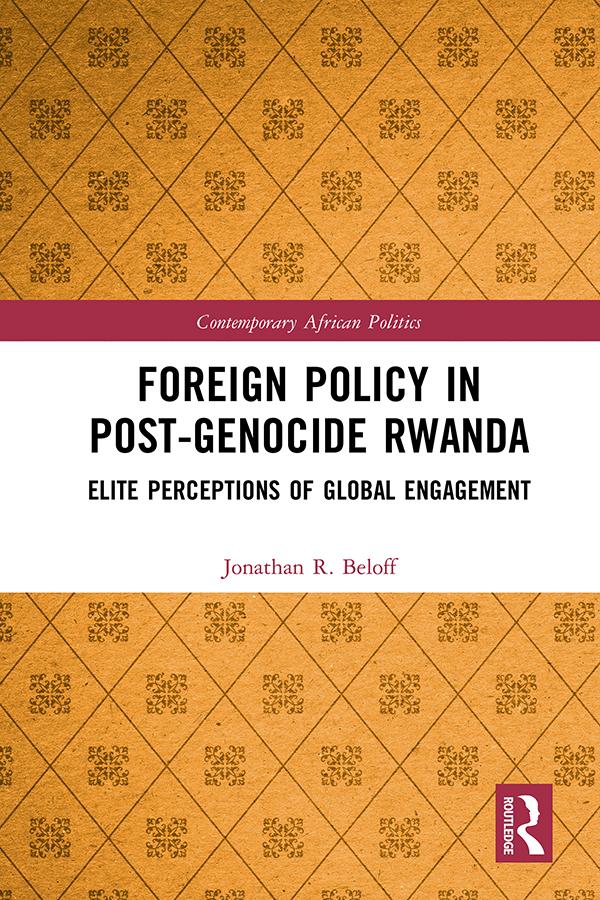
This book examines how Rwandan elites within the government, private sector and civil society perceive the nation’s political and economic relationship with the international community. Using testimonies and interviews of Rwandan political, military and economic leaders, and bureaucrats, this book examines the intersubjective beliefs that formulate how Rwanda engages with the international community. The book presents and analyses three primary intersubjective themes: historical and possible future abandonment of Rwanda; implementing an ideology of agaciro to promote self-respect, dignity and self-reliance for state security and economic development; and the belief in the government’s obligation to promote human security for those who identify as ‘Rwandan’. These perceptions help us understand how post-genocide Rwanda engages with the international community in the pursuit of state security, economic development and to prevent a future genocide. This book will be of interest to students and scholars of African politics and international relations as well as the politics of post-genocide states.
Pay easily by card, Klarna, Apple Pay or Google Pay. Not happy? You always have a 14-day money-back guarantee. Read more in our terms. If you have any questions, email us at hello@memmo.org.
Memmo makes studying easier – wherever you are in the world. We bring your course books and smart study tools together in one place: summaries, quizzes, podcasts and flashcards. Plus Ted, your study buddy who answers anything you wonder. Over 50,000 students already study here – built to help you learn faster and stress less.