
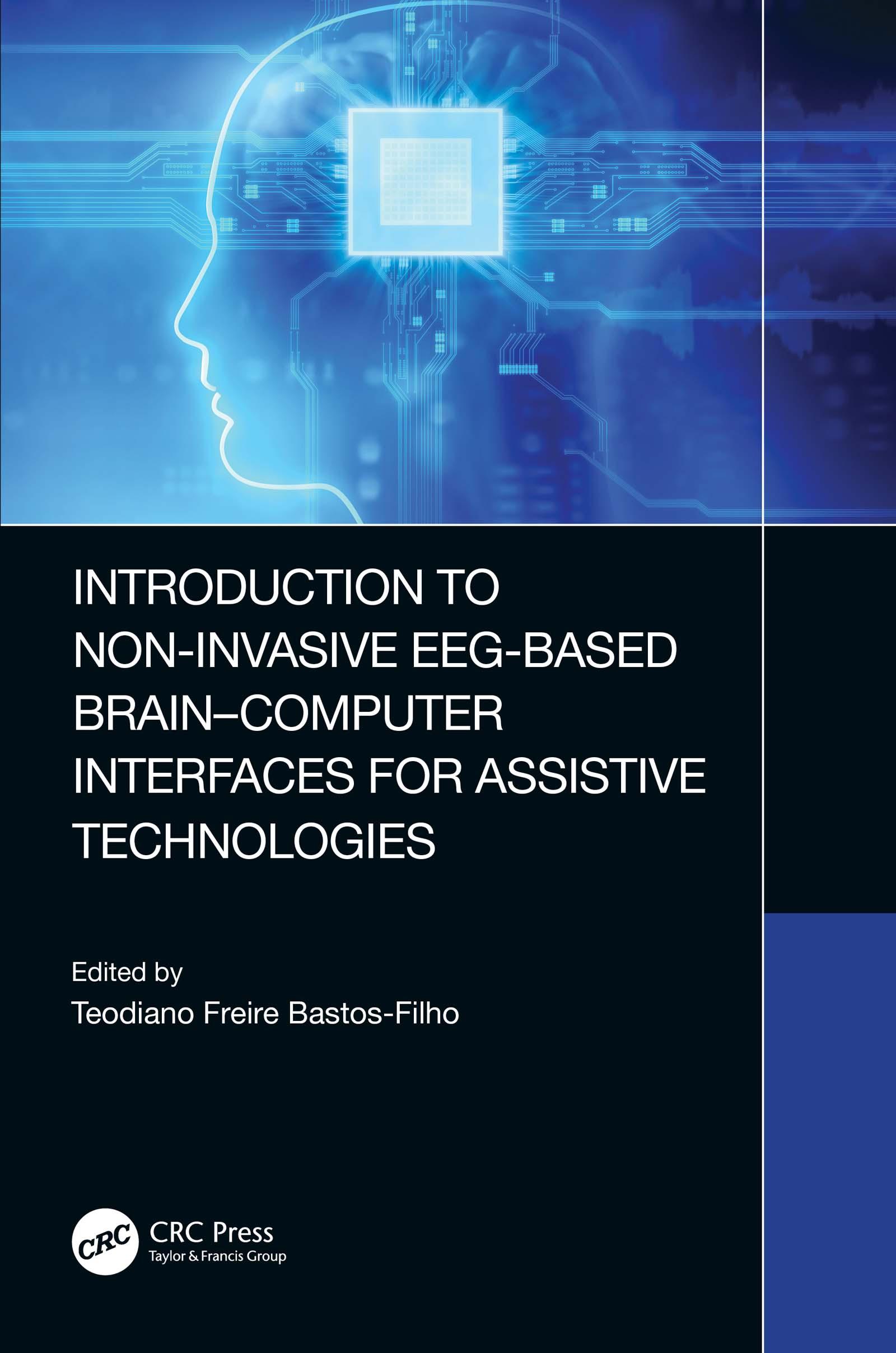
This book aims to bring to the reader an overview of different applications of brain-computer interfaces (BCIs) based on more than 20 years of experience working on these interfaces. The author provides a review of the human brain and EEG signals, describing the human brain, anatomically and physiologically, with the objective of showing some of the patterns of EEG (electroencephalogram) signals used to control BCIs. It then introduces BCIs and different applications, such as a BCI based on ERD/ERS Patterns in α rhythms (used to command a robotic wheelchair with an augmentative and alternative communication (AAC) system onboard it); a BCI based on dependent-SSVEP to command the same robotic wheelchair; a BCI based on SSVEP to command a telepresence robot and its onboard AAC system; a BCI based on SSVEP to command an autonomous car; a BCI based on independent-SSVEP (using Depth-of-Field) to command the same robotic wheelchair; the use of compressive technique in SSVEP-based BCI; a BCI based on motor imagery (using different techniques) to command a robotic monocycle and a robotic exoskeleton; and the first steps to build a neurorehabilitation system based on motor imagery of pedalling together an in immersive virtual environment. This book is intended for researchers, professionals and students working on assistive technology.
Pay easily by card, Klarna, Apple Pay or Google Pay. Not happy? You always have a 14-day money-back guarantee. Read more in our terms. If you have any questions, email us at hello@memmo.org.
Memmo makes studying easier – wherever you are in the world. We bring your course books and smart study tools together in one place: summaries, quizzes, podcasts and flashcards. Plus Ted, your study buddy who answers anything you wonder. Over 50,000 students already study here – built to help you learn faster and stress less.