
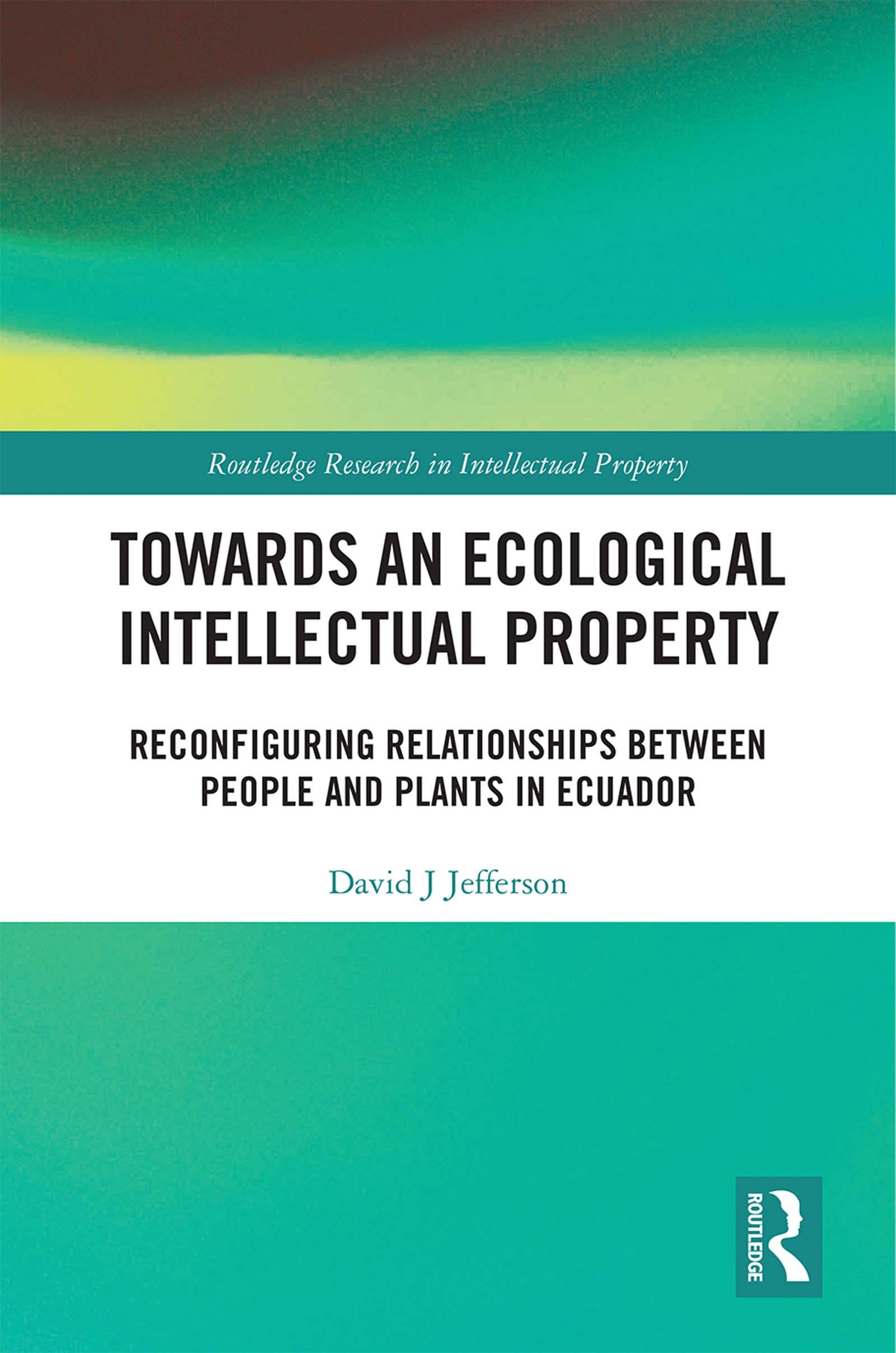
This book focuses on analysing how legal systems set the terms for interactions between human beings and plants.
The story that the book recounts is one of experimental lawmaking in Ecuador, a country where over the past decade, governmental officials and civil society advocates have attempted to reconfigure how human individuals and institutions relate to nature, by following an "eco-centric" approach to lawmaking. In doing so, Ecuadorian legislators, administrators, and judges have taken seriously the ontologies of non-human entities, including plants, through a process that has required the continuous navigation of tensions with certain "logics" that pervade conventional legal regimes. The book endeavours to disrupt these conventional assumptions and approaches to lawmaking by taking seriously alternative strategies to reconstitute interactions between people and plants. In doing so, the book argues in favour of an "ecological turn" in laws that govern vegetal life. The analysis is based on a close examination of the experiences that lawmakers in Ecuador have had when experimenting with innovative approaches to re-form relationships between human and non-human beings. Concretely, these experiments have yielded constitutional, legislative, and regulatory changes that inform the inquiry of how intellectual property and plant genetic resources laws – both in Ecuador and worldwide – could become more "ecological" in nature.
The argument that the book develops is based on extensive ethnographic fieldwork and empirical research in Ecuador, complemented by archival and doctrinal legal analysis. The contents of the book will be of interest to an academic audience of legal scholars and postgraduate students in law, in addition to scholars and students in the fields of anthropology, sociology, socio-legal studies, and science and technology studies.
Pay easily by card, Klarna, Apple Pay or Google Pay. Not happy? You always have a 14-day money-back guarantee. Read more in our terms. If you have any questions, email us at hello@memmo.org.
Memmo makes studying easier – wherever you are in the world. We bring your course books and smart study tools together in one place: summaries, quizzes, podcasts and flashcards. Plus Ted, your study buddy who answers anything you wonder. Over 50,000 students already study here – built to help you learn faster and stress less.