
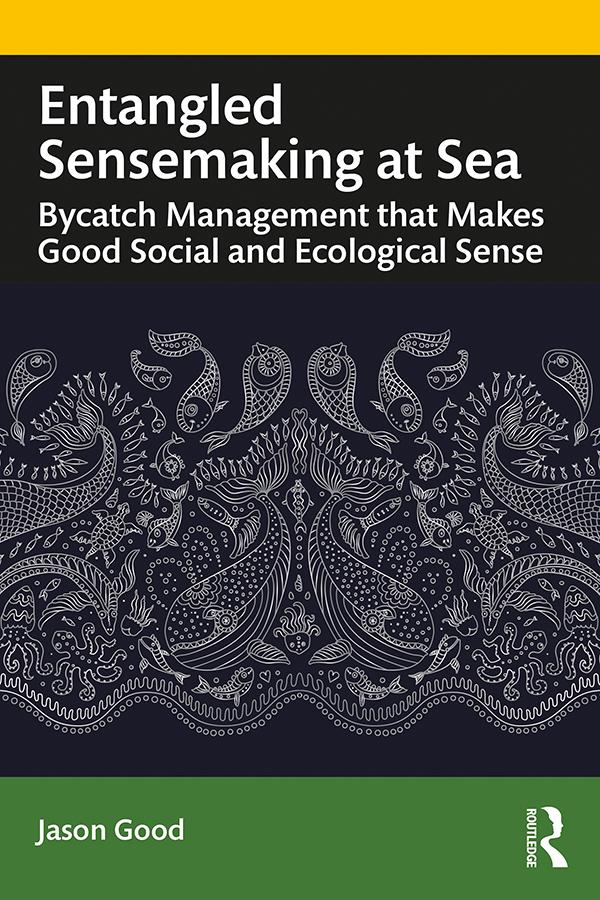
Sustainable commercial fishing, species conservation, and bycatch are contentious topics. Great emphasis has been placed on the sustainable sourcing of particular species that we buy at the store and order in restaurants, but how can we trust that the fish on our plates, from a system-wide perspective, have been appropriately sourced? Even in what are commonly considered to be the best-managed fisheries in the world (i.e., Alaskan fisheries), thousands of tons of fish are wasted each year in the interest of providing certain species in certain ways to certain people, at certain prices. Are the management practices and regulations that we think are helping actually having the desired outcomes in terms of the effective use of natural resources?
This book presents a framework that can enhance our understanding, research, and regulation of frontline organizing processes in commercial fisheries, which may be generalized to other resource extraction industries. It enables readers to better grasp and respond to the need to develop practices and regulations that involve effective use of all natural resources, rather than just a chosen few. The book is especially important to researchers and practitioners active in the fishing industry, and natural resource managers and regulators interested in understanding and improving their management systems. It is also highly relevant to organization and management researchers interested in coupled human and natural systems, ecological sensemaking, the role of quantum mechanics in organizational phenomena, sociomateriality, and sustainability.
The book uses the real-world case of an Alaskan fishing fleet to explore how the commercial fishing industry (which includes businesses, management agencies, regulatory bodies, and markets, among others) entangles itself with natural phenomena in order to extract resources from them. After gaining a better understanding of these processes can we see how they can be improved, especially through changes to regulatory management systems, in order to foster not only more sustainable, but also less wasteful (these two goals are not necessarily interdependent in today's regulatory management systems), natural resource extraction and use. Such an understanding requires exploring how regulations, natural phenomena, human sensemaking processes, and market forces entangle at sea to materialize the fish that make their way to our plates - as well as those that, importantly, do not.
Pay easily by card, Klarna, Apple Pay or Google Pay. Not happy? You always have a 14-day money-back guarantee. Read more in our terms. If you have any questions, email us at hello@memmo.org.
Memmo makes studying easier – wherever you are in the world. We bring your course books and smart study tools together in one place: summaries, quizzes, podcasts and flashcards. Plus Ted, your study buddy who answers anything you wonder. Over 50,000 students already study here – built to help you learn faster and stress less.