
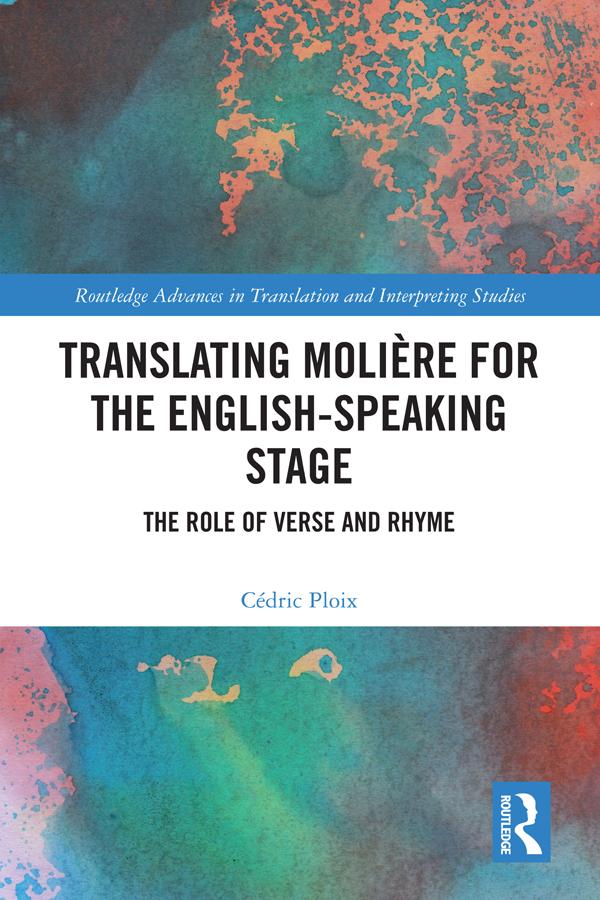
This book critically analyzes the body of English language translations Moliere’s work for the stage, demonstrating the importance of rhyme and verse forms, the creative work of the translator, and the changing relationship with source texts in these translations and their reception. The volume questions prevailing notions about Moliere’s legacy on the stage and the prevalence of comedy in his works, pointing to the high volume of English language translations for the stage of his work that have emerged since the 1950s. Adopting a computer-aided method of analysis, Ploix illustrates the role prosody plays in verse translation for the stage more broadly, highlighting the implementation of self-consciously comic rhyme and conspicuous verse forms in translations of Moliere’s work by way of example. The book also addresses the question of the interplay between translation and source text in these works and the influence of the stage in overcoming formal infelicities in verse systems that may arise from the process of translation. In so doing, Ploix considers translations as texts in and of themselves in these works and the translator as a more visible, creative agent in shaping the voice of these texts independent of the source material, paving the way for similar methods of analysis to be applied to other canonical playwrights’ work. The book will be of particular interest to students and scholars in translation studies, adaptation studies, and theatre studies
Pay easily by card, Klarna, Apple Pay or Google Pay. Not happy? You always have a 14-day money-back guarantee. Read more in our terms. If you have any questions, email us at hello@memmo.org.
Memmo makes studying easier – wherever you are in the world. We bring your course books and smart study tools together in one place: summaries, quizzes, podcasts and flashcards. Plus Ted, your study buddy who answers anything you wonder. Over 75,000 students already study here – built to help you learn faster and stress less.