
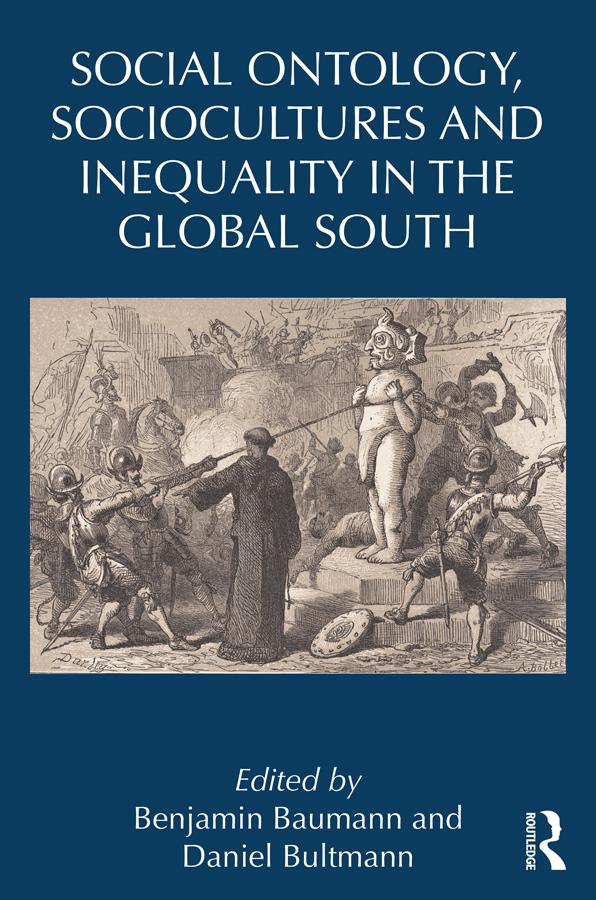
Challenging the assumption that the capitalist transformation includes a radical break with the past, this edited volume traces how historically older forms of social inequality are transformed but persist in the present to shape the social structure of contemporary societies in the global South.
Each social collective comprises an interpretation of itself – including the meaning of life, the concept of a human person, and the notion of a collective. This volume studies the interpretation that various social collectives have of themselves. This interpretation is referred to as social ontology. All chapters of the edited volume focus on the relation between social ontology and structures of inequality. They argue that each society comprises several historical layers of social ontology that correspond to layers of inequality, which are referred to as sociocultures. Thereby, the volume explains why and how structures of inequality differ between contemporary collectives in the global South, even though all of them seem to have similar structures, institutions, and economies.
The volume is aimed at academics, students and the interested public looking for a novel theorization of social inequality pertaining to social collectives in the global South.
Pay easily by card, Klarna, Apple Pay or Google Pay. Not happy? You always have a 14-day money-back guarantee. Read more in our terms. If you have any questions, email us at hello@memmo.org.
Memmo makes studying easier – wherever you are in the world. We bring your course books and smart study tools together in one place: summaries, quizzes, podcasts and flashcards. Plus Ted, your study buddy who answers anything you wonder. Over 50,000 students already study here – built to help you learn faster and stress less.